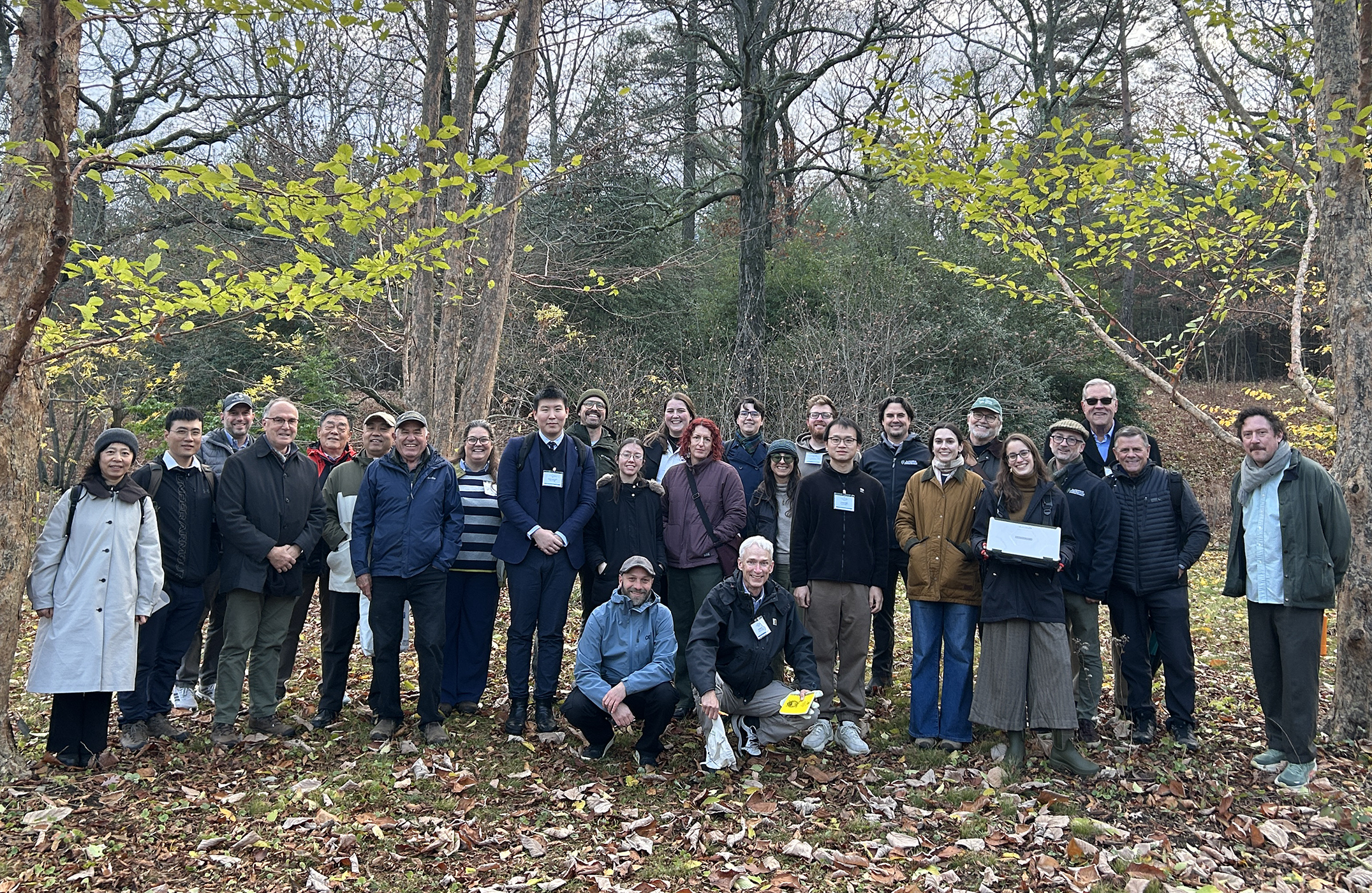
Institutional plant collectors and researchers gather in Boston to plan future activities of the North America-China Plant Exploration Consortium
A two-day symposium held November 12-13 at the Arnold Arboretum of Harvard University celebrated the thirty-fifth anniversary of the North America-China Plant Exploration Consortium ‘and charted the future of this enduring partnership to safeguard biodiversity. The gathering brought together 48 participants from 11 botanical gardens and research institutions across the United States, Canada, and China including representatives from China National Botanic Garden in Beijing and the Shanghai Chenshan National Botanic Garden. Together, participants celebrated a partnership that has spanned generations of scientist-explorers and has become a model for international cooperation in plant conservation. Through presentations, panel discussions, workshops, collection tours, and strategic planning sessions, attendees explored how botanic gardens can strengthen their role in plant conservation, research, and international collaboration in the decades ahead.
Founded in 1991, NACPEC is the longest-running and most active international plant exploration consortium in the botanical garden community. Over the past three decades, member institutions have conducted 21 scientific expeditions across China and North America, documenting floristic diversity and collecting—and sharing—plant material critical to research, horticulture, and conservation. These efforts have generated living collections, herbarium specimens, archival records, and ecological data that support scholarship and species preservation.
The symposium underscored the growing importance of this work at a time when habitat destruction, global change, and biodiversity loss place increasing pressure on plant populations. Participants explored new opportunities for international cooperation, including expanded research collaborations, formal agreements among member institutions, and future collecting expeditions designed to strengthen plant conservation collections in both North America and China.
A significant milestone of the gathering was the Arboretum’s inaugural contribution to the newly established seed bank at the China National Botanic Garden. The Arboretum donated seed from Franklinia alatamaha, the Franklin tree, a species that is extinct in the wild and survives only through cultivation. The Arboretum’s specimens in its Explorers Garden—accessioned as 2428*3 A and B—are believed to be the oldest living Franklin trees in the world, making them especially valuable for ex-situ conservation efforts. The donation represents a new chapter in NACPEC’s commitment to preserving threatened plant species through international partnership and shared stewardship.
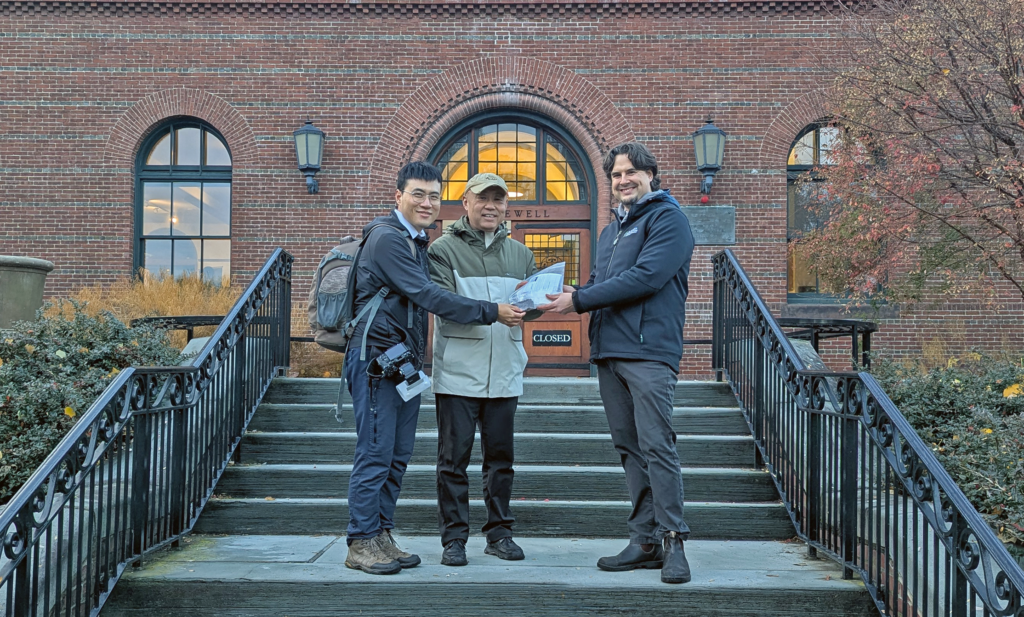
The symposium also highlighted the Arnold Arboretum’s unique role in preserving NACPEC’s legacy. Participants toured the institution’s renowned living collections as well as the NACPEC archives, now maintained officially by the Arnold Arboretum and preserved in the library. These collections, expanded through a recent two-year, donor-funded archival initiative, provide an increasingly accessible record of modern plant exploration and botanical exchange for researchers and the public alike.
The symposium coincided with the recent publication of a special double issue of the Arboretum’s magazine Arnoldia dedicated to NACPEC and produced with contributions from all current member institutions. The issue serves both as a retrospective of the consortium’s many achievements and as a roadmap for its next five years of exploration, research, and conservation.
Made possible through funding from the Harvard China Fund, the NACPEC symposium was organized by Assistant Curator Miles Schwartz Sax and Arboretum staff in collaboration with representatives from member institutions across the consortium. The conversations and plans that emerged from the gathering underscored both the enduring value of the consortium and the growing urgency of its work. As NACPEC enters its next chapter, the consortium’s mission remains steadfast: to advance scientific understanding of plant diversity and ensure that threatened species are documented, protected, and shared to strengthen the resilience of plant life in a rapidly changing world.
List of Participating Institutions:
- Arnold Arboretum of Harvard University
- China National Botanic Garden
- Chicago Botanic Garden
- The Dawes Arboretum
- Holden Forests & Gardens
- Morris Arboretum & Gardens
- The Morton Arboretum
- Shanghai Chenshan National Botanic Garden
- University of British Columbia Botanical Garden
- University of California Botanical Garden at Berkeley
- Scott Arboretum of Swarthmore College
- Harvard University Herbarium