| NACPEC MISSION STATEMENT |
| The preservation of Chinese and North American botanical biodiversity through cooperative and collaborative plant exploration, exchange of germplasm, scholarly research, and professional development to enhance genetic diversity of living collections and secure plants for the future. It has achieved this through multi-institutional, multi-generational partnership between North American and Chinese botanic gardens. |
In 2026, the North America-China Plant Exploration Consortium (NACPEC) turns thirty-five years old, and as with any major milestone this has fostered introspection. NACPEC is the longest continuously running international plant exploration consortium of its kind. Its archives are replete with rich histories of plant exploration that tell the stories of a diverse cast of characters involved in collaborative partnerships and the ever-evolving landscape of botanical scholarship. In 2010, a special issue of Arnoldia (Vol. 86, #2) was devoted to NACPEC’s activities over its first twenty years. This issue is the next chapter of this story, sharing perspectives on NACPEC between 2010-2026 and a vision of consortium activities for the next five years.
Over the last sixteen years, NACPEC has stayed focused on collecting plants for conservation, research, and cultivation in botanic gardens. The expeditions in this period addressed contemporary challenges and embraced emerging opportunities. This included the expeditions to Shaanxi, Hebei, and Beijing, in 2010, and Shaanxi, Gansu, in 2011, both focused on general collecting. The 2015 expedition was dedicated to paperbark maple (Acer griseum) and focused on collecting germplasm and documenting populations of this endangered species. Expeditions to Sichuan (2016, 2017) and Hubei (2018) were a mix of general and targeted collecting focusing on acquiring taxa identified in collections’ development plans like the Arnold Arboretum’s Campaign for the Living Collections (Friedman, Dosmann et al., 2016). The 2019 expedition across the Appalachian range trod new ground as the first North American trip in the consortium’s history. On this expedition, U.S.-based NACPEC gardens hosted Chinese partners for two weeks in the field and created the opportunity to study, explore, and collect plants within the flora of North America. This expedition set a precedent for future trips in North America and provided the opportunity to show reciprocity to our Chinese colleagues for the many excursions they’ve hosted. The 2025 expedition to Zhejiang, Hubei, Shaanxi, and Beijing focused on relationship building, scouting, and making formal records of plants observed in the field. These trips have infused NACPEC living collections with a diverse set of new germplasm, deepened relationships, and introduced new models for expeditions focused on biodiversity documentation.
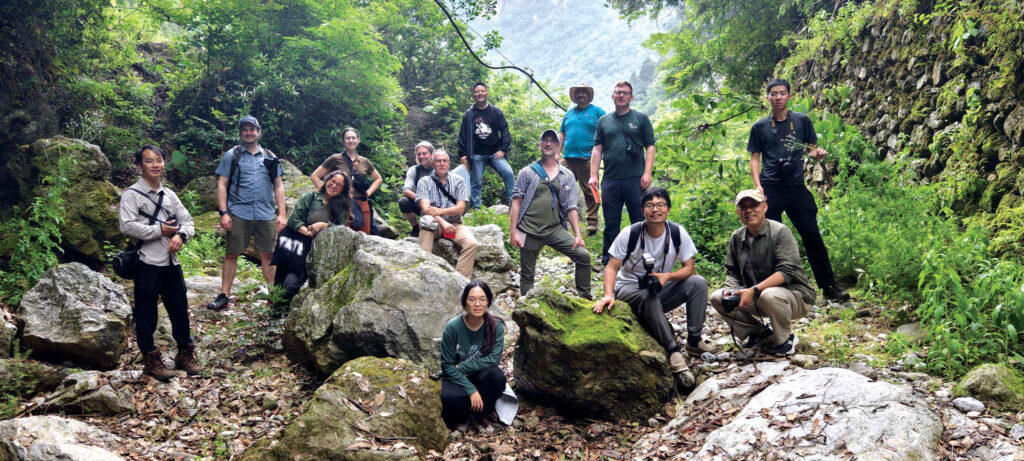
During the last fifteen years, NACPEC has achieved many accomplishments outside of its expeditionary work. Across the eleven member gardens, 1,793 individual accessions of plants acquired on NACPEC expeditions are growing, providing opportunities for evaluation and study. The official NACPEC herbarium, housed at the U.S. National Arboretum, has been fully digitized and is now accessible online. A special two-year project focused on the archives of NACPEC has been underway to catalogue the consortium’s collections and make them accessible to the public. A searchable, public-facing database is being constructed to provide data on all NACPEC acquisitions from the wild and an inventory of the living metacollection of plants across member gardens. A new set of archival and biodiversity documentation standards was developed and field tested during the 2025 expedition to China. In 2026, NACPEC welcomed University of California Botanical Garden at Berkeley (UCBG Berkeley) into the consortium as its newest member, adding another collection with deep connections to the flora of China. Lastly, NACPEC formalized its governance structure when it developed and ratified the first official mission statement and set of bylaws.
While NACPEC has accomplished much over the last thirty-five years, the organization must continue to grow and evolve to remain relevant and address contemporary needs. Challenges posed by climate change, habitat degradation, and the biodiversity-loss crisis put increased pressure on global plant communities and ex situ collections. Changes in geopolitics and international policy surrounding the sharing of genetic resources impose restrictions on the exchange of plants. While these headwinds can make the fundamentals of plant exploration more challenging, they also shine a light on the importance of collaborative organizations like NACPEC.
To ensure NACPEC is collectively looking towards the future and responding to current needs, the consortium undertook a strategic planning process in 2025-2026. This included the distribution of a questionnaire and guided discussions during meetings and on the 2025 expedition. This was the first time in the consortium’s history that a formal strategic planning process was implemented, but not the first time NACPEC’s future activities were considered. Notable past articulations were discussed by Lawrence Lee in a NACPEC founding document (Lee, 1991) and by Kunso Kim, Kris Bachtell, and Kang Wang in 2010 as they described their thoughts on future activities of NACPEC in the Consortium’s 20th anniversary issue of Arnoldia (Kim, Bachtell, et al., 2010). This current article is a synthesis of what was learned through the collective planning process. It is focused on two main themes: the benefits NACPEC members receive from being part of the consortium, and the goals and opportunities for the group for the next five years (2027-2032).
NACPEC Membership Benefits
Since NACPEC was founded in 1991, it has grown from three gardens (Holden Arboretum, U.S. National Arboretum, and Morris Arboretum) to eleven members today. The longevity and continued expansion of the group demonstrates that member institutions find value in being part of a consortium. But what specifically are the benefits that members derive? Based on survey results, members identified five core areas of benefit.
Enrichment of living collections: From NACPEC’s inception, the acquisition and cultivation of novel, wild-collected germplasm of known provenance from China have been central to the consortium’s mission. The growing of NACPEC plants is the most tangible result of consortium activities, allowing garden staff, researchers, and the public to interact with these plants and the fruits of the consortium’s labor. Multiple gardens growing the same collections create a metacollection framework, allowing for comparative studies of how individual species sourced from the same wild populations respond to cultivation across multiple garden sites. This model ensures plants of high value or conservation concern are safeguarded. Adopting and maintaining high data standards across the consortium has created secondary benefits, such as improving curation practices within member gardens.
Collaboration and knowledge sharing: The consortium has fostered a stable yet ever-evolving set of relationships among colleagues in botanical institutions across North America and China for over three decades. With NACPEC’s longevity, the opportunity for garden staff to cycle through the consortium has created a community that fosters mentorship and knowledge sharing. Instances of multiple member gardens working together on shared endeavors create a platform for networking and collective problem-solving. Working together within the NACPEC community has created a virtuous cycle where member gardens are more likely to collaborate on projects, even when they are non-NACPEC related. This has been particularly beneficial to members in the realms of research, propagation, and horticulture.
Staff development & professional growth: NACPEC participation creates the condition for members to develop new skills and knowledge. Examples include opportunities to learn expedition methods, new plant species in the field, novel propagation methods, and data-management strategies. The opportunity to travel internationally and immersively allows participants to expand their cultural perspectives and understanding of plant ecology. Growing plants from expeditions allows staff to engage with novel germplasm and extends participation in NACPEC more broadly within member gardens.
Plant conservation and biodiversity missions: NACPEC is seen by consortium members as a platform to advance biodiversity research and conservation within international frameworks like the Global Strategy for Plant Conservation (GSPC, 2025). On expeditions, populations of rare plants are documented and monitored in support of in situ conservation. Collecting threatened plant species and growing them in member gardens supports ex situ conservation.
Institutional profile and credibility: NACPEC members identified that being part of an internationally recognized organization raised the visibility and status of their institution. Thanks to NACPEC’s “brand” recognition and internal practices, association with the consortium enhances members’ bona fides in plant exploration and international collaboration.
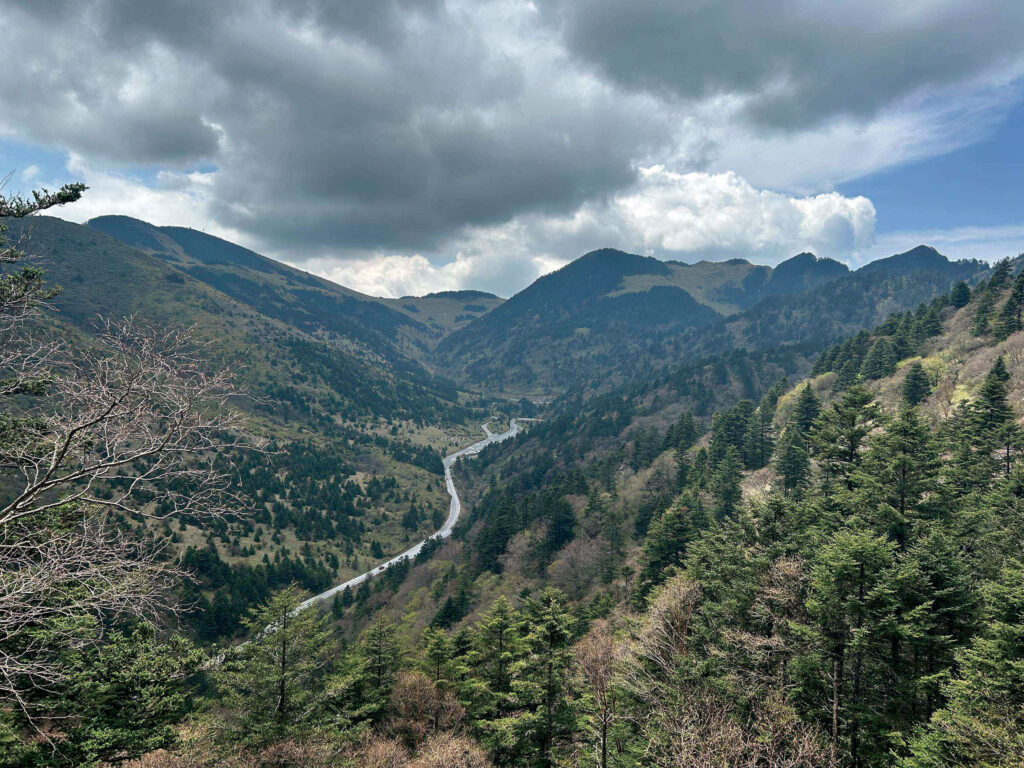
NACPEC stands poised to make unique contributions to conservation and the discipline of plant exploration.
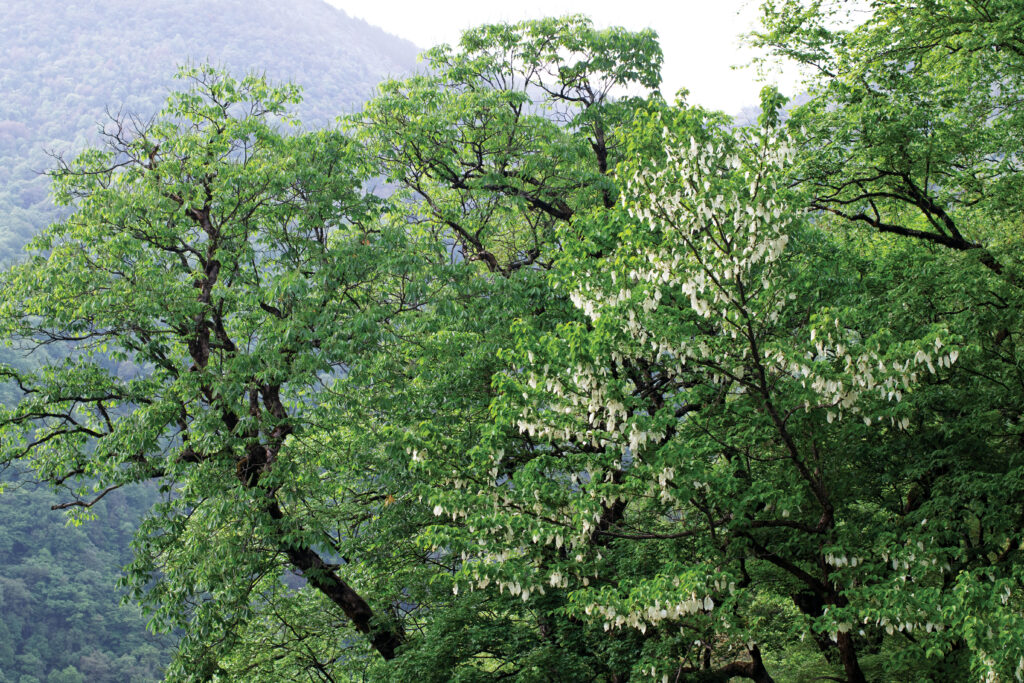
The rich arboreal diversity of the Shennongjia Forest District as seen on the 2025 trip to Zhejiang, Hubei, and Shaanxi. Photograph by the author.
Future Directions
In the future, NACPEC can rely on its established strengths while developing new initiatives addressing contemporary needs of its members. Over the next five years, NACPEC will focus its efforts on four core areas including the following:
Plant Exploration & Collections Development
Plant exploration continues to be a NACPEC’s primary focus. There is strong interest across the consortium in continuing to mount expeditions that acquire new germplasm and herbarium vouchers and document floristic biodiversity. NACPEC has identified prioritizing themes to guide these efforts (see Table 1).
Over the next five years, expeditions to North America will create opportunities for Chinese colleagues to join North American partners in the field and promote continued bi-directional exchange of germplasm. A precedent was set for North American collecting during the 2019 expedition to Appalachia, breaking new ground for NACPEC while upholding the organization’s principal mission. This expedition was the realization of a vision articulated at NACPEC’s founding (Lee, 1991) and supports the consortium’s commitment to plant exploration and reciprocal exchange. The majority of NACPEC gardens focus on North American collecting in addition to their international work. These established programs could be a significant asset for NACPEC partners. For example, UCBG Berkeley has a field program focused on the plants of the endemic-rich California floristic province. With the addition of UCBG Berkeley to the consortium, Chinese gardens and researchers associated with NACPEC can gain access to their expert knowledge, familiarity with the region, and extended resources, like the Jepson Herbarium, focused on California plants. University of British Columbia Botanic Garden has been focusing on exploration of rare West Coast North American conifers and facilitating international seed exchange of this critical germplasm. Chicago Botanic Garden holds a seed bank focused on the flora of the Midwest that already holds over 1,800 native plant species. A focus on North American taxa can increase participation by gardens who are currently prioritizing domestic collecting over international work, such as the U.S. National Arboretum or the Morris Arboretum. With National Botanic Garden Beijing seed bank’s global focus, this initiative provides ample opportunity to ensure North American taxa are represented within this important repository.
As new regulations on the export of Chinese germplasm come into effect, NACPEC is ready to adapt. In situations where seed acquisition in the field is not possible, expeditions can shift focus to new initiatives like scouting, biodiversity documentation, and research. Such trips are still highly valuable in supporting staff development and NACPEC’s goals. For example, the 2025 expedition to China occurred in May, outside the typical expedition season. During this trip, a new set of documentation methods was trialed with the aim of capturing meaningful biodiversity data. This included formally creating species checklists, taking photographs of observed plants, and tracking their exact positions using GPS. These images and locations were associated with each other; taxa names were verified; and resulting files were uploaded to iNaturalist, creating a public repository of georeferenced datapoints for observed plants in the field, furthering efforts to document global biodiversity. This is one example of how NACPEC can shift its expedition paradigm to reach the consortium’s multifaceted goals. Expeditions will continue to provide opportunities for NACPEC members to undertake field work together and demonstrate the consortium’s deep commitment to the flora of China and global plant conservation.
| Table 1. | |
|---|---|
| Priority genera | Acer, Amentotaxus, Carya, Cladrastis, Clematis, Fagus, Fraxinus, Ginkgo, Magnolia, Quercus, Rhododendron, Stewartia, Syringa, Tilia, Tsuga, Viburnum |
| Priority Species | Member gardens have identified specific taxa of interest based on collections development plans and research priorities (e.g., Morton Arboretum collecting Fraxinus mandshurica, F. chinensis, F. insularis, etc., to support research on emerald ash borer resistance) |
| East Asia – North America disjunct genera | Priority target genera that have species representation in both China and North America (e.g., Aesculus, Carpinus, Cornus, Hamamelis, Hydrangea, Illicium, Ostrya) |
Conservation taxa | Globally rare species in China and North America; supporting in situ documentation and conservation of rare, endangered plant species; priority taxa for Global Conservation Consortia that NACPEC members are part of (e.g. Acer, Fraxinus, Magnolia, Quercus, Rhododendron) |
Seed banking | Collecting species from North America and China for deposition in National Botanic Garden Beijing’s seed bank and/or the seed repository in USDA’s National Plant Germplasm System |
Underrepresented herbaceous taxa | Increasing emphasis on herbaceous plant acquisition, which has historically been underrepresented compared to woody plants |
Germplasm for resiliency | Focusing on taxa that are adaptable to abiotic stressors associated with climate change, such as heat and drought tolerance; plant species with pest and disease resistance; collecting in warmer regions to find plants that will be adapted to future climate scenarios. |
Collecting in climate regions analagous to NACPEC gardens | Using Köppen-Geiger climate classification models to match garden locations with plants growing in analogous climates, i.e., mid-Atlantic gardens collecting in southeastern China, or National Botanic Garden Beijing collecting in humid regions of northeastern and central USA |
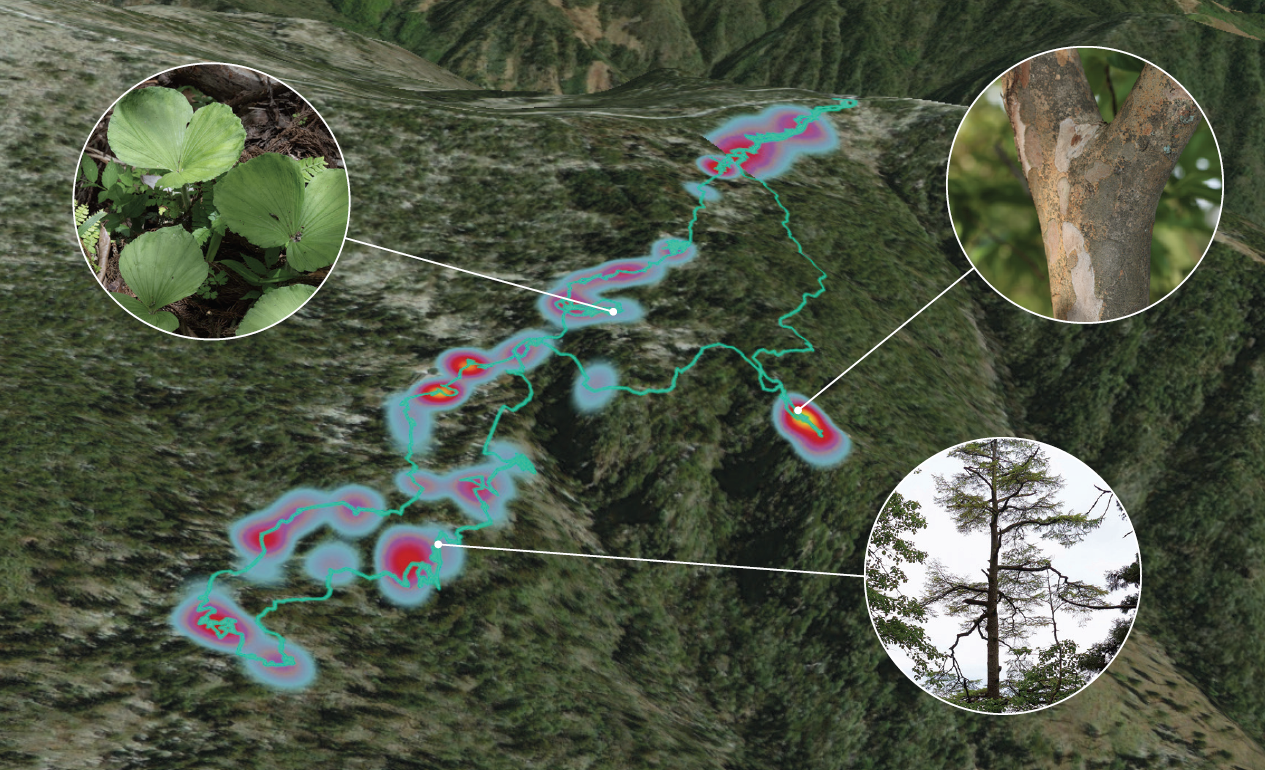
in Tainmu Shan (Zhejiang). Warmer colors indicate larger number of photos taken per plant taxon. Image by the author
Observational occurrence data is a great starting place, but herbarium vouchers remain the gold standard for primary documentation of plants in the field. Historically during NACPEC expeditions, vouchers have been collected concurrently with germplasm acquisition. This has yielded 3,547 vouchers that are now held within herbaria at the U.S. National Arboretum, Harvard University, the Morris Arboretum, and the Morton Arboretum, as well as in Chinese institutions. Going forward, herbarium collecting will continue to be prioritized during germplasm expeditions. Herbarium voucher collection should also be considered when making observation occurrences for NACPEC priority genera. Expeditions focused on biodiversity documentation provide the opportunity to collect earlier in the season and capture vouchers at key phenophases, like flowering. A focus on herbarium collecting during expeditions will ensure NACPEC continues to make meaningful contributions to plant-biodiversity documentation and floristics.
Across the consortium, supporting in situ and ex situ plant conservation continues to be counted a priority. A few recent past examples of conservation-focused exploration include the 2015 Acer griseum project, or the 2025 expedition where populations of Acer sutchuenense, Davidia involucrata and Kirengeshoma palmata were found in the field. In instances where seed germplasm can be collected, NACPEC can support ex situ efforts such as conservation horticulture and seed banking. For example, the USDA’s National Plant Germplasm System and NBG Beijing’s seed bank are ideal sites for seed deposition and longterm maintenance. Conservation horticulture has become a tradition for NACPEC gardens as they develop methods to cultivate rare and novel germplasm. Conservation horticulture is defined as “the application of horticultural knowledge and skills to the conservation of rare and threatened plants…within the context of developing ex situ collections” (Hughes, 2025). In recent years, institutions such as Longwood Gardens (Zale, Turner-Skoff et al., 2025) and University of British Columbia Botanic Garden have started to formalize conservation horticulture as discrete programs. These programs can have beneficial downstream effects, as NBG Beijing has observed, by raising awareness of the importance of biodiversity conservation. These combined activities make significant contributions towards individual gardens’ programs, but also align NACPEC’s activities with those of broader initiatives, like the ex situ goals described in China’s National Botanical Garden biodiversity conservation scheme (He, Zhou et al., 2025) or GSPC Targets 1, 4, 5, 13, 20, 21.
Considering NACPEC’s new paradigm and priorities, funding proposals going into the future will need to reflect the consortium’s goals described in this article. To qualify for funding, an expedition in North America or China must be focused on one of the following activities: Germplasm and/or herbarium voucher collections, scouting and/or capturing observational occurrences, collecting samples for research, or partnership development and maintenance. These activities should be associated with NACPEC priority themes (Table 1) and at least a portion of the acquisitions should of interest to both North American and Chinese partners. Expedition teams should include members from both North America and China whenever possible or have a plan to distribute collections to partners in reciprocal regions. To document the shared benefits derived from NACPEC participation, bi-directional distributions of North American and Chinese germplasm will be tracked going into the future.
NACPEC Collections Maintenance & Evaluation
Along with the acquisition of new plant material, there is a strong recognition of the importance of the plants already growing within member gardens. These plants represent the most tangible results of past NACPEC expeditions, fostering public engagement while offering the opportunity to observe, study, and conserve these organisms and their genetic lineages.
Across the field of public horticulture there is a growing recognition of the vulnerability of living collections to loss and attrition. A recent meta-analysis study of botanic gardens suggests that the mean survival probability of an accession is only fifteen years (Cano, Powell et al., 2025). Growing awareness of such vulnerability has arisen concurrently with efforts to create multi-garden metacollections focused on a single genus or thematic group. Examples include multi-site Plant Collections Network (PCN) Gardens (e.g. Acer, Magnolia, Quercus) within the American Public Garden Association framework or the Global Conservation Consortium’s (GCC) model, sponsored by Botanic Garden Conservation International.
Over its history, NACPEC has developed its own metacollection model organically, with multiple gardens growing the same seed collections acquired on expeditions. As attrition occurs within member gardens, there is a recognized need to holistically consider the maintenance of these collections across the consortium. This has prompted an interest in developing a process to review NACPEC holdings from a metacollection perspective and ensure unique lineages are preserved, when appropriate.
NACPEC has catalogued its metacollection through an annual survey that records in spreadsheet form the presence or absence of plants in each garden based on their original collecting number. While this provides a baseline level of data, it limits possibilities for deeper analysis. To expand consortium-wide record-keeping capacity, a new online database will be released in 2026. Hosted by the Arnold Arboretum, this database will compile collecting data from the field and living accessions records of NACPEC plants across member gardens. It will provide search functionality across multiple living collections and provide opportunities to take deeper dives into the data. For example, the database will have the capacity to compare growth metrics like plant height, DBH, or condition in a single collection and across multiple gardens, allowing for quantification of tree performance within and among sites. Incorporating accession records of both living and dead specimens across the metacollection can be used to establish demography trends of individual collections or taxa.
The database will flag lineages that are only represented within a single living collection. This will allow the consortium to determine if lineages should be repropagated or de-accessioned. While preservation is the goal, instances will occur where a lineage is no longer maintained. For example, with the impending closure of the USDA’s Woody Landscape Plant Germplasm Repository site in Beltsville, MD, in 2026, NACPEC plants housed on this property will likely be removed. In preparation, the consortium has assessed the NACPEC lineages in this collection. At the time of publication, no member has opted to request propagules of a wild collected Buddleja davidii (QL252), among other lineages. The combination of this species being common throughout China, of low conservation concern, and having invasive tendencies in parts of its cultivated range make it a low priority for metacollections preservation. While NACPEC works together to maintain the metacollection, individual members ultimately maintain collections sovereignty and choose to grow individual taxa based on their policies and goals.
The consortium has reaffirmed research and evaluation as a priority for the next five years. Research activities are well aligned with the metacollection model and are already occurring on an ad-hoc basis in some NACPEC gardens. Examples include documentation of propagation protocols for rare plants new to cultivation (e.g., Corylus fargesii or Tsuga chinensis); performance of novel plants in horticulture, like the Acer davidii subsp. grosseri ‘Dawes Emerald Tiger’ cultivar introduced by the Dawes Arboretum; plants’ susceptibility to pests (e.g., Tsuga chinensis resistance to Hemlock Wooly Adelgid) or diseases (e.g., Corlyus fargesii and Eastern Filbert Blight (Capik and Molnar 2012)). The routine curatorial practices of taxonomic review and verification can also yield import results (e.g., review of Longwood Garden’s NACPEC Epimedium spp. collections.
Across the consortium, a formal evaluation program of NACPEC plants has been highlighted as a goal. Leveraging the NACPEC metacollection framework offers a novel approach to evaluation and unique opportunity to compare plant performance across geographic regions. To this end, NACPEC has identified a list of evaluative themes for particular attention:
- Evaluation of pest and disease resistance of NACPEC accessions in general and with a focus on Fagus spp., Fraxinus spp., Tsuga spp. and Ulmus spp.
- Evaluation of plants for stress tolerance and climate change adaptation
- Evaluation of plant invasive tendencies and traits that pose risk factors for escape from cultivation
- A conservation horticulture focus, i.e., compilation of propagation, production, and landscape-management methods focused on growing and preserving rare and endangered species for ex situ conservation
- Evaluation of NACPEC plants and their performance in the landscape with the goal of horticultural introduction in alignment with the Conventions of Biological Diversity (CBD) framework
- Comprehensive synthesis of propagation records from across NACPEC collections
- Capturing photographs of NACPEC plants within living collections
While living plants have often been the focus of NACPEC scholarship, the consortium also maintains herbarium and archival collections. These provide a rich source of scholarly material, and are becoming more accessible thanks to the U.S. National Arboretum’s efforts to digitize herbarium records and the Arnold Arboretum’s archival project. The archives are a particularly rich source of information on plant exploration in China over the last thirty-five years. Scanned photographs show images of Chinese landscapes and how the practices of plant exploration have changed over time (e.g., physical vs. digital maps, correspondence and photographs, the advent of high-speed rail or the reduced presence of livestock for local transport, etc.). These resources facilitate scholarship on the practice of plant exploration and archival management as discrete endeavors.
Consortium Engagement & Partnership Development
One oft-cited benefit of NACPEC membership is access to a group of like-minded gardens engaged in a common pursuit. Having a group focused on a shared mission allows for collaboration, engagement, and community building. Opportunities for engagement are built into the consortium model, with annual meetings and expeditions. However, engagement could be deepened through coordinating consortium activities like the creation of a formal multi-garden evaluation program. In 2026, NACPEC will be hosting its first-ever symposium at the Arnold Arboretum in celebration of the consortium’s thirty-fifth anniversary. Current NACPEC members, alumni, and an expanded group of Chinese guests will attend.
To strengthen internal engagement, NACPEC is also aligning its priorities with member gardens’ strategic goals. This alignment allows NACPEC to bring direct value to its member institutions, while encouraging participation in the consortium. For example, the Chicago Botanic Garden’s (CBG) strategic plan expresses the aspiration to be a global leader in conservation science. A NACPEC working group focused on conservation horticulture, plant evaluation, and resiliency would support CBG’s science goals as well as those defined by the consortium. The Morton Arboretum sees their engagement with NACPEC as a way to address their strategic goal of building “regional and global capacity in elevating trees and their role in thriving ecosystems.” The Morton Arboretum serves on the steering committee for the GCC for Ash (Fraxinus spp.). While the Ash GCC has many European and North American partners, it doesn’t currently include any from East Asia. With China being one of the centers of diversity for Fraxinus and the genus being a priority for NACPEC, this creates natural synergies with the GCC. Engagement by the Morton Arboretum with NACPEC partners on Chinese ash would support their goal of elevating trees on a global scale and align consortium activities with an international conservation framework.
While NACPEC currently includes ten North American members and one Chinese garden, NBG Beijing, the consortium has conducted field expeditions and developed collaborative partnerships with a series of other Chinese botanical institutions over its history. Professor He Shan’an, of Nanjing Botanical Garden, summarized the general benefits that Chinese collaborators have received from being part of NACPEC in a 2010 Arnoldia article (He, 2010). Additional benefits to Chinese partners highlighted from NACPEC’s archives include staff exchange to US botanic gardens; research collaborations (e.g. the Chinese hemlock project (He, 1998)); financial support for field research in China by Chinese institutions; and the transmittal of North American germplasm to China (e.g. 2019 Appalachian expedition).
Such efforts continue today. For example, faculty, staff, and students from Zhejiang University’s College of Life Sciences and Kunming Institute of Botany joined the 2025 expedition, giving students and staff the chance to gain field experience and develop their own research collections (DNA samples and herbarium vouchers). These past examples provide inspiration for future activities and recognize the mutual benefits received by NACPEC partners and members. Over the next five years, NACPEC aims to continue to foster collaborative partnerships with the broader botanical community in North America and China. To this end NACPEC welcomes opportunities to expand membership to botanic gardens in China and North America that meet eligibility requirements and have an institutional commitment to the flora of China.
With thirty-five years of experience, NACPEC offers a model for international collaboration.
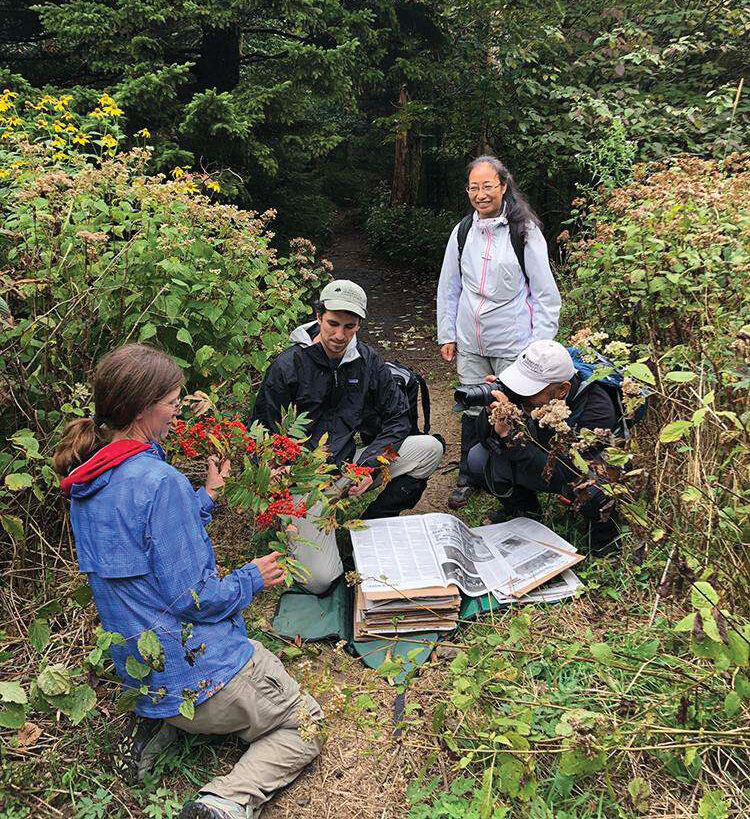
2019 NACPEC Appalachian Expedition Team collecting herbarium specimens of a Sorbus americana along the Appalachian Trail in Tennessee. L to R: Angela Magnan, Jared Rubinstein, Gao Xinfen, and Wang Kang. Photograph by Andrew Gapinski
Sharing Knowledge
With NACPEC’s thirty-five years of activity, the organization has amassed a significant number of records, archival items, and experiences in the field. A natural result of this knowledge accumulation is an interest in sharing stories and lessons learned through speaking at conferences, writing articles, and celebrating plants within the landscape. Over the next five years, NACPEC will continue to seek ways to share its accumulated knowledge and make this information more accessible.
The two-year NACPEC archival project has taken substantial steps toward making information about the consortium more broadly available. This includes the development of a website that will provide information about the consortium with links to various collections such as the NACPEC metacollection database; scanned archives and photos housed in Harvard University’s library portal (Hollis); plant occurrence data in iNaturalist and the Global Biodiversity Information Facility; as well as records of consortium protocols, archival standards, field methods, by-laws, and publications. Having this information centralized on a public platform will continue to increase NACPEC’s visibility and provide a greater depth of resources for members and those interested in the consortium’s activities. The consortium also has an interest in finding more opportunities for internal knowledge sharing, particularly related to the horticultural practices of growing, propagating, and maintaining NACPEC collections.
Finding opportunities to publish NACPEC activities and present at conferences will continue to be important in reinforcing the work of the consortium. NACPEC should target opportunities to present at venues such as the American Public Garden Association annual conference, Botanic Garden Conservation International’s global botanic congress, and relevant horticultural and plant-biology conferences. Finding opportunities within China to present on NACPEC activities should also be targeted. With thirty-five years of experience, NACPEC offers a model for international collaboration, and should use its platform to advocate for responsible plant exploration within the botanical, horticultural, and public-garden communities.
Conclusion
Thirty-five years of NACPEC activities, and an openness to evolution, has prepared the organization for the complex moment we find ourselves in. As we face the global biodiversity-loss crisis and climate change, the need for plant exploration in support of conservation is larger than ever. At the same time, changes in geopolitics are making fieldwork and collaboration more challenging than in the past. Despite these headwinds, NACPEC stands poised to make unique contributions to conservation and the discipline of plant exploration by demonstrating a collaborative model for botanical scholarship. The paradigm for NACPEC activities will undoubtably shift over the next five years in response to these current realities. Staying focused on the organization’s mission, along with a newly identified set of core priorities, will enable NACPEC to continue its critical work and demonstrate the power of collective action around a core vision.
Miles Schwartz Sax is the assistant curator of living collections at the Arnold Arboretum and the current chair of NACPEC.
References
Cano, Á., Powell, J., Aiello, A. S., Andersen, H. L., Arbour, T., Balzer, A., … & Brockington, S. F. (2025). Insights from a century of data reveal global trends in ex situ living plant collections. Nature Ecology & Evolution, 9(2), 214-224.
Capik, J. M., & Molnar, T. J. (2012). Assessment of host (Corylus sp.) resistance to eastern filbert blight in New Jersey. Journal of the American Society for Horticultural Science, 137(3), 157-172.
Friedman, W., Dosmann, M., Boland, T. M., Boufford, D., Donoghue, M. J., Gapinski, A., & Pfister, D. (2016). Developing An Exemplary Collection: A Vision For The Next Century At The Arnold Arboretum Of Harvard University. Arnoldia. 73 (3), 2-18.
Global Partnership for Plant Conservation (2025), The Global Strategy for Plant Conservation 2020-2030. Botanic Gardens Conservation International (BGCI), London, UK
He, S. 2010. Sharing and Enjoying the Joint Botanical Expeditions. Arnoldia, 68(2): 12–15.
He, S. 1998. Summary of 1998 Tsuga Expedition. North America-China Plant Exploration Consortium (NACPEC) Papers, III.B.1, Box 6; Folder 11; Item 4. Arnold Arboretum Archives.
He, T., Zhou, Z., Dong, H., Yuan, L., Guo, L., Wang, Y., … & Ren, H. 2026. China’s National Botanical Gardens: An innovative model to support global biodiversity conservation and sustainable development. Plant Diversity, 48(1), 219.
Hughes, K. 2025. An investigation into the components of conservation horticulture projects. Sibbaldia: the International Journal of Botanic Garden Horticulture, 24(24).
Kim, K., Backtell, K., Wang, K. (2010). Planning Future NACPEC Plant Exploration: Challenges and Opportunities. Arnoldia. 68(2): 40–47; Lee 1991; Zale et al. 2025