For more than a century, the Arnold Arboretum of Harvard University has been connected to the plants and landscapes of Korea through exploration, scientific study, and international collaboration. Beginning in the early 1900s, Arboretum botanists traveled to the Korean Peninsula to document its flora and introduce new plants to cultivation in North America, creating collections that continue to support scientific study, horticulture, and conservation.
Among the most remarkable legacies of this work is that of Arnold Arboretum plant explorer Ernest Henry Wilson and his photographic record of Korea in 1917 and 1918. His images of plants, landscapes, architecture, and everyday life remain one of the most extensive visual records of the Korean Peninsula created by a Western scientist during the early twentieth century.
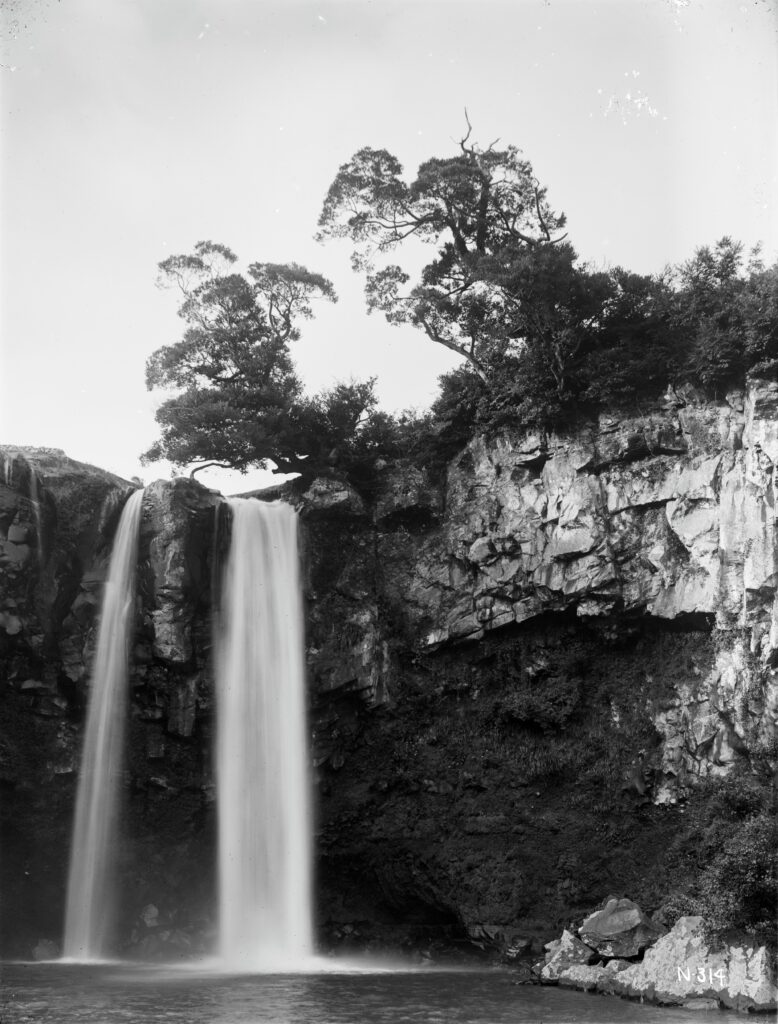
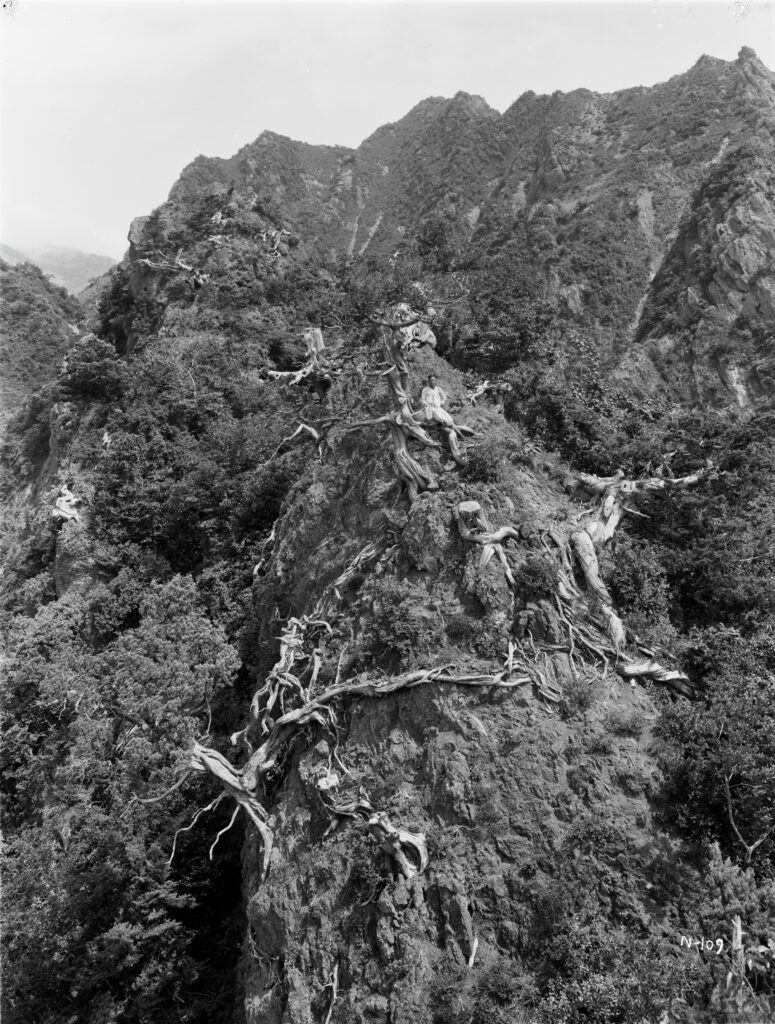
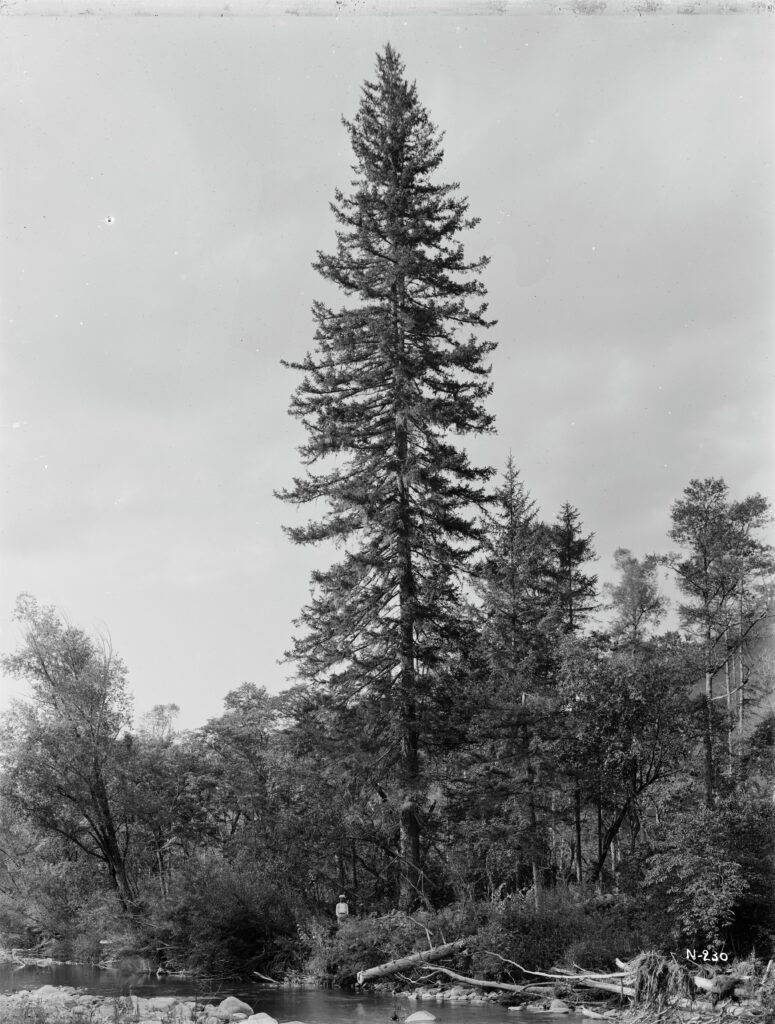
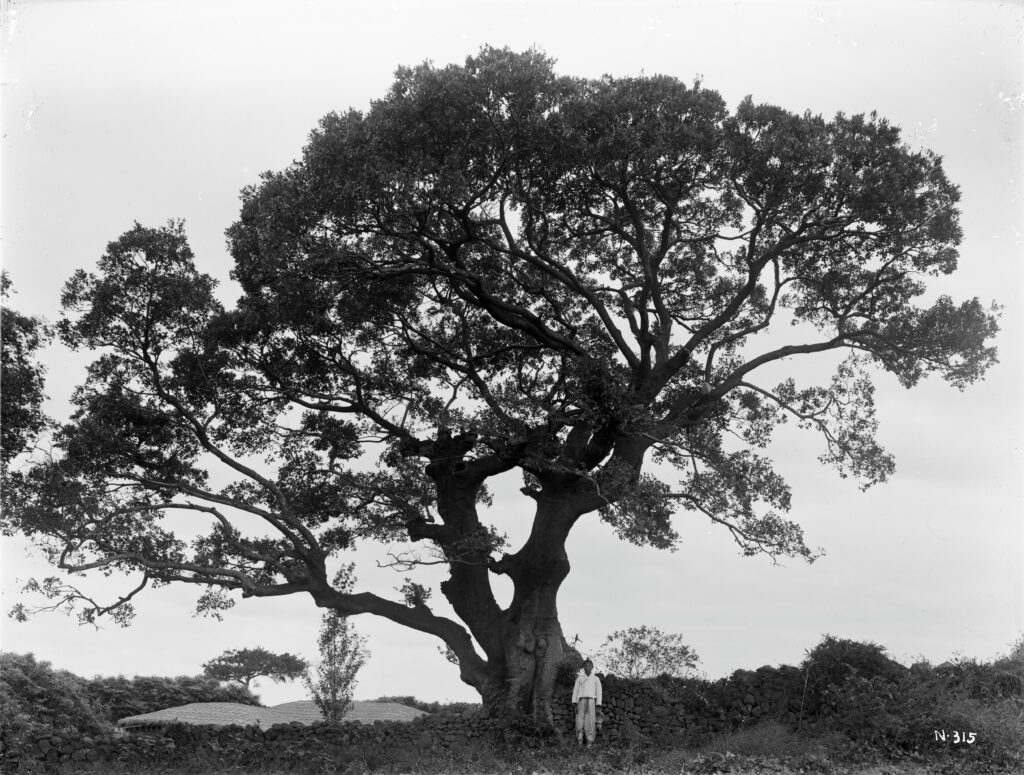
The Arnold Arboretum continues to conserve and maintain native Korean plants, and to preserve the historical records and photographs that form the basis of this exhibit. Together, these collections form a record of more than a century of scientific discovery, cultural change, and international collaboration, connecting past exploration with ongoing efforts to study, conserve, and better understand the botanical heritage of Korea and the world.
Why Korea?
By the early twentieth century, botanists and plant collectors at the Arnold Arboretum were looking to temperate East Asia for hardy woody plants suited to cultivation in New England.
Arboretum scientists recognized that Korea shared many climatic conditions with the northeastern United States and that it could be an important source of hardy trees and shrubs adapted to our cold winters and warm summers. Western botanists knew relatively little about Korea’s flora however, making the peninsula especially promising for botanical exploration and plant collecting.
Many plants collected during these expeditions remain in the Arboretum’s living collections today. Visitors can explore selected Korean species and their stories through Expeditions, the Arboretum’s mobile guide.


Timeline of Korean History
Korea in an Age of Imperialism
Korea experienced extensive foreign intervention at the end of the 19th century and into the first decade of the 20th century. Korea officially “opened” its doors to foreigners after signing its first unequal Western-style treaty with Japan in 1876, followed by one with the United States in 1882. However, Korea soon became the site of imperial competition, which seriously hindered its efforts to modernize. Japanese influence in Korea increased during the Russo-Japanese War of 1904-1905, which was partially fought on Korean territory. They orchestrated the assassination of Queen Min in 1895 and the forced abdication of Emperor Gojong in 1907. Ultimately, Japan’s growing ambition to become an imperial power resulted in Korea losing its independence in 1910.
Japanese Colonial Rule
Korea was under Japanese occupation. The Government-General of Korea repressed the Korean people and their culture. Cultural objects were destroyed or taken, the teaching of the Korean language was banned, and Koreans were forced to adopt Japanese style names. During World War II, the Japanese government conscripted Koreans and exploited their resources for its total war efforts, subjecting them to atrocities and poverty.
Liberation and Division
At the end of World War II, Korea was liberated from Japanese rule and divided into North and South. The Soviet Union administered the North, and the United States administered the South until separate governments were established in 1948.
Korean War
War between North and South Korea drew in international forces, with the United States supporting South Korea and China and the Soviet Union supporting North Korea. The conflict devastated much of the peninsula. An armistice in 1953 established the Demilitarized Zone (DMZ), which continues to separate the two countries.
A Divided Peninsula
North and South Korea remain divided. North Korea became a hardline totalitarian Communist society with a repressive hereditary leadership noted for its human right abuses towards its own people.
Following the cessation of hostilities, South Korea was ruled by a succession of autocratic governments. Civil unrest demanding democratization erupted at various times until 1987, culminating in the June Democratic Struggle which resulted in democratic elections. Since establishing a democratic society, South Korea has grown into a thriving economy and become the epicenter of global pop culture.
Early Expeditions
Early expeditions laid the foundation for the Arboretum’s later work in Korea.
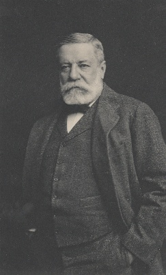
1903 — Charles Sprague Sargent
During his travels in Korea, Arboretum Director Charles Sprague Sargent recognized that the peninsula’s climate and flora made it a promising source of hardy plants for cultivation in New England. Sargent’s trip to Asia was one leg of an around the world voyage he took with his son and naturalist John Muir.
“Not much is known here of the flora of Korea, and only a few Korean plants are growing in the Arboretum, but these have proved so successful that it has seemed desirable to undertake a systematic exploration of Korea.”
— Charles S. Sargent, 1916-1917 Report to the President of Harvard University
Photo: Studio Portrait of Charles S. Sargent, ca. 1900.
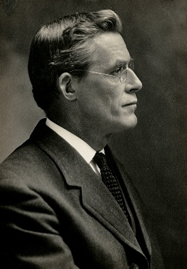
1904 — John George Jack
As part of a larger trip through eastern Asia, Arboretum botanist John George Jack spent several weeks in Korea botanizing near Seoul 서울 and Pyeongyang 평양. Along with collecting seeds and herbarium specimens, he photographed the plants, landscapes, and people he encountered. He could not travel more widely in the country because the Russo-Japanese War had not been concluded. Jack’s expedition established some of the Arboretum’s earliest Korean plant collections and photographic records.
“In 1905, Mr. J. G. Jack... was in the Orient and visited Korea... he sent back seeds and living material of quite a number of plants which have proved to be of exceptional interest and value.”
— Ernest H. Wilson
Photo: Studio Portrait of John G. Jack, 1904.
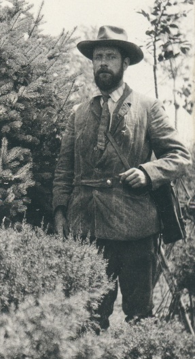
1906 — Frank Nicholas Meyer
During a thirteen-year collecting campaign across temperate Asia, Frank Nicholas Meyer gathered economic plants for the USDA and ornamental plants for the Arnold Arboretum. In 1906, he traveled through northern Korea, collecting plants and documenting landscapes in regions that Ernest Henry Wilson would later explore more extensively.
Meyer’s collections expanded the Arboretum’s knowledge of Korea’s flora and created important records of the peninsula’s landscapes in the early twentieth century.
Photo: Frank Nicolas Meyer in the Field, 1907. This photograph of Meyer was taken in Fengtai near Beijing, China.
Ernest Henry Wilson
Wilson hailed from England and had trained at the Royal Botanic Gardens, Kew. He first traveled to China to collect for the Veitch Nursery company in 1899 and 1903, where he collected seed from the Dove Tree (Davidia involucrata), Meconopsis, and other ornamental species. He returned to China in 1907-1909 and 1910-1911 in the employ of the Arnold Arboretum. He explored Japan in 1914. During all his Arboretum expeditions he photographed extensively.
His highly successful 1917–1919 expedition to eastern Asia took Wilson to Japan and Taiwan, but he spent the bulk of his time in Korea. He ranged widely across the Korean Peninsula, often on foot and through difficult terrain. He collected plants, photographed landscapes, and recorded his observations through detailed field notes. He created a comprehensive visual and botanical record of Korea during a period of profound political change. His images also preserve rare views of landscapes and communities that have since changed dramatically or are now difficult to access. Many sites are in present-day North Korea, while others, including the monasteries of the Diamond Mountains, have been significantly altered or destroyed. Today, these collections, photographs, and archival materials continue to inform research and are still being studied and reinterpreted.
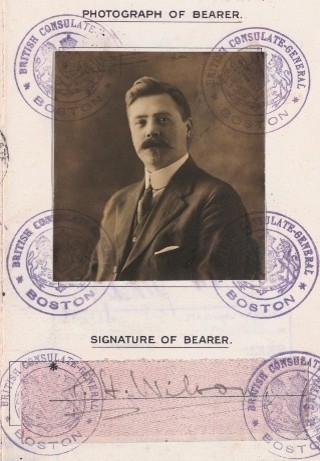
Ernest Wilson’s Passport Photograph, 1916
This photograph is a detail from Wilson’s British passport issued in Boston in 1916. As was the practice in the period, the passport also included his wife Ellen, who was traveling with him. Their daughter Muriel joined them as well. His family did not accompany him into the field except for a trip in October 1918 to see the fall color and beautiful landscapes of the Geumgang Mountains 금강산.
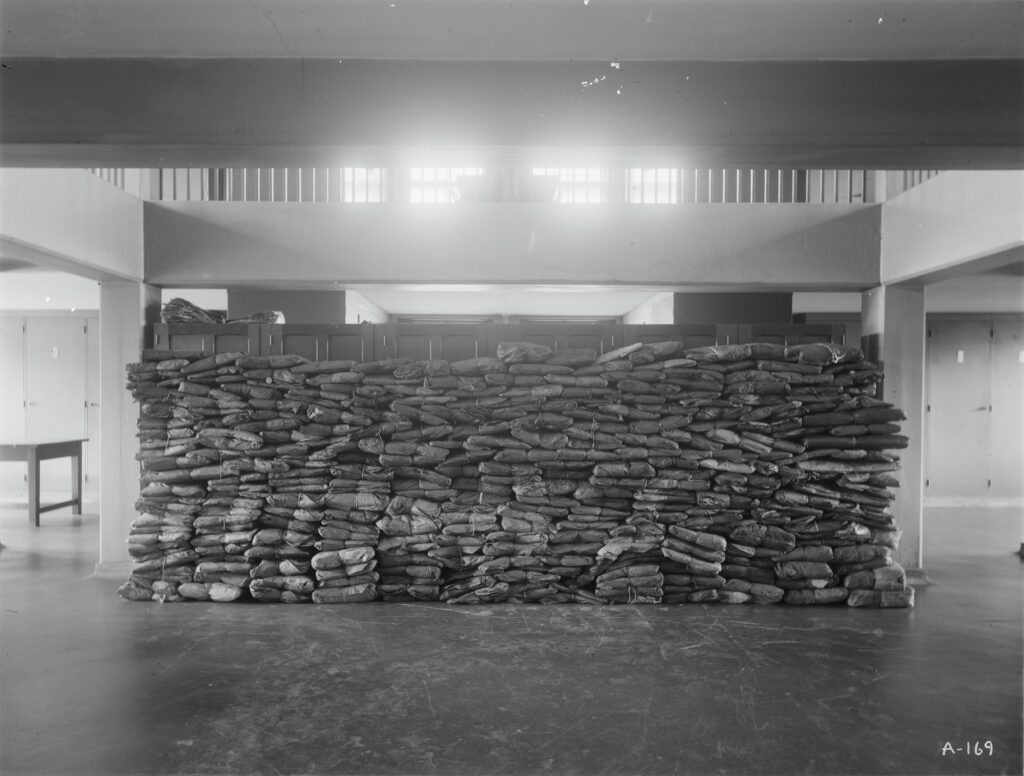
Wilson’s Herbarium Specimens, April 1919
Ernest Wilson’s collection of herbarium specimens made in Korea and Taiwan during 1917 and 1918 displayed in the first floor atrium of the Hunnewell Building.
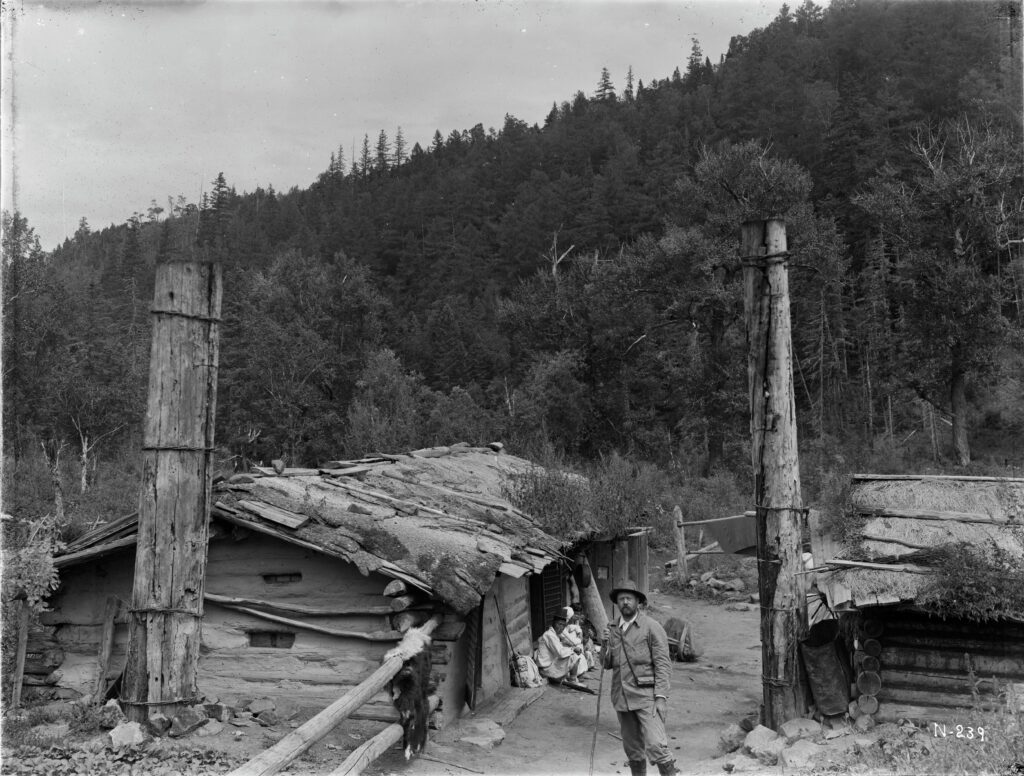
Ernest Wilson in the Field, August 1918
Ernest Wilson stands in the foreground walking stick in hand. Behind him, Korean people sit by the entrance to an inn at Deokrip-dong. The tall columnar structures on either side of Wilson are beehives.
Modern Location: Deokrip-dong, Musan-gun, South Hamgyong Province 함경남도 무산군 덕립동, North Korea.
Wilson’s Expedition at a Glance
- Documented nearly all known Korean woody plant species
- Collected about 4,000 herbarium specimens
- Took nearly 300 photographs
- Collected seeds from 112 species
Wilson’s Exploration Routes
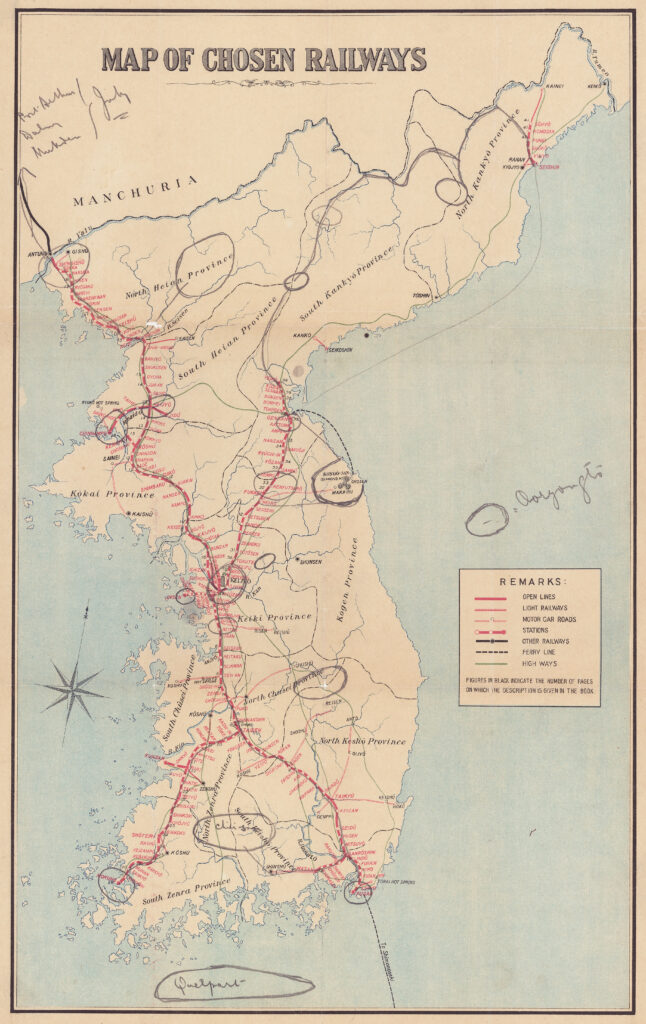
Wilson made use the growing railway system during his sojourn in Korea, however much of his traveling, especially in the far north of the country, was done on foot. This map with his notations is preserved in the Arboretum Archives.
“Since my arrival in Korea on May last, I am surprised to find that I have travelled nearly ten thousand miles! On a sketched map enclosed I crudely outlined in pencil the principal districts visited in. Every place was visited with some special object to view and in addition to abundant material the Expedition has obtained very complete information on the geographical distribution of the woody plants in Korea.”
— Ernest Henry Wilson, December 1917
Photo: Map of Korean Railways, ca. 1917. Wilson penciled in his collecting routes during 1917-1918 on this commercially printed railway map.
Under Colonial Rule
Wilson’s expedition took place during Japanese colonial rule of Korea (1910–1945), when scientific research was controlled by Japanese colonial authorities. His movements through Korea depended on access and assistance provided by Japanese officials, shaping where he could travel and with whom he worked. Under these same conditions, Korean assistants and guides contributed to the expedition but had limited authority and were not given the same recognition or autonomy as Japanese scientists.
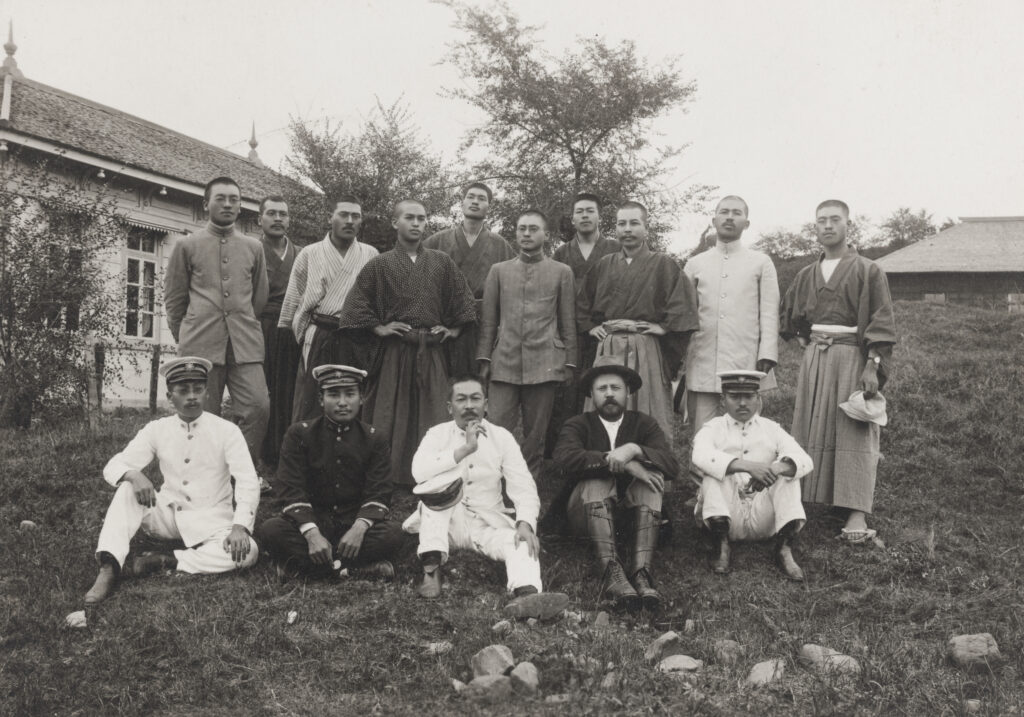
Ernest Wilson and Japanese Officials, 1917
The Japanese sought to exploit the rich timber resources they found in Korea to replenish the dwindling supplies in Japan and logged in many areas, especially in the north of the country near the Amnok (or Yalu) River 압록강 (鸭绿江). Repressive forestry laws were enacted to keep Koreans from accessing traditional forest resources.
The Colonial Forestry Department conducted research at several experimental stations, one of which was overseen by forest researcher Ishidoya Tsutomu 石戸谷勉. The Japanese realized that reforestation efforts needed to occur to replenish forests which had been logged, but Wilson complained, “They are very keen on reafforestation but have an unfortunate penchant for Japanese and exotic trees,” rather than reforesting with native Korean species.
Photo: Wilson (seated second from right) posed with Japanese Forestry officials in Korea in 1917.
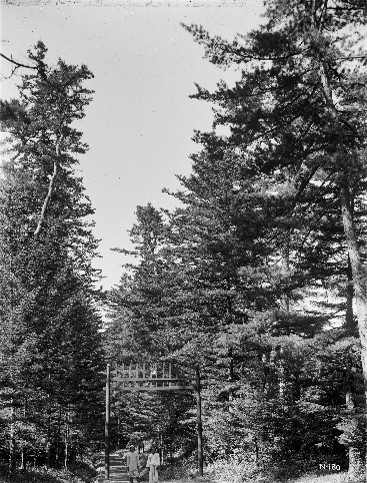
Hongsalmun Gate at Gwangneung 광릉 at the Tomb of King Sejo of Joseon 세조, July 1917
Ishidoya was a forest researcher who came to Korea in 1911 after his graduation from the Sapporo Agricultural College in Hokkaido, Japan. He realized through his research in the laboratory and in observation in the field that the colonial practice of using non-native trees to reforest Korea was misguided and that indigenous Korean species should be used instead. He was an early advocate of what has come to be known as forest ecology. He felt that forests were living systems made up of many parts which relied on the other parts for their survival. He criticized Japanese botanist Nakai Takenoshin for his heavy reliance on dried plant specimens for determining new species without field observations of the plants in the native habitats.
When Ishidoya came to Korea, he was convinced of the necessity of modernization and civilization of Korea by Japanese colonization. He gradually became disillusioned by the goals of Japanese Imperial science and denigration of indigenous Korean knowledge. This caused him to leave his post at the Forestry Research Institute in the 1920s and devote himself to the study of historical Korean materia medica publications.
Modern Location: Gwangneung, Gyeonggi Province 경기도 광릉, South Korea.
Photo: Ishidoya Tsutomu 石戸谷勉 (left) and a Korean man (right) stand at the entrance gate to the Gwangneung 광릉 Royal Tombs. Korean pines, 잣나무 Jat-na-mu (Pinus koraiensis), and needle firs, 전나무 Jeon-na-mu (Abies holophylla), line the avenue.
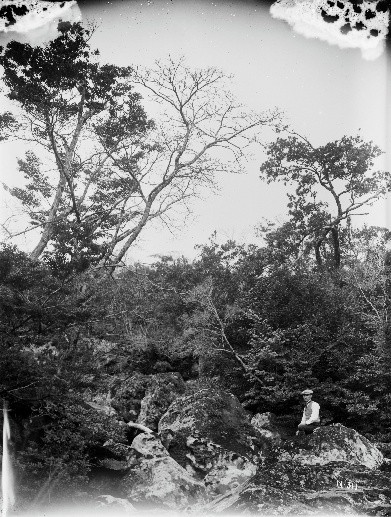
Nakai Takenoshin 中井 猛之進 in a Forested Landscape, November 1917
Dr. Nakai, a Japanese botanist, was an expert on Korean plants and published a comprehensive flora of the country. He identified many new species. However, Wilson criticized him sharply for his lack of discernment in naming taxa, saying, “He seems to have no real conception of what constitutes a species, and one might reasonably believe from his work that he holds the view that everything was fixed at the creation except the label”. Nakai accompanied Wilson to Jeju and Ulleung Islands and assisted throughout his expedition in Korea.
Nakai has a problematic story. He believed deeply in the Japanese Imperial mission to colonize and “civilize” Korea. As a result, he regarded Korean botanists and field collectors with distain, despite using the materials they collected to determine new taxa. Many of the taxonomic names he assigned to plants were later invalidated by other botanists.
Modern Location: Jeju Special Self-Governing Province 제주도, South Korea.
Korea Through Wilson’s Eyes
Wilson’s photographs, specimens, and field notes have been preserved at the Arnold Arboretum for more than a century. In recent years they have been digitized and placed online through Harvard Library resources. These materials are valuable not only to Arboretum researchers, but also to scholars and institutions in Korea. Together, they document plants, landscapes, architecture, and cultural history during a period of profound political and social change.
Many of the places Wilson photographed are located in what is now North Korea, where outside access is highly restricted. Some landscapes, including the Geumgang or Diamond Mountains (Geumgangsan), have also been significantly altered since Wilson’s visit. As a result, his photographs provide rare visual records of landscapes and communities that have changed dramatically or can no longer be easily studied.
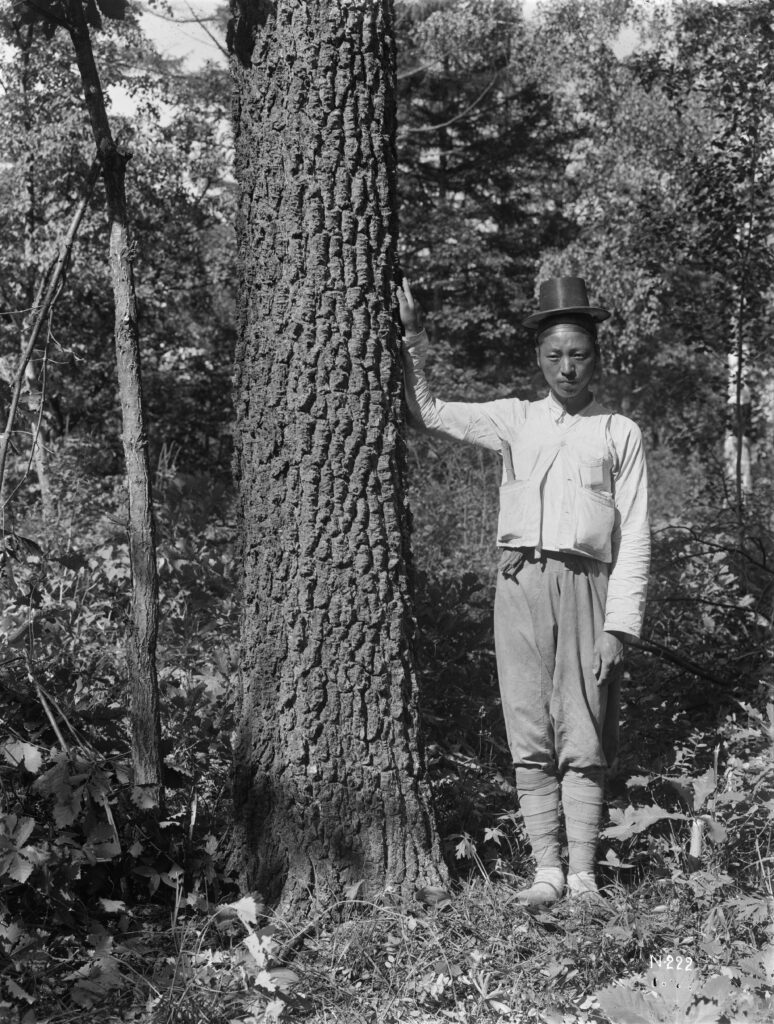
The Arboretum Returns to Korea
After Wilson’s expedition, the Arboretum’s fieldwork in Korea paused for nearly six decades. Japanese colonial rule, World War II, the division of Korea, and the Korean War dramatically altered the political and logistical conditions for scientific exploration on the peninsula. By the 1970s, Arboretum botanists recognized that Korea remained relatively underexplored by American plant collectors, prompting the Arboretum’s return in 1977.
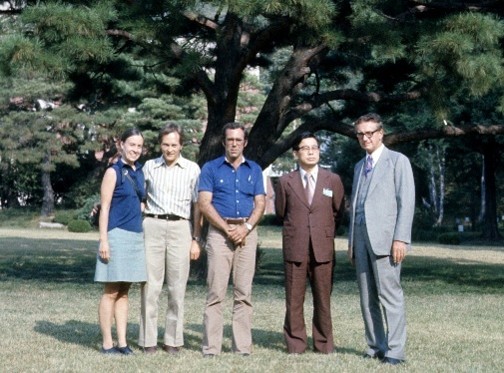
1977 — Stephen A. Spongberg and Richard E. Weaver
In 1977, Arboretum botanists Spongberg and Weaver traveled to South Korea and Japan, marking the Arboretum’s return to fieldwork in Korea for the first time since Wilson’s expedition nearly sixty years earlier. The expedition sought to re-establish the Arboretum’s connections to East Asian flora through field study, plant collecting, and scientific exchange. During their travels, Spongberg and Weaver visited Chollipo Arboretum and collaborated with its founder, Carl Ferris Miller (also known by his Korean name Min Byung-gal 민병갈), helping strengthen scientific and horticultural exchange between Korea and the United States. Some of the wild collected hemlock plant material sent to the Arboretum from Chollipo in 1983, was later identified as Tsuga ullengensis, a new species.
Photo: 1977 Expedition Team and Friends. (left to right) Harmony Spongberg, Stephen Spongberg, Richard Weaver, Shim Heung-soo (Deputy Director of the Forestry Research Institute of the Korea Forest Service 산림청), and Carl Ferris Miller visiting the Hongneung Arboretum 홍릉수목원.
Location: Seoul Special Metropolitan City 서울, South Korea
2008 — Peter Del Tredici
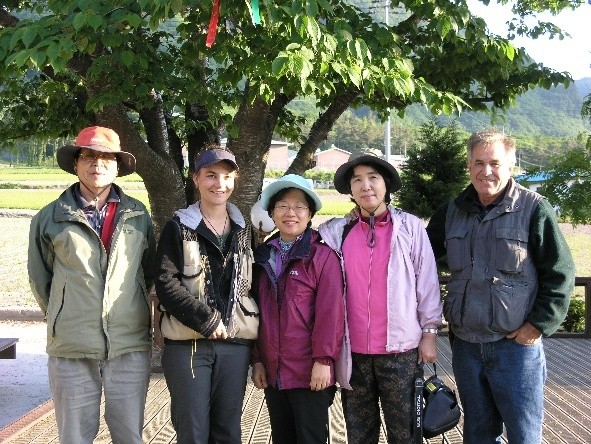
In 2008, Arboretum Senior Research Scientist Emeritis Peter Del Tredici, traveled to Ulleung Island in the East Sea, known for its distinctive flora and high levels of plant endemism. His visit focused on studying the newly recognized Ulleungdo hemlock (Tsuga ulleungensis), a species closely related to eastern North American and East Asian hemlocks. The new species was identified through DNA analysis from wild collected plant material sent to the Arnold in 1983 from the Chollipo Arboretum. The trip helped strengthen scientific relationships between the Arnold Arboretum and South Korean researchers.
Photo: Ulleungdo Hemlock Team, 2008. (left to right) Suk Su Lee, Ashley Lamb, Nam Sook Lee, Sung Hee Yeau, Peter Del Tredici
Location: Ulleungdo, North Gyeongsang Province 경상북도 울릉도, South Korea
2024 & 2025 — Michael Dosmann and Chris Copeland
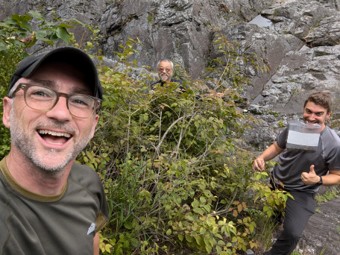
In 2024, Arboretum Keeper of the Living Collections Michael Dosmann and Propagator Chris Copeland led the Arnold Arboretum’s first large-scale collaborative collecting expedition to South Korea since 1977. Working with colleagues from Sungkyunkwan University, Seoul National University, Mokpo University, Chollipo Arboretum, and other partner institutions, the team documented plant diversity and collected seeds, herbarium specimens, and field records from sites across the country.
Dosmann returned in 2025, expanding collaboration with South Korean scientists, including researchers from the Korea National Arboretum. Together, these expeditions supported the Arboretum’s Campaign for the Living Collections by documenting and collecting rare, endemic, endangered, and horticulturally significant species for long-term study, conservation, and cultivation.
Photo: The Collecting Team in the Field, 2024. (left to right) Michael Dosmann, Seung-Chul Kim from Sungkyunwan University, and Chris Copeland.
What’s in a Plant Name?
Plant names carry more than biological information—they also reflect history, and often its biases.
During the Japanese colonial period, some Korean plants were recorded using Japanese place names, and some Korean botanists worked and published under Japanese names imposed by colonial policies. These naming practices reflect the political conditions under which scientific work took place at that time.
Today, researchers are revisiting historical collections and records to restore original Korean place names, recognize the contributions of Korean botanists, and better document the histories connected to Korea’s plant life. This work helps ensure that botanical records more accurately reflect the people, places, and scientific contributions associated with Korea’s flora.
For South Korean institutions and researchers, these efforts are also part of a broader commitment to understanding, conserving, and stewarding Korea’s botanical heritage.
Reclaiming Stewartia 노각나무 for Korea
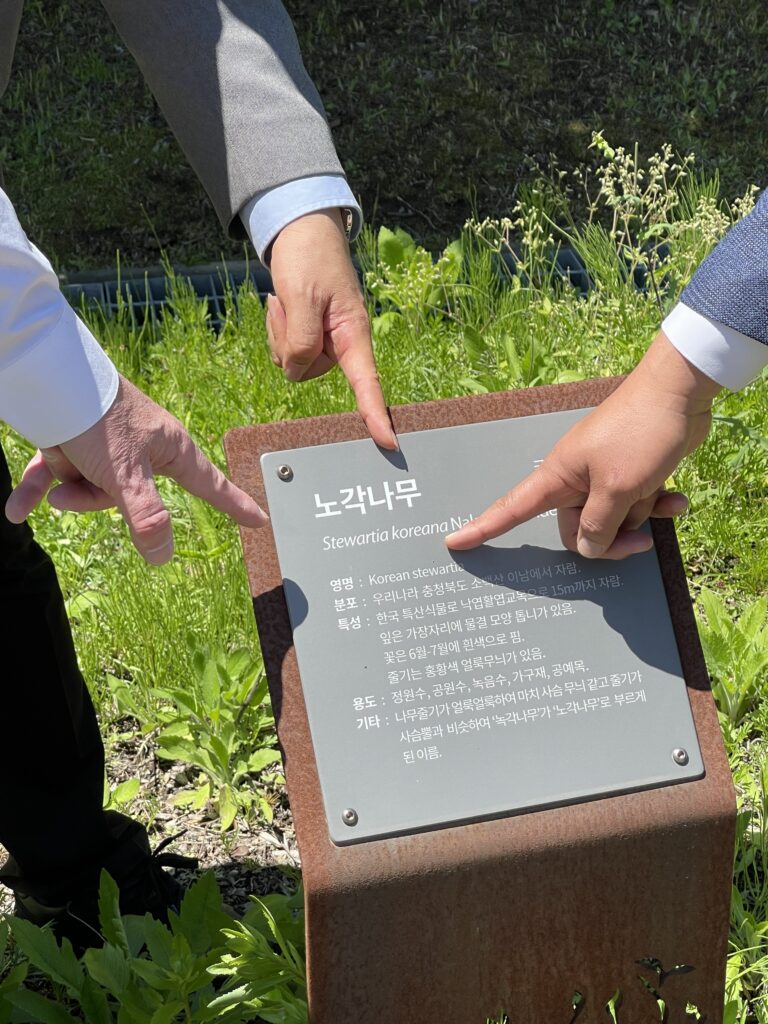
As part of their efforts to reclaim Korean plants from a colonialist past, botanists at the Korea National Arboretum (KNA) have worked to have the form of Stewartia pseudocamellia which grows in Korea recognized and have adopted the name Korean Stewartia for plants of that species which grow in their country.
Korea National Arboretum and Arnold Arboretum leaders point at a sign for Stewartia pseudocamellia, May 2024
Note the tree’s common name, Korean Stewartia (formerly Japanese Stewartia) No-gak-na-mu노각나무. The Korean form of this tree has differences from Stewartia of the same species from elsewhere in Asia. KNA botanists have adopted this new name to signify a break from colonialist naming practices of the past.
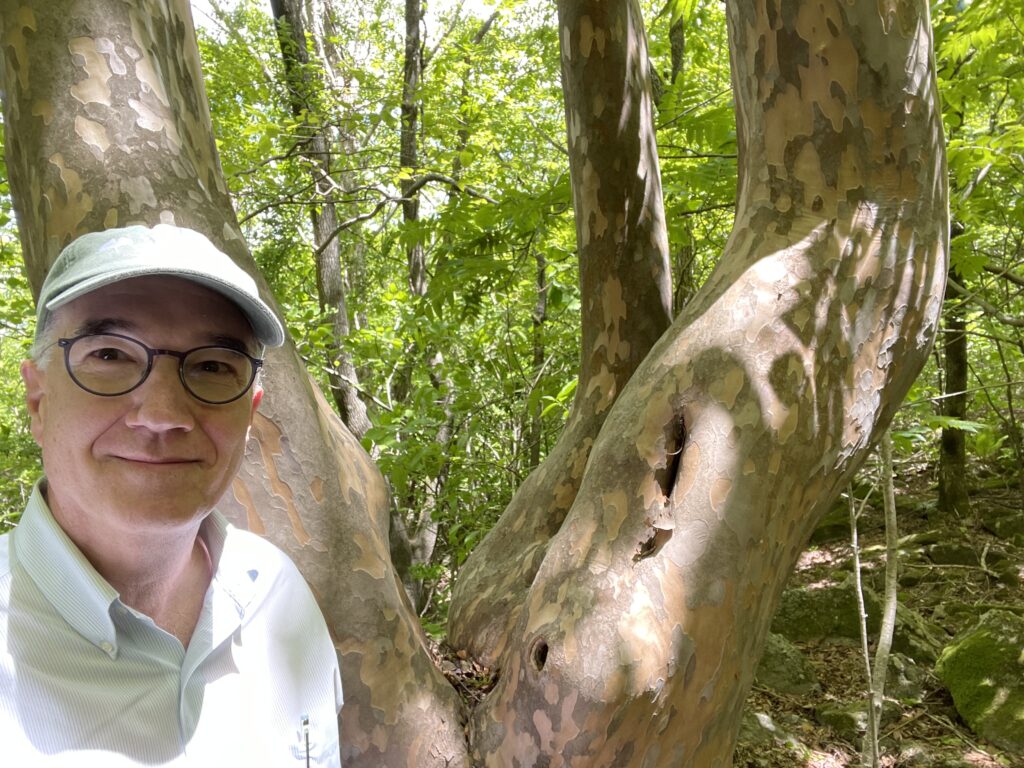
William (Ned) Friedman Beside a Korean Stewartia 노각나무, May 2024
Arboretum director Friedman visited Mount Jiri in 2024 and observed Stewartia pseudocamellia, No-gak-na-mu 노각나무, in the wild.
Location: Mount Jiri, South Gyeongsang Province 경상남도 지리산, South Korea
A Name Restored: Jeong Tae-hyeon 정태현
Jeong Tae-hyeon (also transliterated as Chung Tyaihyon and Chung Taehyun) was one of Korea’s pioneering botanical scientists. He was trained at the Suwon Agricultural and Forestry School and then worked at the Suwon forestry office on reforestation projects. He worked with Japanese botanist Nakai Takenoshin and acted as a logistics manager and translator for Nakai on his plant exploration trips in Korea. Jeong is shown on the far right in a group photograph taken in the field in 1917 during Wilson’s explorations of Ulleung Island.
As a result of the sōshi kaimei policies imposed by the Japanese occupiers, Koreans were forced to adopt Japanese style names. Jeong was compelled to adopt the name Kawamoto Taigen (河本台鉉) and was cited in the scientific literature as “T. Kawamoto,” “Kawamoto,” “Taigen,” or “Daigen.” This forced name change led to the misconception that Jeong’s work was actually that of a Japanese scholar. In 2025, the Korea National Arboretum announced an effort to restore Jeong Tae-hyeon’s Korean name to the academic literature and replace T. Kawamoto with T.H. Chung for the plants he named.
Im Youngsuk, former Director of the Korea National Arboretum, emphasized, “Restoring the name of Mr. Jeong Tae-hyun is a significant undertaking that goes beyond merely restoring the honor of a single scholar; it involves correcting distorted academic records and reclaiming our nation’s biological sovereignty.”
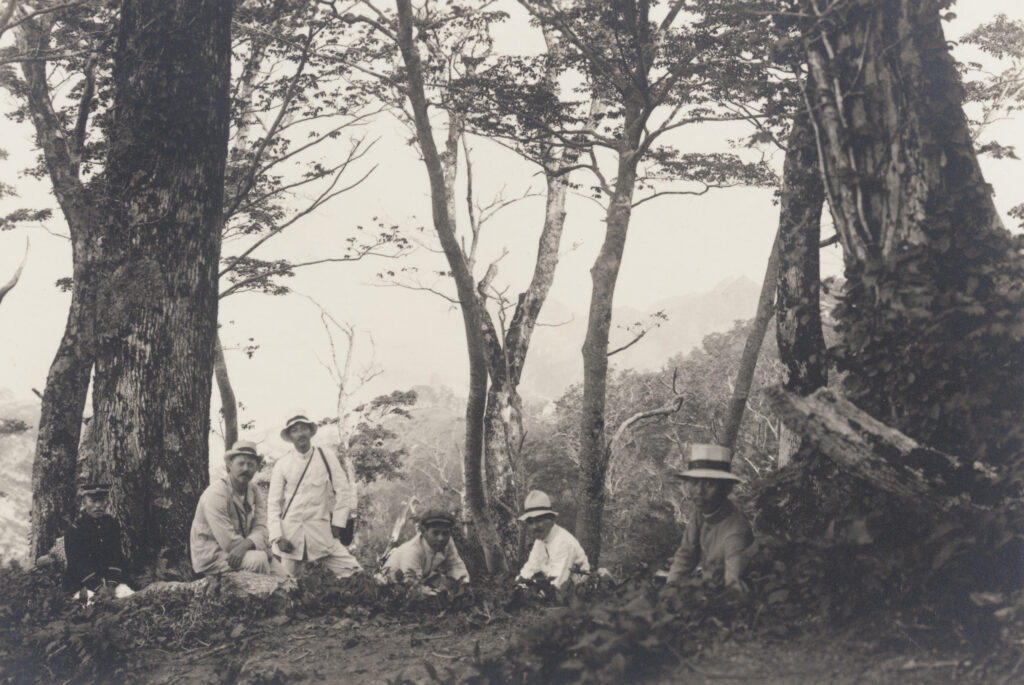
Ernest Wilson on Ulleung Island, May-June 1917
This photograph shows, from left to right, an unnamed forestry official, Wilson, Nakai Takinoshin 中井 猛之進, Mr. Morita (Wilson’s personal assistant), an unnamed forestry official, and Jeong Tae-hyeon 정태현.
Modern Location: Ulleungdo, North Gyeongsang Province 경상북도 울릉도, South Korea.
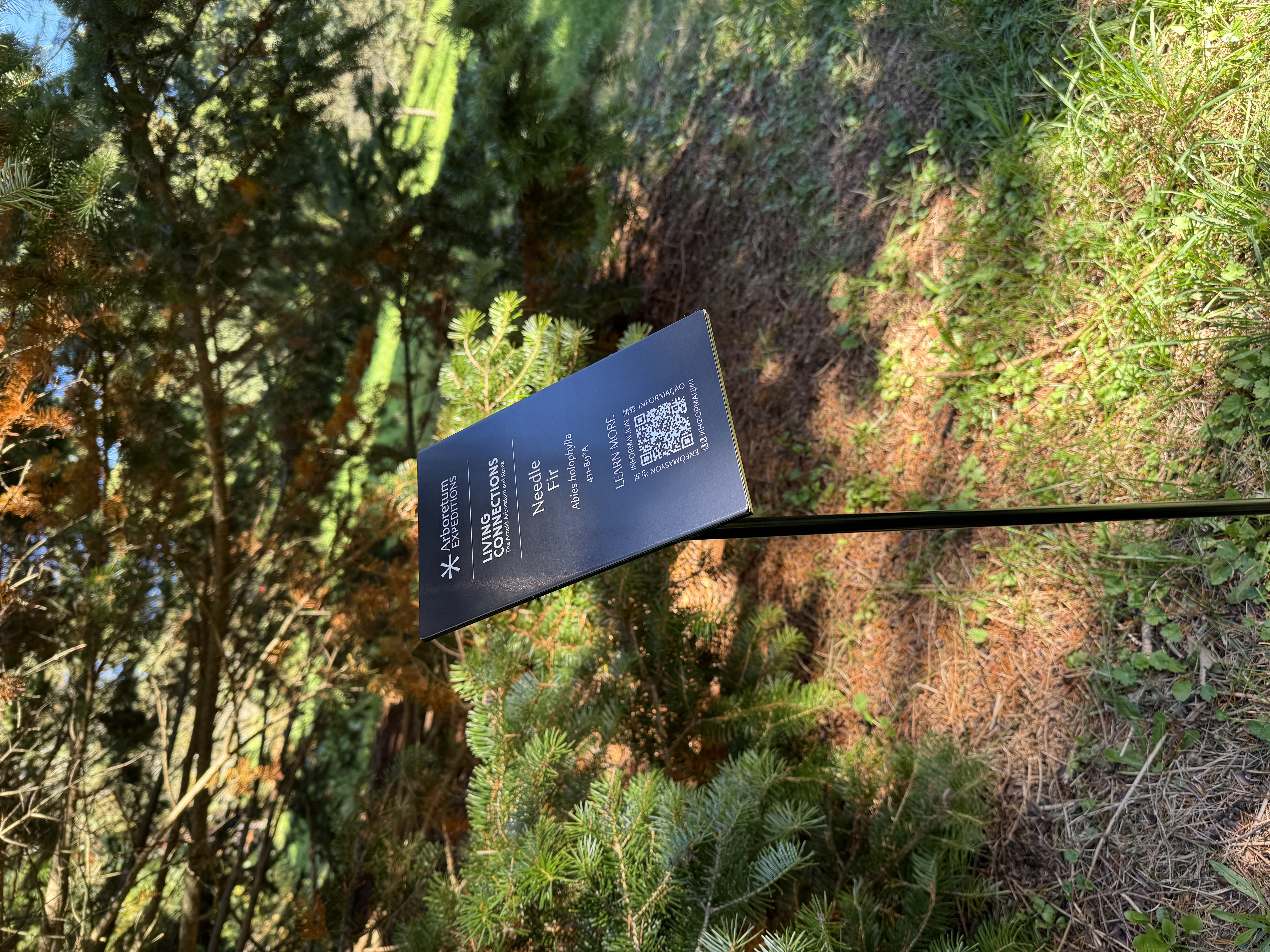
Living Collections
Plants collected during expeditions remain part of our living collections today. More than a century later, these plants provide a direct connection to the Arboretum’s history of exploration on the Korean Peninsula and serve as a valuable resource for conservation and study.
Since 2022, the Arboretum has shared plant material with the Korea National Arboretum 국립수목원, including plants originating from South Korea and present-day North Korea, where scientific collecting is now highly restricted. The Arboretum has also shared native North American woody plants with our Korean partners.
The locations of these plants may be discovered through our interactive web feature Arboretum Explorer and Expeditions, our mobile guide.
These plants create a direct connection to the Arboretum’s history of exploration on the Korean Peninsula and serve as a valuable resource for conservation and scientific study.
Growing Partnerships
The Arboretum’s relationship with Korea has changed considerably since the first collecting expeditions of the early twentieth century. Today, those longstanding connections continue through collaboration, reciprocal exchange, and shared efforts to study and conserve plant diversity.
In 2019, the Arnold Arboretum and Korea National Arboretum 국립수목원 formalized their partnership through a Memorandum of Understanding, followed by a collaboration agreement with Chollipo Arboretum 천리포수목원 in 2024.
These partnerships build on more than a century of connections between the Arboretum and Korea while creating new opportunities for exchange, research, and shared stewardship for the future.
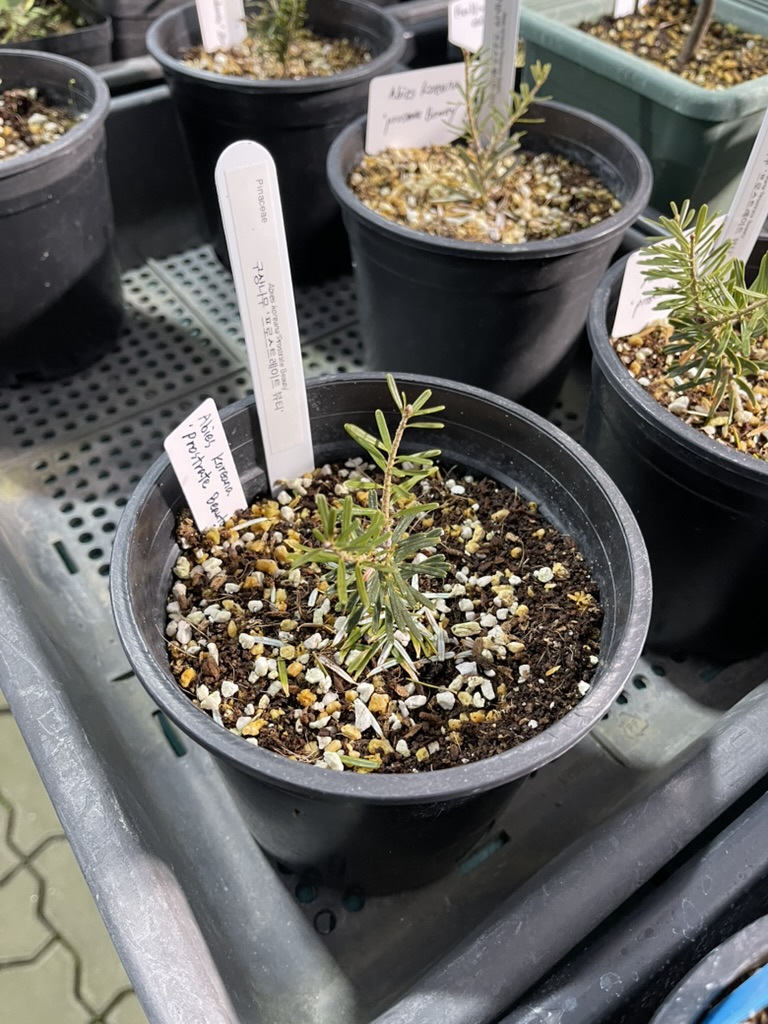
‘Prostrate Beauty’ Korean Fir 구상나무 Rooted Cutting, 2025
This Abies koreana ‘Prostrate Beauty’ 구상나무 Gu-sang-na-mu cutting, propagated from an Arnold Arboretum plant, was shared with the Korea National Arboretum 국립수목원.
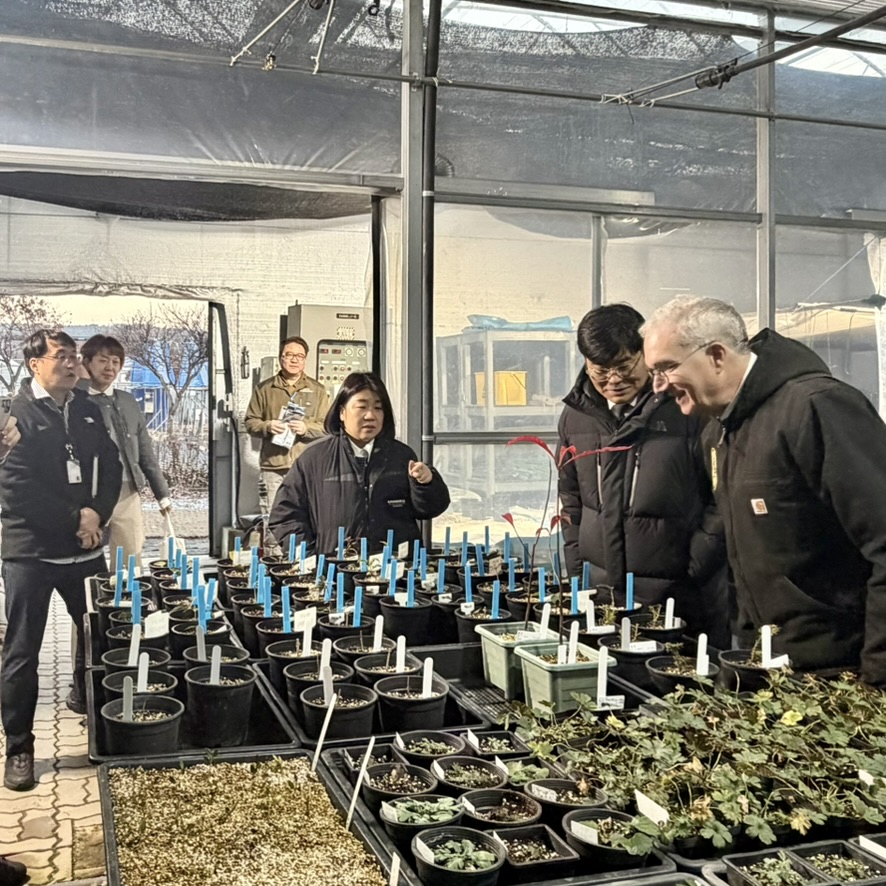
Arboretum Leaders Examining Plants, 2025
Arnold Arboretum Director William (Ned) Friedman (right) and Korea National Arboretum 국립수목원 former Director Im Youngsuk examine plants shared from the Arnold Arboretum at the Korea National Arboretum’s Useful Plant Propagation Center.
Location: Yangpyeong-gun, Gyeonggi Province 경기도 양평군, South Korea
Plant Diplomacy
These exchanges go beyond simply returning Korean plant material to its place or origin. It demonstrates how historic collections continue to support new scientific partnerships and help connect the Arboretum’s early work in Korea with its ongoing relationship with Korean institutions today.
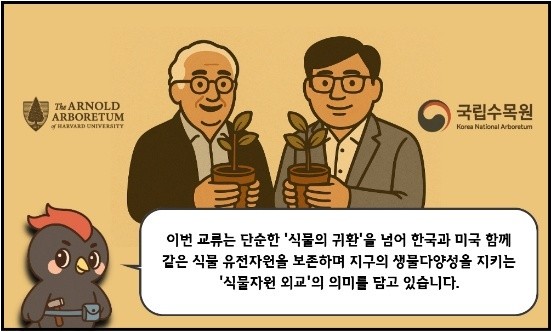
Plant Exchange Between Arboretum Leaders, 2025
Arnold Arboretum Director William (Ned) Friedman and Korea National Arboretum Director Im Youngsuk exchange plants in this cartoon. The caption below them says, “This exchange goes beyond a simple ‘return of plants’ and is a joint effort between Korea and the United States. Preserving the same plant genetic resources and protecting Earth’s biodiversity. It carries the meaning of ‘plant resource diplomacy’.”
This exhibition is sponsored in part by Leslie and Peter Ciampi. It is adapted from exhibitions originally presented by the Korean National Arboretum and later at the National Assembly of Korea.