
Some expeditions seem to come together effortlessly; others are years in the making. Back in February of 2020, Steve Schneider, former director of operations and public engagement at the Arnold Arboretum, approached Milan Mataruga, professor at the Faculty of Forestry, University of Banja Luka, to establish a collaboration to preserve Picea omorika, the Serbian spruce, a priority for the Arboretum’s Campaign for the Living Collections (Friedman, et al., 2016). Milan is an expert on Serbian spruce and has researched extant populations in his own country of Bosnia and Herzegovina (B&H) as well as those in the Republic of Serbia, the nation to the east. Just as Steve and Milan finalized arrangements for an expedition, all was postponed because of the COVID-19 pandemic.
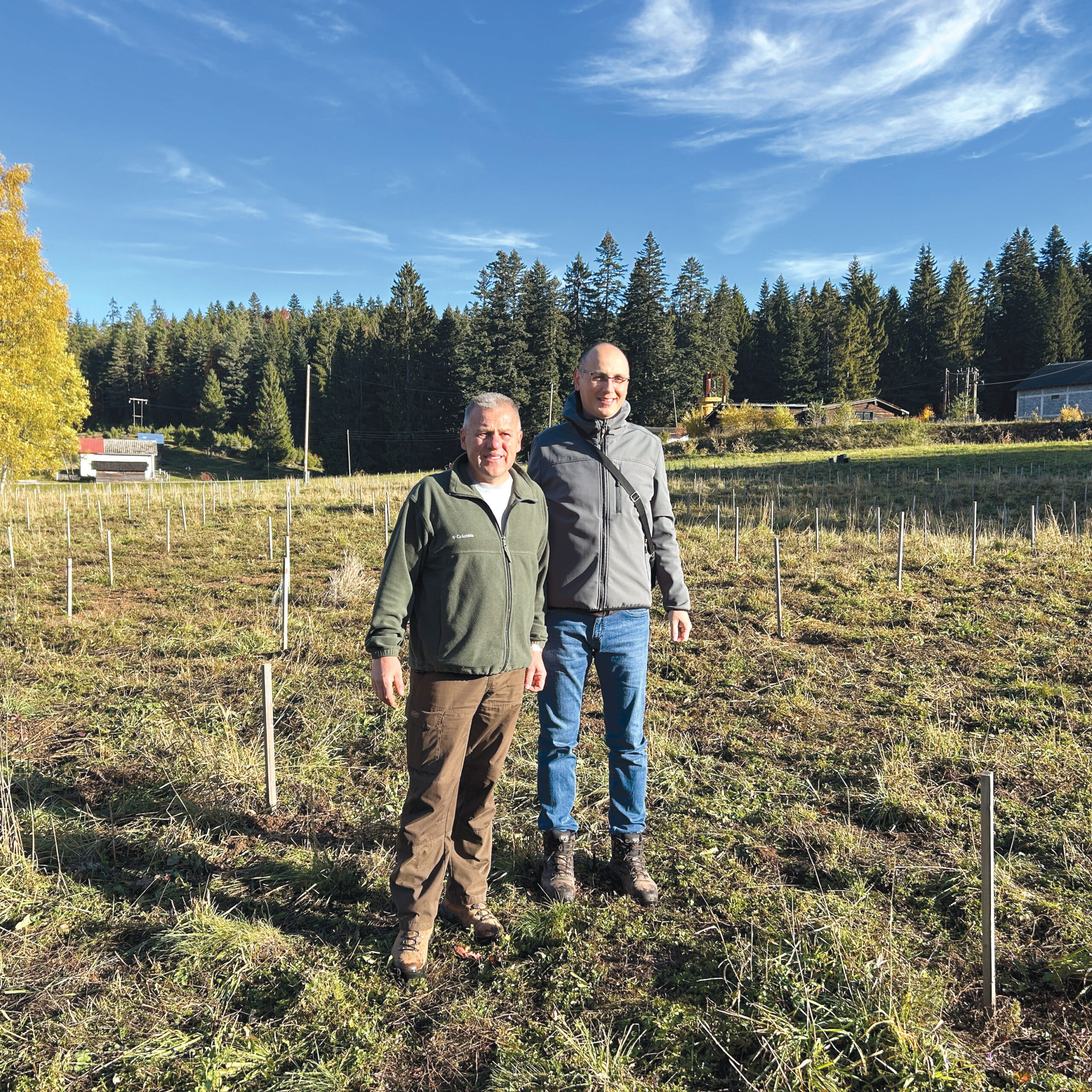
Five years later, in January, 2025, Michael Dosmann and Miles Schwartz Sax reached out to Milan to see if we could resume the collaboration. (Steve had since moved on to Northeastern University to oversee their arboretum.) It took almost ten months to organize a trip, but the efforts paid off. In October, 2025, the three of us, along with Branislav Cvjetković, also from the Faculty of Forestry, University of Banja Luka, spent five days in the field collecting cones from Serbian spruce trees in their natural habitat. During our hikes and our drives to and from the populations, we decided to tell the story of Serbian spruce, and our collaboration, particularly because 2025 was the sesquicentennial (150th) year of the tree’s discovery. A wonderful new book written by Milan about Picea omorika also celebrates this momentous anniversary.
Michael and Miles arrived in Sarajevo on October 20 where they met Milan and drove northwest to Banja Luka, through forested mountains radiant with the yellow glow of autumn leaves of European beech (Fagus sylvatica). Banja Luka is the second largest city in B&H and serves as administrative center for the Republika Srpska, one of the two confederations that govern B&H. All known populations of Picea omorika outside of Serbia occur on lands administered by the Republika Srpska.
The expedition team visited the University of Banja Luka the following morning to meet with students, faculty, and administrators. This included a formal meeting between Michael, Milan, and Miles with the University Rector, Radoslav Gajanin, and his senior staff, including Vojislav Dukić, Professor and Dean of the Faculty of Forestry. These meetings reflected the importance of this collaboration, to our knowledge the first between Harvard University and the University of Banja Luka. Michael and Miles gave an open lecture to students, staff, faculty, and other guests and local officials about the Arnold Arboretum, our plant exploration efforts, the importance of Picea omorika, and this specific collaboration. We held a final meeting with Jasna Milešević, the Director of the Institute for the Protection of Cultural, Historical, and Natural Heritage of the Republika Srpska. She was instrumental in helping us acquire the necessary collecting permits and permissions to access Serbian spruce sites.
With the formal meetings over, the team met up with Danijel Šurlan and Robert Ćuk, two arborists who would assist by climbing trees and collecting the cones, and departed Banja Luka that afternoon passing through Sarajevo and continuing east to the town of Rogatica, our base camp for the next few days.
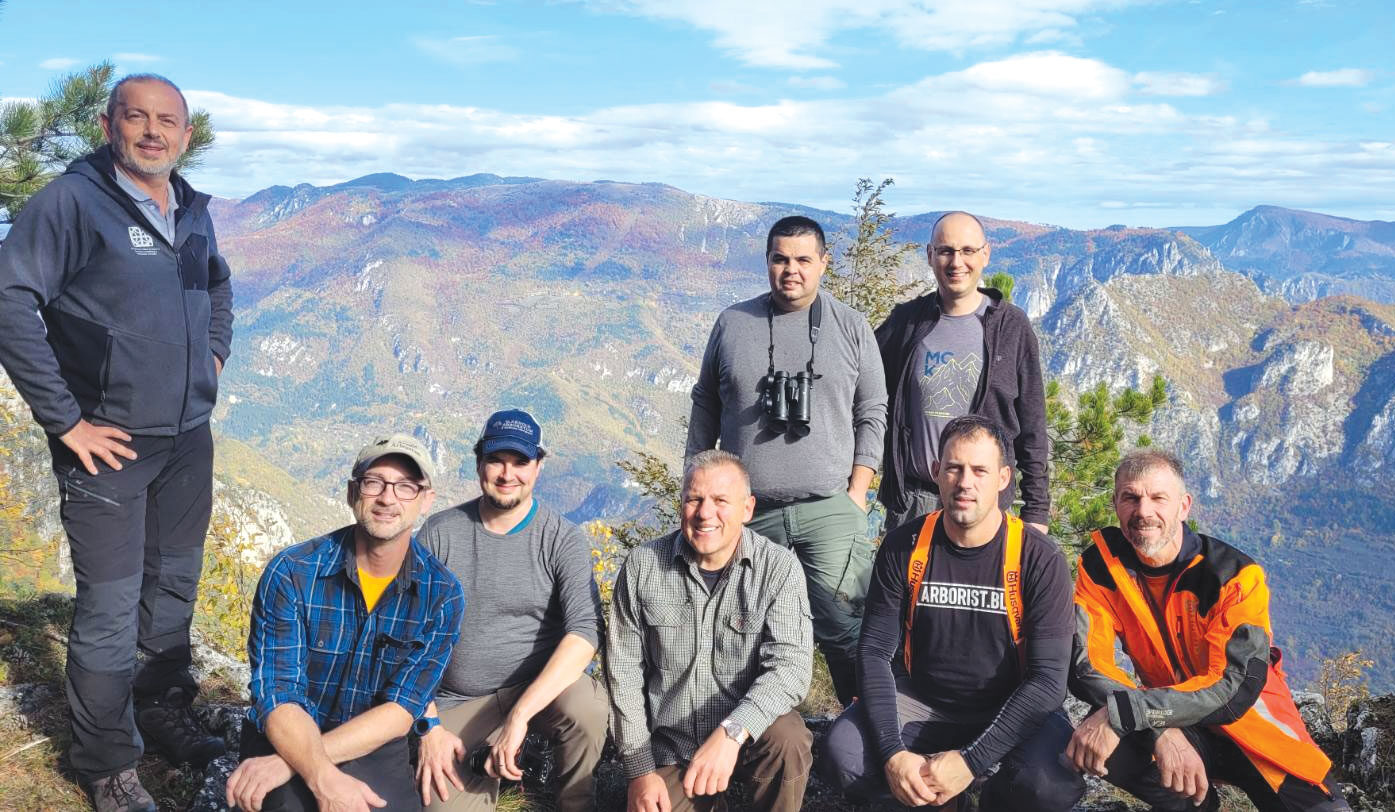
Why put so much effort into an expedition focused on a single species? Although Serbian spruce is common in gardens and the horticultural trade, it is exceedingly rare in nature, and is listed as a species of high conservation concern, ranked as Endangered by the International Union for Conservation of Nature. As we learned in the course of our travels, the story of Picea omorika is a compelling mixture of history, botany, and ongoing dedication.
Although Serbian spruce is one of the oldest woody species in Europe from an evolutionary perspective, it was one of the last to be discovered. In 1875, much of the European flora had already been described and examined in detail, so the likelihood of finding a new woody (more precisely, coniferous) species was low. Thus, many scientists at the time expressed disbelief when they received information about this new species of spruce, and assumed it was simply a local variety of an already described species.
The first news of this new species came when Josif Pančić published a report in 1876. He had seen wild Serbian spruce trees the year before near the village of Zaovine, which today lies in Serbia’s Tara National Park. Pančić’s discovery was the result of many years studying the natural history of the Balkans. He wrote floras of Serbia and another specific to the Belgrade region; his crowning achievement, however, was the introduction to science of Picea omorika. The Serbian common name for the species, Pančićeva omorika, means “Pančić’s spruce.”
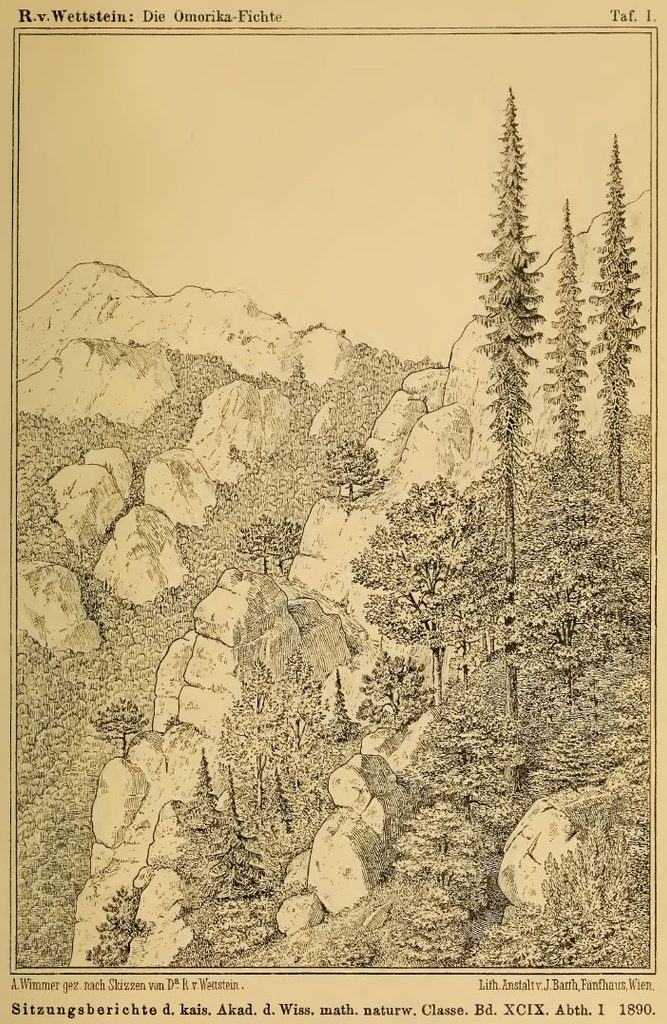
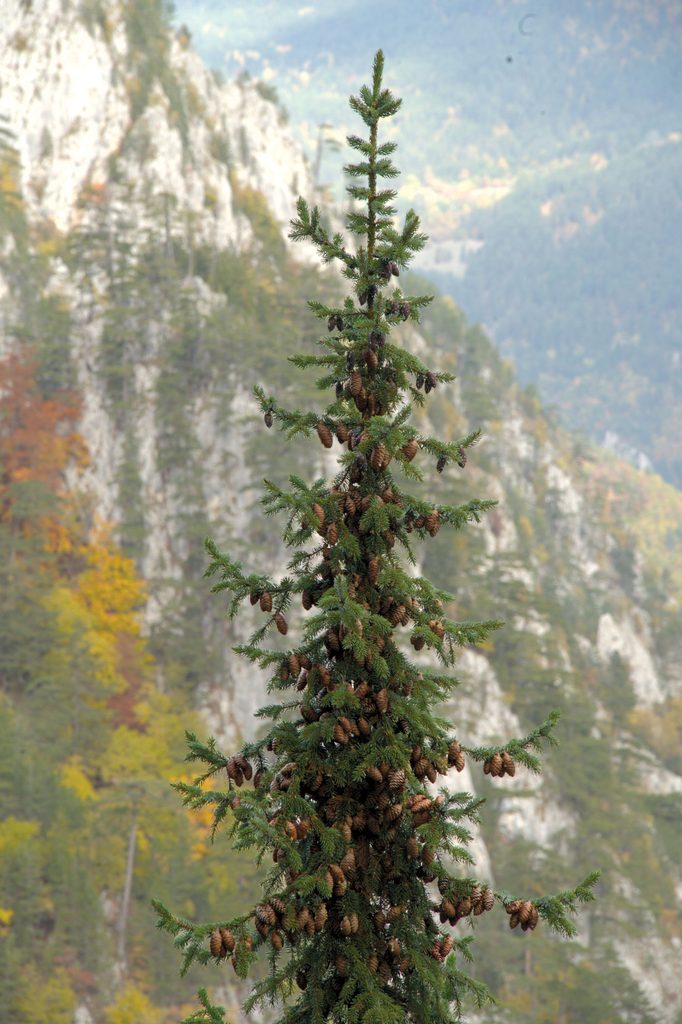
After Pančić’s discovery, the Austrian botanist Richard Wettstein visited Serbian spruce sites in Bosnia. His impressive 55-page monograph (Wettstein, 1890) was the most exhaustive work on the species to date and remains an incredible resource. His morphological, anatomical, phytogeographic, and ecological studies of the spruce’s habitats were precise and comprehensive. Writing about the Serbian spruce’s habit, Wettstein notes that with its tall, narrow, pyramidal crown, it is one of the most striking trees and easily distinguished from the surrounding Norway spruce (Picea abies) and silver fir (Abies alba) trees from afar (Figure 1).
Wettstein made another important contribution with his systematic comparison of the Serbian to other species, notably Sitka, Jezo, and Sakhalin spruces (Picea sitchensis, P. ajanensis [now P. jezoensis], and P. glehnii, respectively). With these and other data (including traces of pollen and fossilized cones), Wettstein hypothesized that Picea omorika (or an “omorika-like spruce”) had once been widespread throughout central Europe and beyond during the Tertiary Period (66 to 2.6 MYA). However, due to dramatic changes in climate (i.e., ice ages), its extent was reduced to its now-limited range in the Balkans.
The current phylogenetic placement of Picea omorika within the genus is well understood due to recent comparative studies that applied plastid, mitochondrial, and nuclear DNA sequence analysis (Ran, et al., 2006; Lockwood, et al., 2013), as well as transcriptomic analyses (Shao, et al., 2019). The North American Picea breweriana appears to be the most basal of the thirty-six extant species and varieties of Picea analyzed and is the only surviving species from an ancient Picea lineage that originated in North America and then spread to Asia. The remaining extant North American species are the product of one or more dispersal events from Asia back to North America. Picea omorika shows the closest relationships to two of these North American species: P. mariana and P. rubens, black and red spruce, respectively (Ran, et al., 2006; Shao, et al., 2019). Picea omorika diverged from other species around 10.27 MYA in Europe, and as Wettstein hypothesized, the range (or its ancestor’s) shrunk during the various periods of glaciation, leaving the current distribution in the Balkans (Shao, et al., 2019).
Demographics of wild Picea omorika
| Bosnia and Herzegovina | Serbia | |
|---|---|---|
| Number of sites with more than five trees | 26 | 26 |
| Number of sites of likely extirpation | 11 | 19 |
| Total area of all sites (hectares) | 154.4 | 89.56 |
| Estimated number of trees | 12,400 | 8,800 |
Table 1. Data on Serbian spruce in natural sites in Republika Srpska (B&H) and the Republic of Serbia, adapted from Mataruga & Milanović, 2020 and Milanović & Mataruga, 2025).
In the first half of the 20th century, scientific papers focused on documenting and describing Serbian spruce’s distribution; in the last fifty to seventy-five years, most published papers simply copied and repeated these earlier reports. Even though all populations occur in a relatively small area, nobody had conducted field surveys to document them under current conditions. This created an opportunity to take a comprehensive approach to study the species and define its spatial distribution throughout B&H and Serbia (Table 1). In addition to contributions in the peer-reviewed literature was the new book (Mataruga, 2025), published on the 150th anniversary of Serbian spruce’s discovery. This monograph provides a complete overview of the species’ natural history and ecology and an assessment of every one of the remaining populations within its natural range.
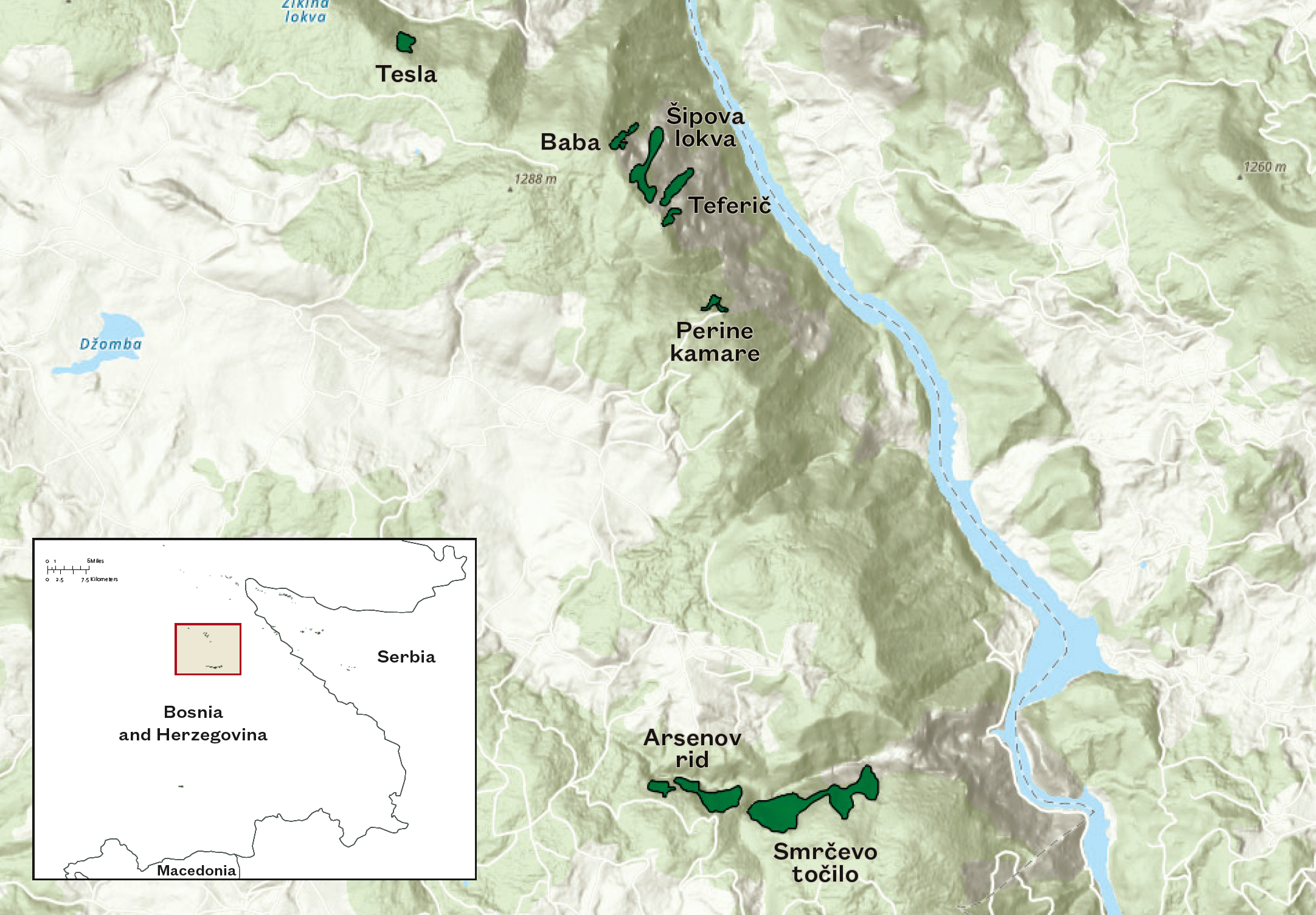
Compiled data from several recent publications estimate that there are just 21,200 trees alive in the wild, growing in fifty-two populations, with twenty-six in each country (Figure 2) (Mataruga & Milanović, 2020; Milanović & Mataruga, 2025; Mataruga, 2025). If you add all the sites together, the area is slightly larger than 590 acres/240 hectares. The Arnold Arboretum occupies 281 acres/114 hectares; thus, all the wild trees in the world could occupy the space of just two Arnold Arboretums.
The habitat is niche: trees are typically found only on north facing, rocky canyons and ravines, where the slopes are very steep and the underlying geology is limestone. Outside these areas, the shade-intolerant Serbian spruce is easily outcompeted by other trees. It tends to regenerate after disturbance, including fire, but as discussed below, fire is decimating populations.
Devastating fires in 2021 killed some 11,000 trees across 47.5 hectares at the Gostilja and Veliki Stolac sites; values below represent current assessments. Like other wind-pollinated species, pollen flow or dispersal in Serbian spruce can be high, but the dispersal of seeds—also by wind—is limited (Aleksić, et al. 2022), and the most endangered populations have reduced seed quality (Mataruga, et al., 2025). Recent dendrochronological studies show that climate change is accelerating the species’ slip towards extinction (Dell’Oro, et al. 2020; Kazimirović & Stajić, 2025). Most populations are shrinking in size, and trees at lower elevations suffer the most due to hotter temperatures and droughts. All populations fall between 520 and 1580 meters above sea level (Mataruga & Milanović, 2020 and Milanović & Mataruga, 2025). Although higher elevations may be more favorable from the perspective of climate, in many cases these areas are also more favorable for other species that outcompete Picea omorika. Or there is no higher ground for the spruces to claim.
Although the species is sensitive to fire, low-intensity burns can play a beneficial role by clearing ground-level vegetation and promoting the establishment of new seedlings. In recent years, however, a series of high-intensity fires have set entire Serbian spruce canopies aflame, killing the cones and trees. Climate change has increased the occurrence of fire, and smaller and shrinking populations have become more vulnerable to its effects.
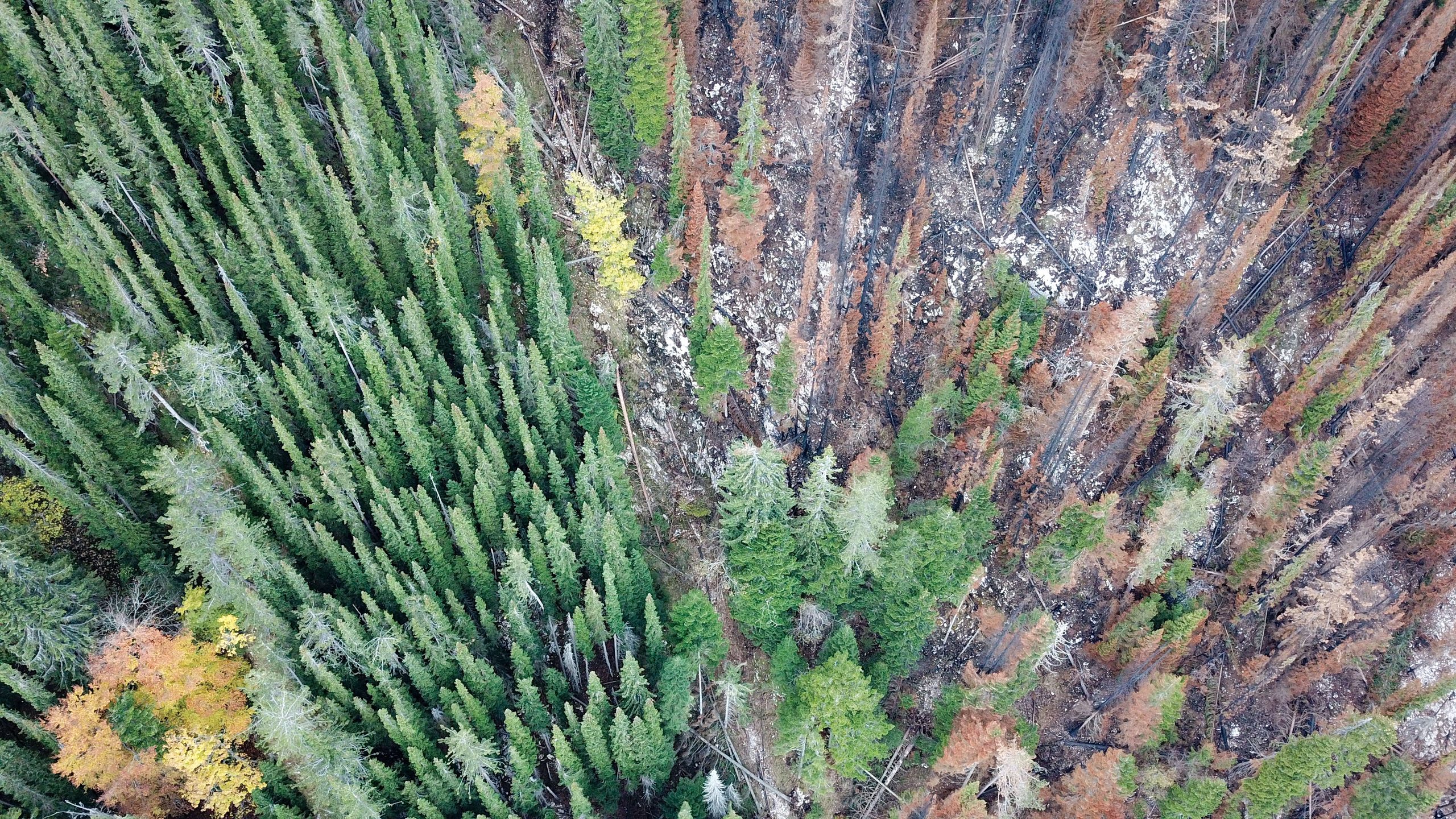
Today, almost every site has been impacted by fire, oftentimes devastatingly. One benefit of thorough and long-term monitoring of populations is the ability to return to sites to assess the impact after fire rips through (Mataruga and Milanović, 2025). In June, 2021, fire consumed two of the largest and healthiest Serbian spruce populations in the Republika Srpska (B&H). At the Gostilja locality, only about twenty out of two-thousand trees survived the fire, while at Veliki Stolac, only one thousand trees remained out of the original ten thousand. In the summer of 2024, fire threatened trees growing in the Crni Potok Valley, near Srebrenica. Because individual trees are so susceptible to fire damage, the impacts are immediate and remain for many years afterwards. Even trees not burned directly go into decline, and in the case of the Gostilja population, there are so few trees left that the prospect of the population fully recovering on its own is grim.
After populations disappeared across the rest of Europe, Serbian spruce survived for thousands of years between glacial and interglacial periods in its current Balkan habitat, the refugia where it has “hid” since the last ice age. But much has changed in these forests since the species’ discovery in 1875. Beyond the environmental challenges described above, there were times when it was harvested during Norway spruce and silver fir timber operations. This prompted Yugoslavian law to officially ban the felling of Picea omorika in 1937 (Levaković, 1938). Currently in the Republika Srpska in B&H, the species is protected by multiple laws and regulations. And on March 20, 2025, the government of the Republika Srpska declared Serbian spruce a species of national importance.
Until recently, research related to the restoration of Serbian spruce in natural habitats provided few applicable guidelines for reforestation. However, forest managers now know that due to the unique genetic makeup of each population, each one should be managed as a discrete conservation unit (Mataruga, et al., 2020). With support from Fondation Franklinia, analyses of the specific climatic and habitat conditions of Serbian spruce forests can be applied to its preservation and restoration under both natural and cultivated conditions (Mataruga and Milanović, 2024).
Sadly, despite these efforts, it is very possible the species will go extinct in the wild. Its habitat is getting harsher and more limited; seedling regeneration is poor and other species easily outcompete it; and fires are more frequent and devastating. Finally, although government protection has been helpful, the overly strict protection regime prevents management interventions that might be necessary to best preserve trees in situ. Thus, ex situ preservation in cultivation may be its only salvation.
Just like Franklinia alatamaha, an American species that is extinct in the wild but found in gardens, Serbian spruce will no doubt survive thanks to the interventions of people who have been growing this species over the last 150 years. Under cultivation, this spruce reproduces easily (via seeds, cuttings, and grafts), thrives under different conditions, and is widely distributed throughout the world due to human activities.
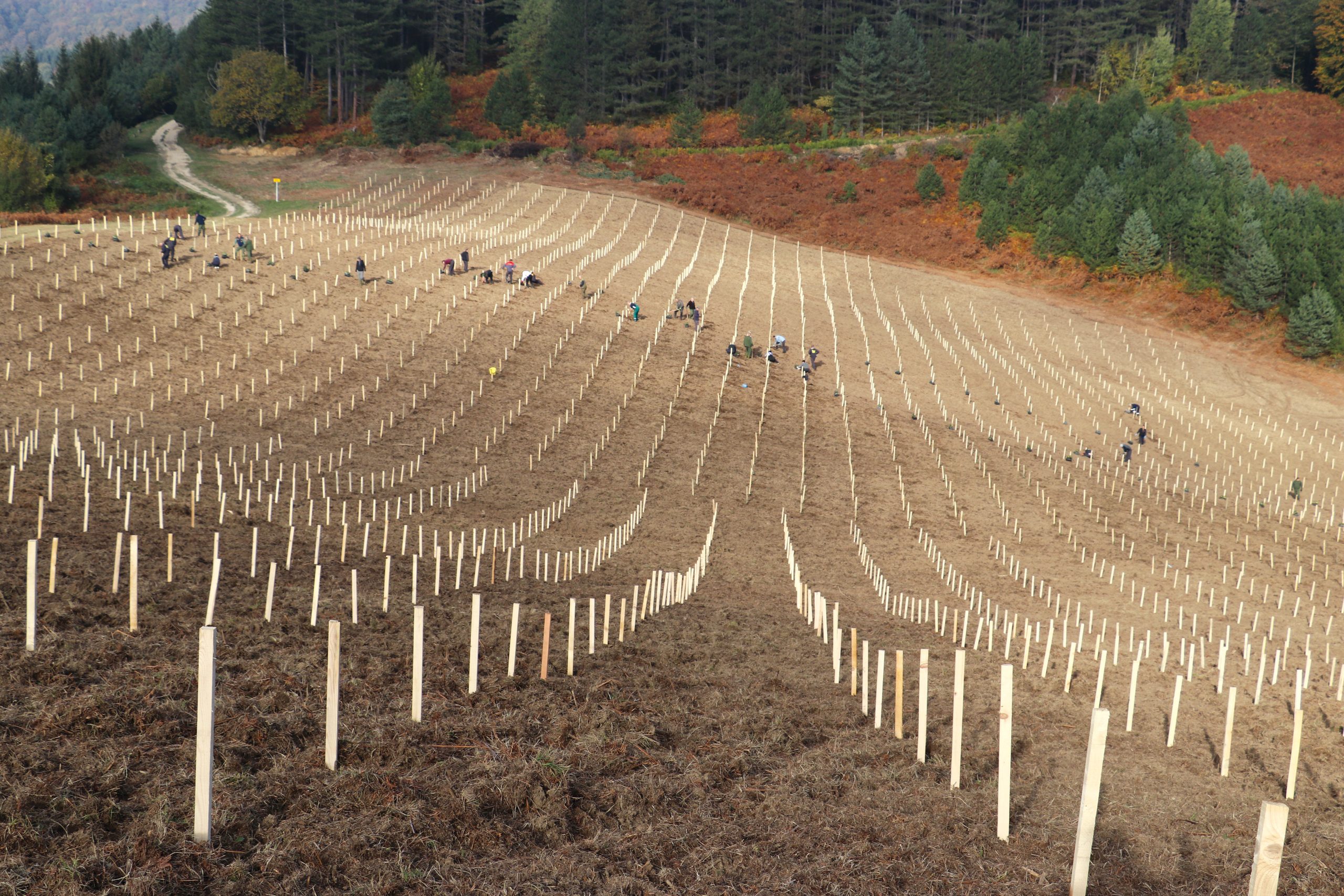
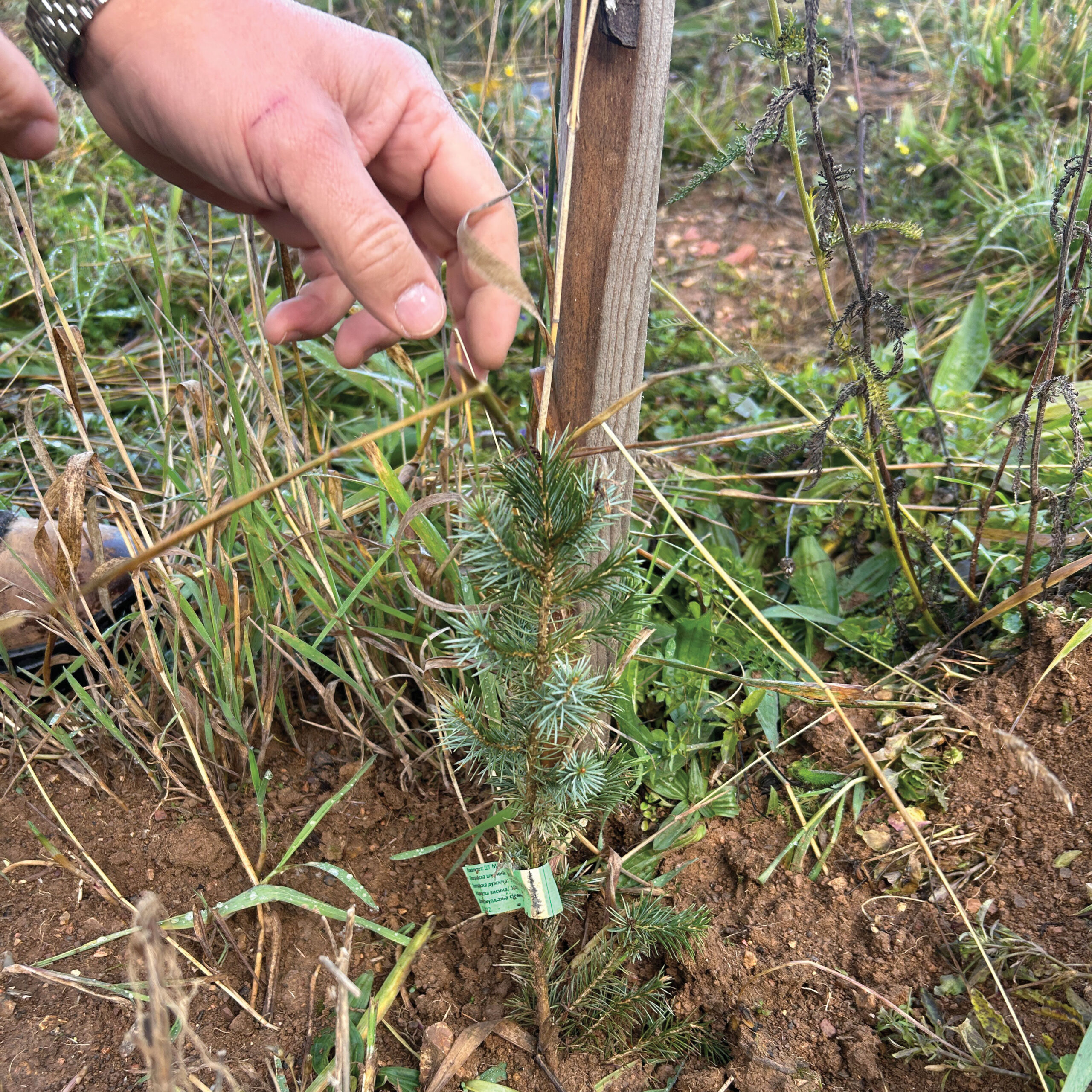
Between 2020 and 2024, three ex situ plantations of Picea omorika were established in the Republika Srpska (B&H) near the towns of Rogatica, Srebrenica, and Višegrad. In Rogatica, fifteen hundred seedlings from seventy half-sib lineages (i.e., maternal or mother trees) collected from seven different populations grow on an area of 2.89 acres/1.17 hectares. The Višegrad collection occupies 2.6 acres/1.04 hectares with one-thousand seedlings from nineteen half-sib lineages from the Veliki Stolac population. And the Srebrenica plantation, the largest in area (7.54 acres/3.05 hectares), has three-thousand seedlings from sixty-six half-sib lineages from seven populations.
In addition to these plantations, Picea omorika has a long and robust horticultural history, particularly in North America and Europe, commonly found in the ornamental nursery trade and the cultivated landscape. The species’ tight upright form and pendulous branches present a distinctive habit among conifers; it works well in plantings of small groups and as individual specimens. Among botanic gardens, Picea omorika can be found in at least 234 collections globally (BGCI, 2026). Most gardens are in Europe and Central to Eastern USA. And many notable outliers show it growing in Iceland, India, Chile, Sakhalin Islands, Florida (USA), and New Zealand. These data demonstrate the amazing ability of Picea omorika to grow under cultivation in a variety of environments from extreme heat to cold, low to high rainfall, and varied day lengths. Anecdotally, this species has been noted as highly stress adapted and tolerant of growing in sites with history of environmental pollutants (Zidler, et al., 2026). Interestingly, a naturalized population has been reported in the Orobic Alps in Italy (Giupponi, et al., 2026), which demonstrates the species capacity for natural regeneration outside of its native range and a formal garden setting. Perhaps prior to the ice ages, the species had been growing in this exact same spot and is simply reclaiming its place?
While Picea omorika is common in cultivation within the botanic garden community, it is very difficult to find many plants of known wild provenance because of a limited number of introductions. However, one recent effort in 2010 of the International Conifer Conservation Programme (ICCP), coordinated at the Royal Botanic Garden Edinburgh (RBGE), collected Serbian spruce seeds from natural habitats in Serbia and B&H. These now grow in conservation collections at RBGE and beyond.
By sharing the story of Serbian spruce, we hope readers learn more about this species and the importance of preserving it before it goes extinct in the wild.
The Arnold Arboretum has one of the longest histories of cultivating Picea omorika in the world, growing (or attempting to grow) sixty-six different accessions over almost 150 years. The first accession (Arnold Arboretum Accession #1496) arrived not long after Josif Pančić described the species to science. The seeds were sent to the Arboretum by Carl Bolle, the naturalist and botanist from Berlin, Germany. Several published accounts, including the Arnold Arboretum’s Bulletin of Popular Information (the predecessor to Arnoldia), state the year as 1880, yet the earliest archival accession books cite a specific date of April 13, 1881. It is possible that the seeds arrived in 1880 but were not formally registered or accessioned for a few months. Alfred Rehder even acknowledges the confusion in the second edition of his Manual of Cultivated Trees and Shrubs in 1927 stating the introduction was “about 1880”; most other accounts provide an exact year of when species were introduced into cultivation. Bolle could only have received seeds sourced from the wild, likely directly from Pančić from the population in modern-day Tara National Park in Serbia. The Arboretum’s first propagator, Jackson Dawson, sowed them and although we do not know the quantity of plants that were initially planted out, at least one tree grew in the Kent Field section of the Conifer Collection until 1934.
Illustrating just how important this species was, Dawson quickly vegetatively propagated the juvenile plant(s). In 1886, he rooted cuttings, and eventually three new plants (#1496-1*A, *B, and *C) grew for decades, the last dying in 2005. In 1887, he grafted scions that became #1496-2 (the understock is unknown but was probably Picea abies). Dawson’s grafts were successful, and fifteen plants of #1496-2 grew in the collections for decades, the last perishing in 1990. Just one plant (#1496-1*A) of the original Bolle lineage was alive in 1992, so new grafts were taken and eventually became #248-92*A and *B. These grew in the West Nursery at the Dana Greenhouse until both were removed in the spring of 2004. One had poor structure; the other was in better condition and stood over a meter high. No reason was stated for the removal, other than it was “requested by living collection managers.” Perhaps they needed to clear space in the nursery, or there was no opportunity to find a permanent location in the crowded plant collections. The removal decision might have been easier to make because the parent tree (#1496-1*A) was still alive in 2004. But this turned out to be unfortunate timing because #1496-1*A, at 119 years old, was removed the following year because its large basal cavity created a hazard. Thus, the last of the Bolle lineage—and the first introduction of Serbian spruce to North America—disappeared from the Arboretum’s collections.
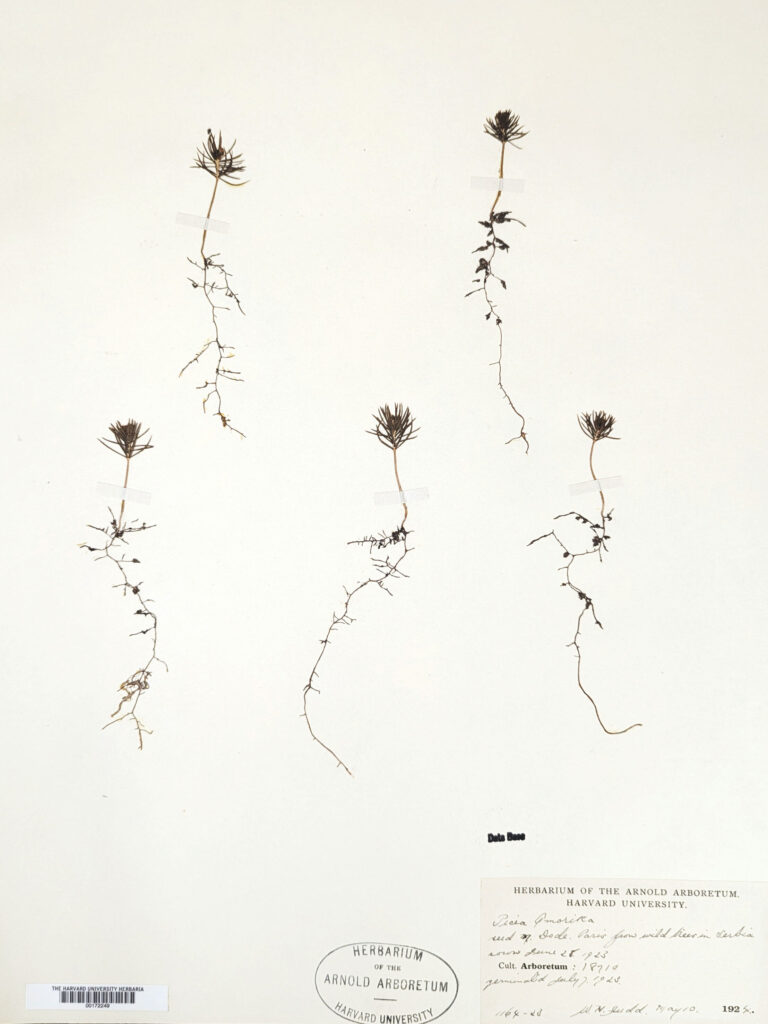
Another wild lineage arrived in 1923 when French botanist Louis-Albert Dode sent seeds from Serbia. Germination was good and in 1924, William Judd, the propagator after Dawson, made an herbarium voucher of five germinated seedlings, noting their sow and germination dates on the label. In 1932, a plant (#18710*A) went into the collections and persisted until removal in 1982. The last wild-origin germplasm came in 1980 from the U.S. Department of Agriculture’s Plant Introduction Station in Glendale, MD. These seeds were donated to USDA by Lav Rajevski and were collected from Mount Babina Gora, near Visegrad in B&H. A tree (#516-80*A) was planted in the autumn of 1984 but was dead by September, 1985 of unreported causes.
The oldest plant still alive (#11143*B) came from Cottage Gardens Nursery in New York in 1919. This centenarian grows at the very edge of Conifer Path and stands 19 meters (62 feet) tall and has a DBH of 33 centimeters (13 inches). Several trees of #504-70, from Bald Hill Nursery, in RI, also grace the collections; plants *B and *C are paired together on the hill just south of the Hunnewell Building and their tall, narrow forms are easily recognized by visitors walking along Meadow Road. The Arboretum has also grown three different cultivars of Serbian spruce over the years: ‘Expansa,’ ‘Nana,’ and ‘Pendula.’
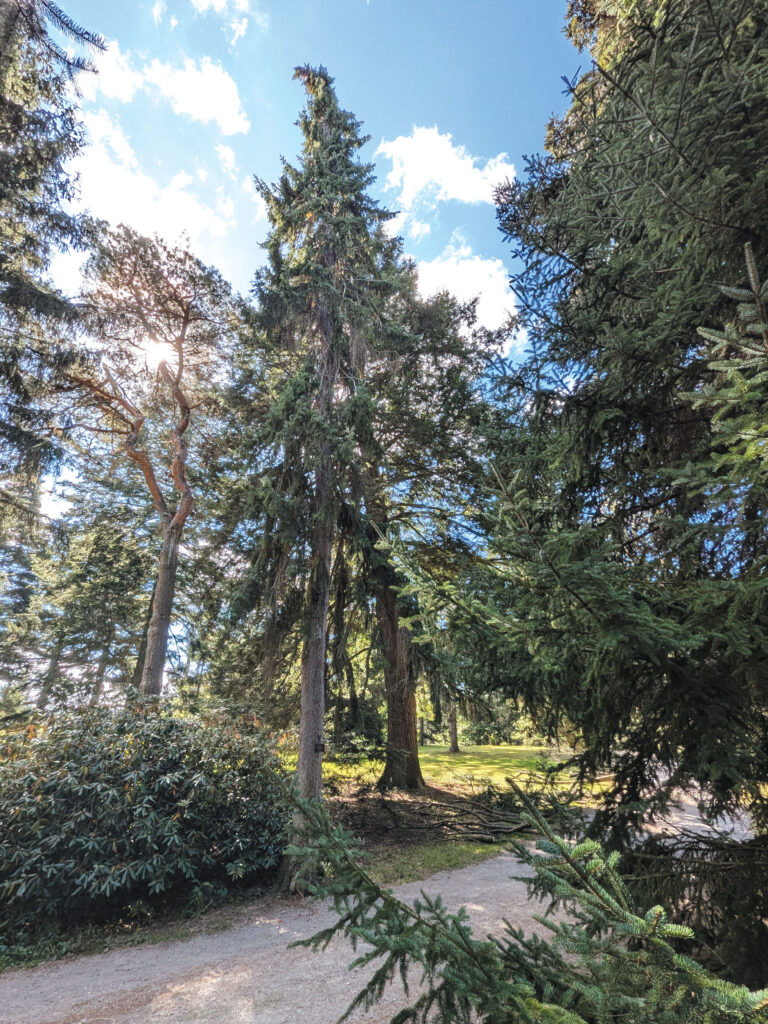
Picea omorika has grown well at the Arnold, with few horticultural or arboricultural challenges. Charles Sargent was enamored with the trees in the early 1900s, writing often of them in these pages. In 1922, he noted that that the trees—some nearly forty years old at the time—were already between nine and twelve meters (thirty and forty feet) tall and had become “one of the handsomest conifers in the whole collection.” Few pathogens or pests bothered the species, although Sargent and others commented that young trees were often damaged by white pine weevil (Pissodes strobi), a boring insect that affected the plant’s central leader. Fortunately, this pest is no longer a problem at the Arboretum.
The original Bolle tree (#1496*A) died in 1934, a year with a brutal winter with temperatures plummeting to -17°F (-27°C ). But it’s unlikely that low temperature stress was the cause of death. In his thorough 1934 review of the plants that suffered that year, John Jack does not mention it among the numerous spruces injured or killed outright, and the rooted cuttings and grafted plants survived the temperatures just fine. It may have been the strong winds that winter, as winds brought about the downfall of many Serbian spruces over the years, particularly when grown in heavier, organic, and wet soils. Five trees of #1496-2 were uprooted during the Hurricane of 1938. In 1954, Hurricane Carol blew down both #8090*A and *B. And during a late winter storm on March 29, 1984—a nasty mix of snow, ice, and wind—#18710*A snapped in half. And just like in the species’ native range, fires killed multiple trees in the 1940s, a time when lit cigarettes were often casually tossed onto the ground, sparking into flames.
The seven Serbian spruce specimens on the grounds of the Arnold Arboretum are beautiful trees, but none is of known wild provenance. Two decades without wild-sourced Picea omorika in the living collections is far too long. With this on our minds, we found ourselves in B&H in October, 2025, to seek out this most remarkable of conifer species.
Two decades without wild-sourced Picea omorika in the living collections is far too long.
Cones hang from the top of a Serbian spruce, ripe for collection. Photograph by Miles Schwartz Sax
On October 22, the expedition team woke to a cool, crisp morning, and we drove through the countryside until we reached the forest’s edge. Packing bags heavy with gear and field equipment, we hiked as a group in a tight column through the forest. This area was heavily land mined during the Bosnian War, so we relied on our local guides to safely show us the path. Our guides included Dragan Kovačević of the Institute for Protection of Cultural, Historical, and Natural Heritage; Miloš Mirković, a local district forester; and Mladen Mirković, a retired forester, and Miloš’ father. After about forty-five minutes of walking through the forest, the landscape in front of us abruptly gave way to the breathtaking open expanses of the Drina River Canyon. There at Perine Kamare, we had made it to our destination, and from our perch at around 1128 meters (3700 feet) we could see the river 853 meter (2800 feet) below and views of Serbia’s Tara National Park on the other side of the canyon. The Serbian spruce trees here, about a hundred and fifty of them, are limited to an area of just 3.7 acres/1.5 hectares.
After dropping bags, we fanned out along the edge of the canyon with binoculars in hand to scan the steep slopes and search for the tight pyramidal form of Serbian spruce. After scouting, we reconvened and identified a nearby location where several dozen Serbian spruce were spotted and we and headed down the steep 70˚ slopes to reach them. The Drina River Canyon is composed of limestone, and we chose our footing carefully as we made our way down rocky outcrops and stoney spine ridges, often climbing hand-over-foot to descend into the gorge. The forest was a mixed composition of towering Austrian pines (Pinus nigra), European beech, lower growing European hornbeam (Ostrya carpinifolia), and of course the occasional Serbian spruce.
We found a safe ridge that gave access to cone-adorned Picea omorika, and began our sampling. The narrow spruces are impossible to climb, making it difficult to reach the very tops where the cones cling to branches. Donning harnesses, spurs, and helmets, Danijel and Robert ascended Austrian pines by wrapping safety lanyards around the trees and using their spurs to kick into the thick bark. After reaching the upper branches, they set safety lines before rappelling down to reach the Serbian spruce cones. They filled heavy canvas bags with cones and lowered them to the ground team below. Milan and Branislav, having spent many expeditions in the field, quickly got to work. Each maternal tree’s cones were kept separately, as were data for each of these lineages. The tree was given a unique number (e.g., PK-4 for the fourth tree sampled that day in Perine Kamare) that was stenciled onto the trunk with spray paint. In a dense and disorienting forest, this was also a great way to mark which trees had already been harvested. The data for each tree included location using a global position system (GPS) unit and height using a hypsometer. We also gathered documentation related to the population’s habitat that included associated species, soils, and other site conditions.
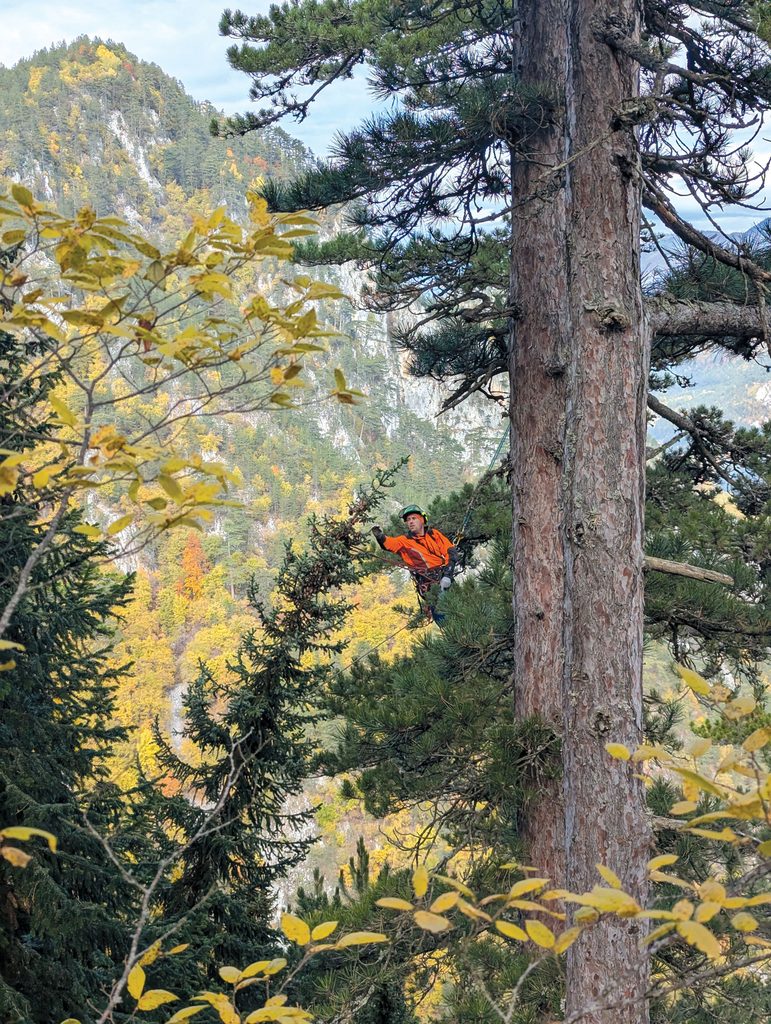
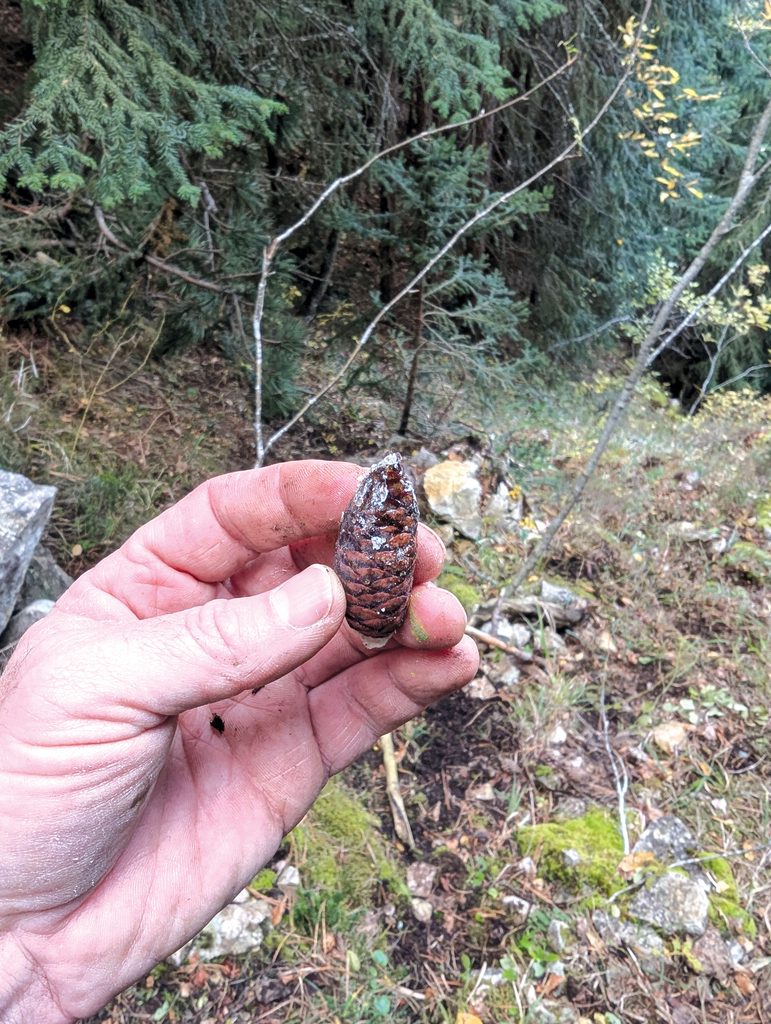
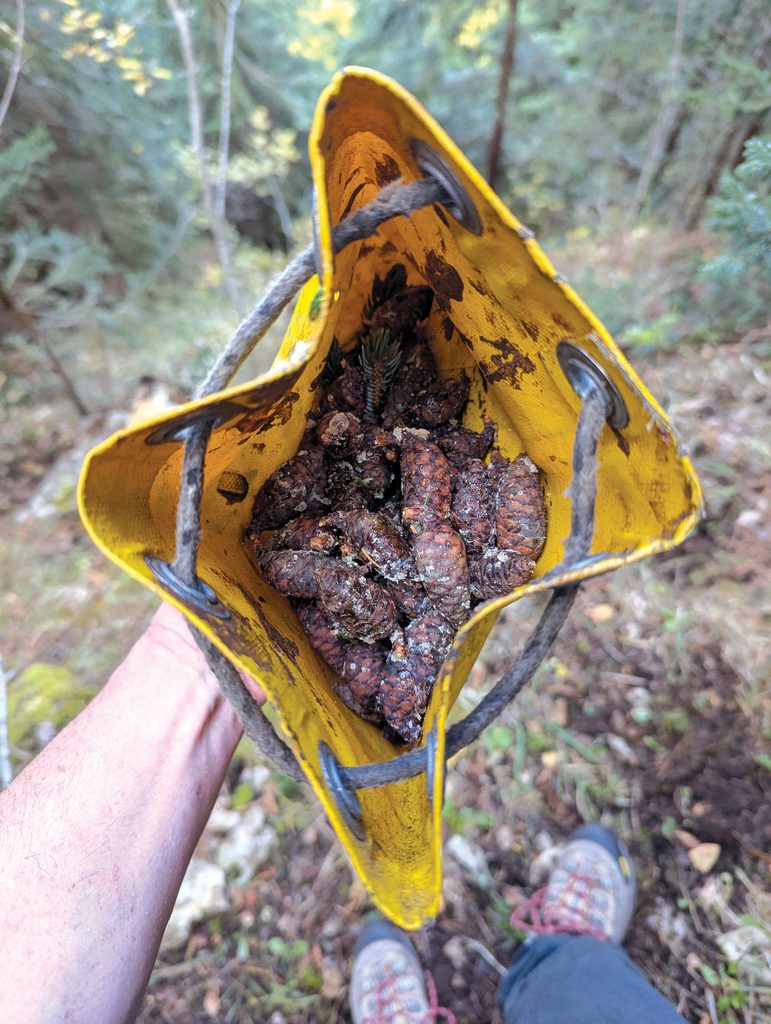
Throughout the day, the climbers ascended tree after tree, collecting a bag or two full of cones from each P. omorika before swinging to a new position or returning to the ground and repeating the process. The ground team followed, carefully navigating the steep slopes and rocky outcrops to ensure cones were properly gathered and all vital data were captured. For the most part, Miles and Michael were runners, schlepping bags, equipment, and other items from station to station. At midday we enjoyed a spread of bread, butter, meats, and cheeses. After sampling twenty-two trees, we wrapped up for the day and climbed out of the gorge. After a rest at the top and a celebratory sip of rakija—a potent brandy, distilled by Mladen—we navigated the rest of the way out of the woods and adjacent minefields as dusk cast incredible light on the wild cherry (Prunus avium) trees in the fields near where we had parked.
The following day, we visited Smrčevo Točilo, a healthy, stable population growing on the south side of the Suvi Do gorge, a river that—when it is flowing—empties into the Drina River just one to two kilometers to the east. It is one of the largest populations of Serbian spruce, with some two thousand individual trees growing across 70 acres/27.5 hectares. We drove down a muddy set of logging roads until we could go no further, and then hiked the rest of the way, finding wolf tracks in the mud. The team repeated the previous day’s protocols for the field work: the arborists climbed neighbor trees to collect Picea omorika cones while the rest of us did the groundwork.
Although the Serbian spruces grew deeper down the gorge, there were also a fair number nearer the top where the slopes were gentler and trees easier to access. There was a greater diversity of tree species compared to what we’d seen the day before. Picea abies, Abies alba, Pinus sylvestris, Populus tremula, and beautiful Sorbus torminalis in autumn color all accompanied the tall Pinus nigra and Picea omorika. We also saw Serbian spruce that were reproducing vegetatively via root suckers. Throughout the site, small saplings grew in the organic duff layer near mature trees. Digging down at the base of the juveniles, we traced roots that extended back to the mother tree, which was fascinating to see as root suckering is an uncommon phenomenon in conifers. This adaptive strategy allows Picea omorika to survive using vegetative (versus sexual) reproduction. Mladen knew this site well and estimated that seventy per cent of the trees here may be clonal. By the end of the day, we had collected cones from twenty trees scattered across the site.
On October 24, we visited the Karaula Štula, a population of about five-hundred trees on 10.1 acres/4.1 hectares on the border with Serbia. This was our final round of collecting and the routine was much as it was the first two days. The slopes were steep, much like the first day, and we zigzagged along the walls like mountain goats, navigating narrow trails that had, in fact, been made by mountain goats or chamois! The trees were much harder to access here, but the arborists worked hard to acquire cones from another ten individuals. From this position we could make out Veliki Stolac, a commanding peak to the south that had housed one of the largest populations Picea omorika until the devastating fire in 2021 left only about a thousand trees out of ten-thousand alive. We spent the evening in Višegrad where we shared a celebratory meal and explored the historic town. The highlight was walking over the Mehmed Paša Sokolović Bridge, constructed in 1577 during the Ottoman Empire. This UNESCO World Heritage Site spans the emerald waters of the Drina River and is steeped in history and lore.
The following morning, we said goodbye to arborists Danijel and Robert before heading out to visit a few more Serbian spruces. The first site was a new ex situ conservation plantation in Rogatica established with the financial support of the United Nations Development Program in B&H. The fifteen-hundred seedlings represent seventy maternal lineages from seven different populations, including material collected from Veliki Stolac a year after the devastating fire. Our final field site was at Tesla, a population of about fifty trees in decline: mature trees are failing and there is no natural regeneration of seedlings. To learn more about this population’s environmental conditions, Milan and Branislav are using dataloggers to monitor conditions such as temperature, humidity, and light. They are also trying to stabilize the population by planting seedlings germinated from seeds gathered here. High on the edge of the gorge, often steeped in cloud or lacking in summer rain, this habitat’s variability is difficult to fully understand without the incoming data. Information from sites like Tesla and others will paint a clearer picture of the unique environmental niche that Picea omorika occupies, and the factors that contribute to its decline—and occasional stability—in nature.
That afternoon, we made our way out of mountains and drove west to Sarajevo where we enjoyed a final meal of ćevapi and recalled the week’s adventure and discussed future research projects and collaborations. After saying farewell, Milan and Branislav continued to Banja Luka while Michael and Miles readied themselves for the flight back to Boston early the next morning. The three populations of spruce cones made their way back with Milan and Branislav, who oversaw the process of drying, processing, and seed extraction over the next few months.
March 14, 2026, was a celebratory day at the Arnold Arboretum when forty-eight packets of Picea omorika seed arrived, each bag representing a different maternal tree from the three sites we visited. As far as we can tell, this represents the largest and best documented introduction of wild collected Picea omorika into the United States. These seeds will be germinated and planted in conservation groves throughout the Arnold Arboretum landscape. They will also be shared among partner botanic gardens that have a commitment to the ex-situ conservation of this endangered species. We hope that these and future efforts help secure this beautiful, rare species in the wild as well as in managed scientific collections. And by sharing the incredible story of Serbian spruce, we also hope readers learn more about this species and the importance of preserving it before it goes extinct in the wild.
Milan Mataruga and Branislav Cvjetković are in the forestry faculty at the University of Banja Luka; Michael S. Dosmann is keeper of the living collections and Miles Schwartz Sax is assistant curator at the Arnold Arboretum.
ACKNOWLEDGEMENTS
We are grateful to the two arborists who collected cones of Serbian spruce (Danijel Šurlan and Robert Ćuk) as well as representatives of institutions and local foresters who joined us in the field (Dragan Kovačević, Rajko Nikitović, Miloš Mirković, and Mladen Mirković). We also appreciate the vital support we received from representatives from the University of Banja Luka (Radoslav Gajanin, professor and rector, and Vojislav Dukić, professor and dean of faculty of forestry) and the Institute for the Protection of Cultural, Historical and Natural Heritage (Jasna Milesevic, director). We also thank Djordjije Milanović and Kyle Port for their assistance in creating maps used in this article. Lastly, we acknowledge the generous donors to the International Plant Conservation Fund at the Arnold Arboretum for funding this expedition.
LITERATURE AND FURTHER READING
Aleksić, J. M. 2008. Genetic structure of natural populations of Serbian spruce [Picea omorika (Panč.) Purk.] [Doktorska disertacija, University of Natural Resources and Applied Life Sciences, Vienna].
Aleksić, J., Mataruga, M., Daničić, V., Cvjetković, B., Milanović, Đ., Vendramin, G., Avanzi, C., & Piotti, A. 2022. High pollen immigration but no gene flow via-seed into a genetic conservation unit of the endangered Picea omorika after disturbance. Forest Ecology and Management 510, Article 120115. https://doi.org/10.1016/j.foreco.2022.120115
BGCI. 2026. PlantSearch. Botanic Gardens Conservation International. Richmond, U.K. Available at https://plantsearch.bgci.org. Accessed on 25/03/2026
Christian, T. 2025. ‘Picea omorika’ from the website Trees and Shrubs Online (treesandshrubsonline.org/articles/picea/picea-omorika/). Accessed 2026-03-13.
Dell’Oro, M., Mataruga, M., Sass-Klaassen, U., & Fonti, P. 2020. Climate change threatens an endangered relict Serbian spruce. Dendrochronologia 59, Article 125651. https://doi.org/10.1016/j.dendro.2019.125651
Friedman, W.E., M.S. Dosmann, T.E. Boland, D.E. Boufford, M.J. Donoghue, A. Gapinski, L. Hufford, P.W. Meyer, and D.H. Pfister. 2016. Developing an exemplary collection: A vision for the next century at the Arnold Arboretum of Harvard University. Arnoldia 73(3):2-18.
Giupponi, L., Alberto, A., Sala, S., & Giorgi, A. 2025. Picea omorika (Pinaceae): an endangered endemic species from Serbia and Bosnia-Herzegovina, naturalised in the Brembana Valley (Orobic Alps, Italy). ARPHA Preprints, 6, e180472.
Jack, J. G. 1934. Winter hardiness of trees and shrubs growing in the Arnold Arboretum (continued). Bulletin of Popular Information, Series 2 2(11): 53-60.
Levaković, A. (ed). 1938. Zabrana Sječe Stabala Pančićeve Omorike I Munike . Šumarski List 3–4: 201.
Lockwood, J. D., Aleksić, J. M., Zou, J., Wang, J., Liu, J., & Renner, S. S. 2013. A new phylogeny for the genus Picea from plastid, mitochondrial, and nuclear sequences. Molecular Phylogenetics and Evolution 69(3): 717–727. https://doi.org/10.1016/j.ympev.2013.07.004
Kazimirović, M., & Stajić, B. 2025. Potential effects of climate change on growth and the implications for conservation of the endangered Serbian spruce (Picea omorika (Pančić) Purk.). Forest Ecosystems 12, 100287. https://doi.org/10.1016/j.fecs.2024.100287
Mataruga, M. 2025. Панчићева оморика (Picea omorika Pančić/Purk.) – Serbian spruce. Faculty of Forestry, University of Banja Luka.
Mataruga, M., & Milanović, Đ. 2020. Prirodne populacije Pančićeve omorike u Republici Srpskoj (Bosna i Hercegovina). Glasnik Šumarskog fakulteta Univerziteta u Banjoj Luci No 4:77–113. https://doi.org/10.7251/GSF2030005M
Mataruga, M., & Milanović, Đ. 2025. Požari tokom 2021-2024. godine u najvećim sastojinama Pančićeve omorike u Republici Srpskoj i njihove posljedice. Glasnik Šumarskog fakulteta Univerziteta u Banjoj Luci, No 36: 193-208. https://doi.org/10.63356/gsf.2025.004
Mataruga, M., Bosančić, B., Cvjetković, B. 2025. Cone and seed variability in Serbian spruce – indicators of population endangerment. Šumarski List 11-12:531-544.
Mataruga, M., Piotti, A., Daničić, V., Cvjetković, B., Fussi, B., Konnert, M., Vendramin, G., & Aleksić, J. 2020. Towards the dynamic conservation of Serbian spruce (Picea omorika) western populations. Annals of Forest Science 77(1). https://doi.org/10.1007/s13595-019-0892-1
Mataruga, Mataruga, M., Milanović, Đ. (saradnici: Ana Ćurić, Aleksandra-Anja Dragomirović, Dragan Kovačević, Branislav Cvjetković, Darko Jovanić. 2024: Smjernice za očuvanje Pančićeve omorike in situ. Republički zavod za zaštitu kulturno-istorijskog i prirodnog nasljeđa. Banja Luka, p:1-83. ISBN 978-99976-661-8-5. COBISS.RS-ID 141254913
Milanović, Đ., Mataruga, M. 2025. Prirodna nalazišta Pančićeve omorike u Srbiji. Glasnik Šumarskog fakulteta Univerziteta u Banjoj Luci No 36: 31-92. https://doi.org/10.63356/gsf.2025.005
Pančić, J. 1876. Eine neue Konifere in den Östlichen Alpen. Srpska kraljevska državna štamparija. Ran, J. H., Wei, X. X., & Wang, X. Q. 2006. Molecular phylogeny and biogeography of Picea (Pinaceae): Implications for phylogeographical studies using cytoplasmic haplotypes. Molecular Phylogenetics and Evolution 41(2): 405–419. https://doi.org/10.1016/j.ympev.2006.05.039
Rehder, A. 1927. Manual of cultivated trees and shrubs hardy in North America, exclusive of the subtropical and warmer temperate regions. MacMillan company.
Sargent, C. S. 1922. [no title] Bulletin of Popular Information, New Series 8(17): 65-68.
Shao, C. C., Shen, T. T., Jin, T. W., Mao, J. H., Ran, H. J., & Wang, Q. X. 2019. Phylotranscriptomics resolves interspecific relationships and indicates multiple historical out-of-North America dispersals through the Bering Land Bridge for the genus Picea (Pinaceae). Molecular Phylogenetics and Evolution 141, 106610. https://doi.org/10.1016/j.ympev.2019.106610
Wettstein, R. 1890. Die Omorika-Fichte, Picea Omorica (Panc.): Eine monographische Studie. Sitzungsberichte 99: 503-557.Zeidler, A., Trojan, V., Vacek, S., Vacek, Z., Tomczak, K., Cukor, J., Strugarek, U., Borůvka, V., Tomczak, A., Gallo, J., & Brabec, P. 2026. Omorika spruce as a potential substitute for Norway spruce and blue spruce in post-pollution reforestation for industrial use. Forests 17(1), 109. https://doi.org/10.3390/f17010109