At the Arnold Arboretum, living trees are studied every day by scientists seeking to expand our understanding of the plant world—how trees grow, adapt, and evolve across time. Yet it is also a place where the lives and stories of individual trees are preserved and explored, where plants intertwine with human history and memory. The 250-year story of the United States of America is steeped in these relationships, where trees have long stood as witnesses to human experience—and where science can help recover connections that time has obscured.
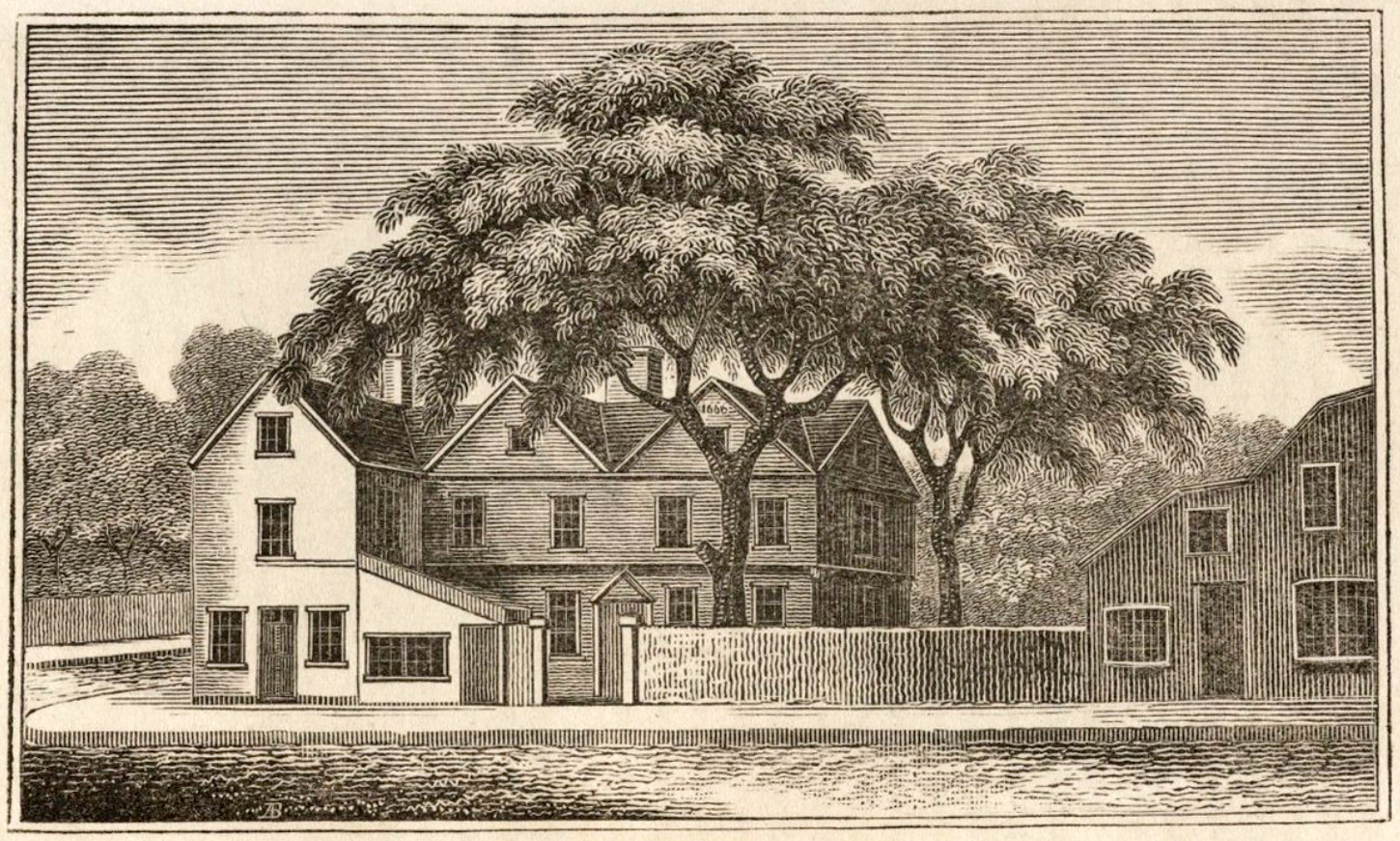
In a recent segment of The Curiosity Desk on WGBH, Arnold Arboretum Director William (Ned) Friedman joined host Edgar B. Herwick III and reporter Hannah Loss to explore a botanical mystery with deep historical roots. Their investigation centers on a set of weathered wood fragments, preserved by the Massachusetts Historical Society and long believed to be cut from Boston’s storied Liberty Tree—a legendary symbol of resistance and commonality that grew on Washington (formerly Orange) and Essex Streets in Boston during the American Revolution.
At first glance, the fragments seem rather unassuming, despite the delicate pink ribbon that bundles them. But in the hands of a plant biologist like Friedman, they become a gateway to discovery. Marshaling his own expertise of trees and digging into the rather scant literature available on the anatomy of tree roots, Friedman was asked to answer a deceptively simple question: do these roots truly belong to the famed Liberty Tree?
What unfolds is a story lying at the intersection of history and science. The size of these wood cross-sections and their distinct cellular patterns offer clues into species identity, age, and origin. Ned’s careful observation and synthesis of botany, dendrology, and physiology reveal how the language of plants can illuminate even centuries-old artifacts.
Watch the full segment on YouTube or listen to the audio from PRX to see how curiosity, rooted in both history and biology, can bring the past back to life.