Collections include rare hawthorns, maples, and apple relatives, many new to the living collections
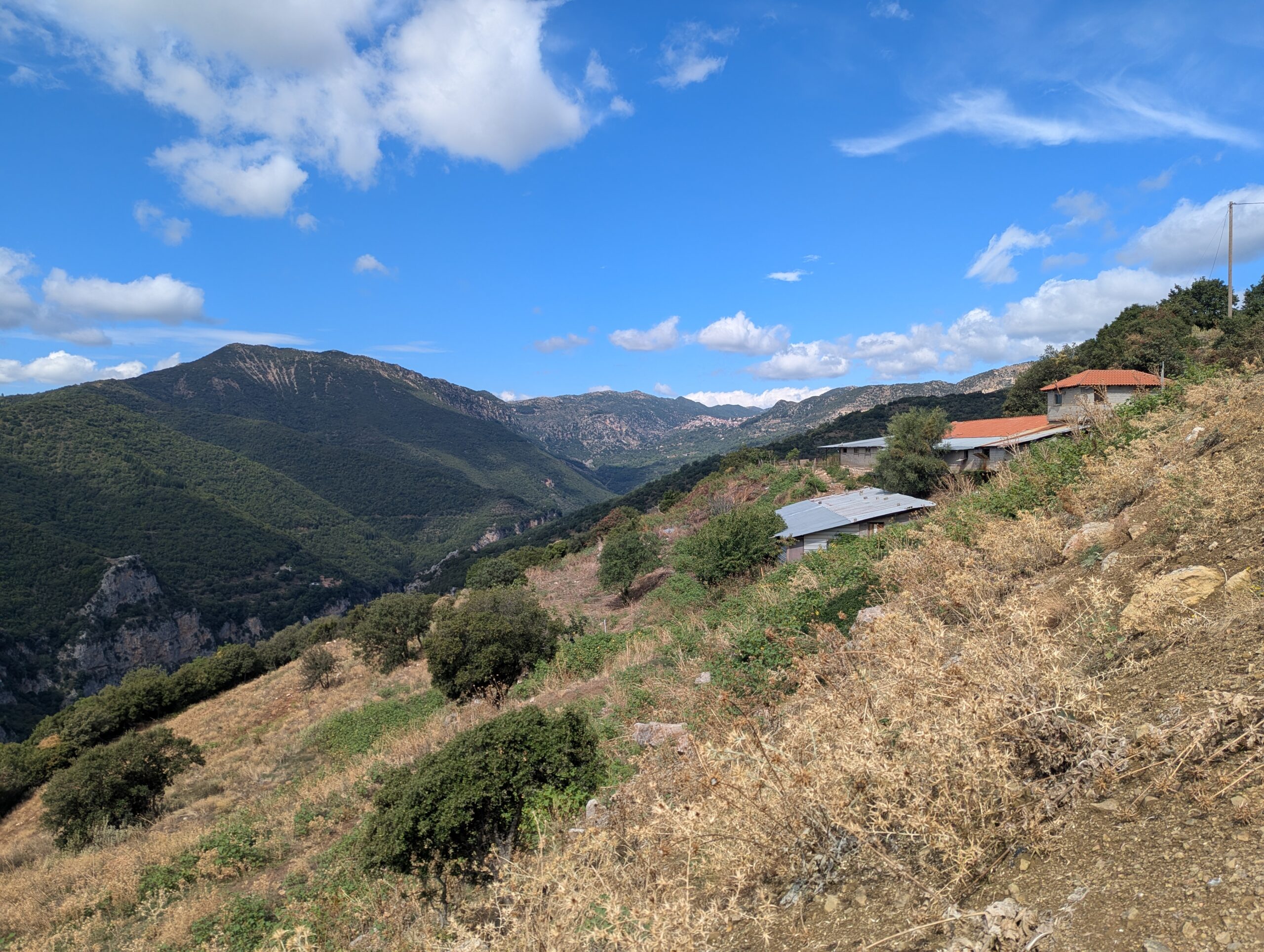
The 2026 autumn expeditions took plant explorers from the Arnold Arboretum of Harvard University to Europe’s Mediterranean habitats to acquire seeds as part of the Arnold’s Campaign for the Living Collections. From September 24 through October 10, Keeper of the Living Collections Michael Dosmann and Assistant Curator Miles Schwartz Sax explored endemic plant populations in Greece and Italy.
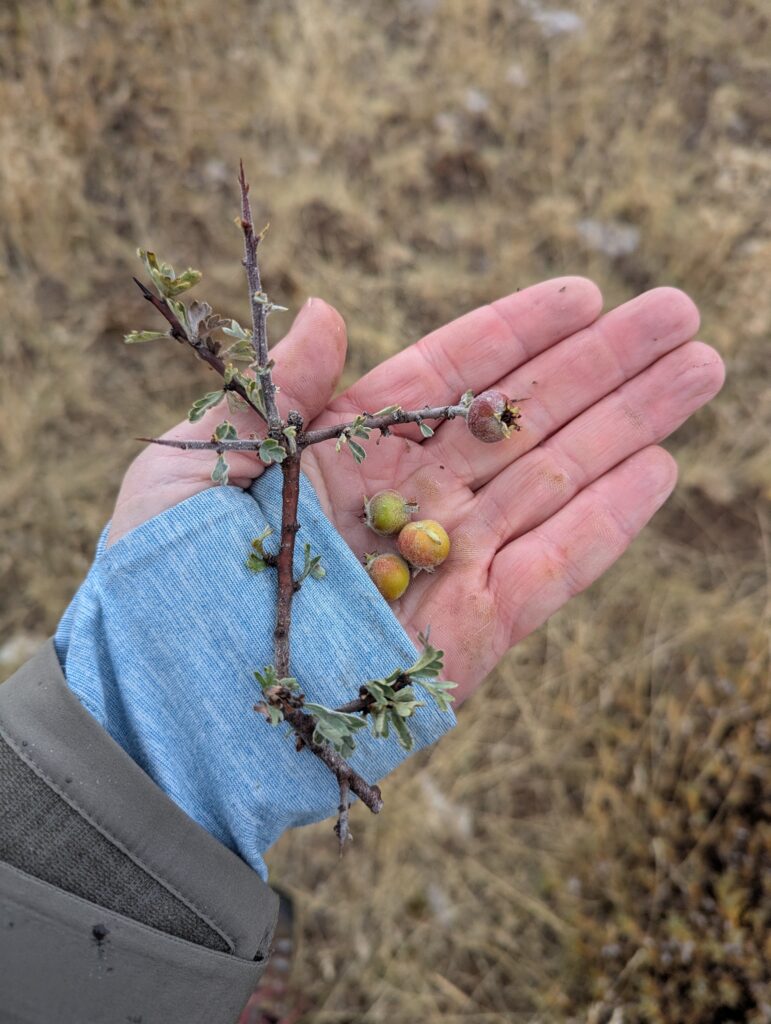
While in Greece, the two veteran explorers joined Anastasia Stefanaki and Gerard van Buiten from the Utrecht University Botanic Gardens in the Netherlands. Though both institutions participate in joint expeditions as members of the international Plant Collecting Collaborative, this was their first expedition together. After meeting up in Athens, they first collected on the Peloponnese, the peninsula in the south, before heading up to Macedonia and Thrace in the northeast part of Greece.
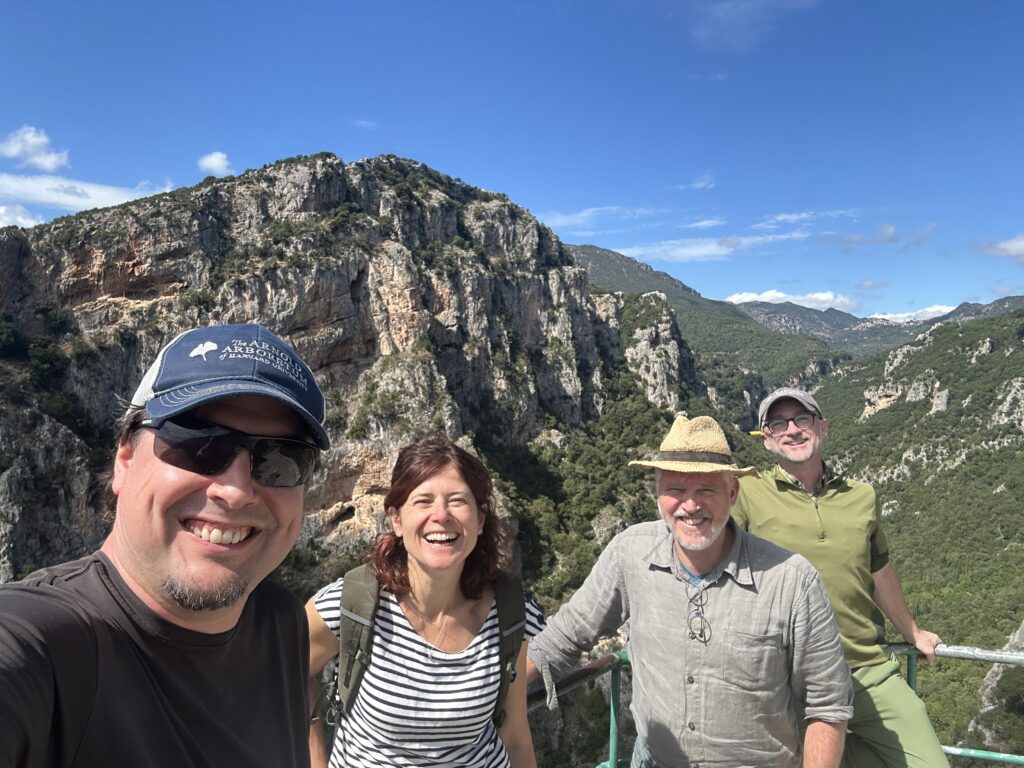
Among the many highlights was Crataegus pycnoloba, a hawthorn endemic to Greece, which they collected on Mt. Helmos and Mt. Mainalo. Most of the plants the team encountered were small, shrubby mounds, reaching just one to two meters in height; with time and persistence, they will grow into small trees. Only a handful of gardens worldwide cultivate the species in their collections, and despite Founding Director Charles Sargent’s fondness for Crataegus, this marks the first time the Arnold Arboretum has accessioned the species.
Another rosaceous (rose family) acquisition was Eriolobus trilobatus, a rare apple relative often placed within the apple genus (syn. Malus trilobata). They made the collection with the help of Georgios Korakis, a professor from the Democritus University of Thrace, who has studied this species for years. The area, not far from Greece’s eastern border with Turkey, was recently decimated by forest fires and the species (one of about a half dozen Georgios has found over the years) grows as a single tree among the ravaged oaks.
Of the two maple species collected on the Peloponnese, Acer sempervirens, or the Cretan maple, was prized most by the team. This medium-sized tree with small, evergreen leaves grew on the steep valley slopes above the Lousios River. Because of low temperature and heavy soil intolerances, this species may not be fully winter hardy in Boston, but it is well worth the effort to attempt its establishment in the collection. If it doesn’t survive in the landscape, the species may be a candidate for preservation in the Arboretum’s renowned bonsai collection.
After they made their final collections and prepared the seeds for export to Utrecht (the Arnold Arboretum seeds would be sent along from there), Miles and Michael traveled to Italy to begin the second leg of the expedition. Maples and members of the rose family were also prime targets, and for assistance the Arnold explorers worked with Federico Selvi, professor at the University of Florence and expert on the Italian flora.
Michael Dosmann
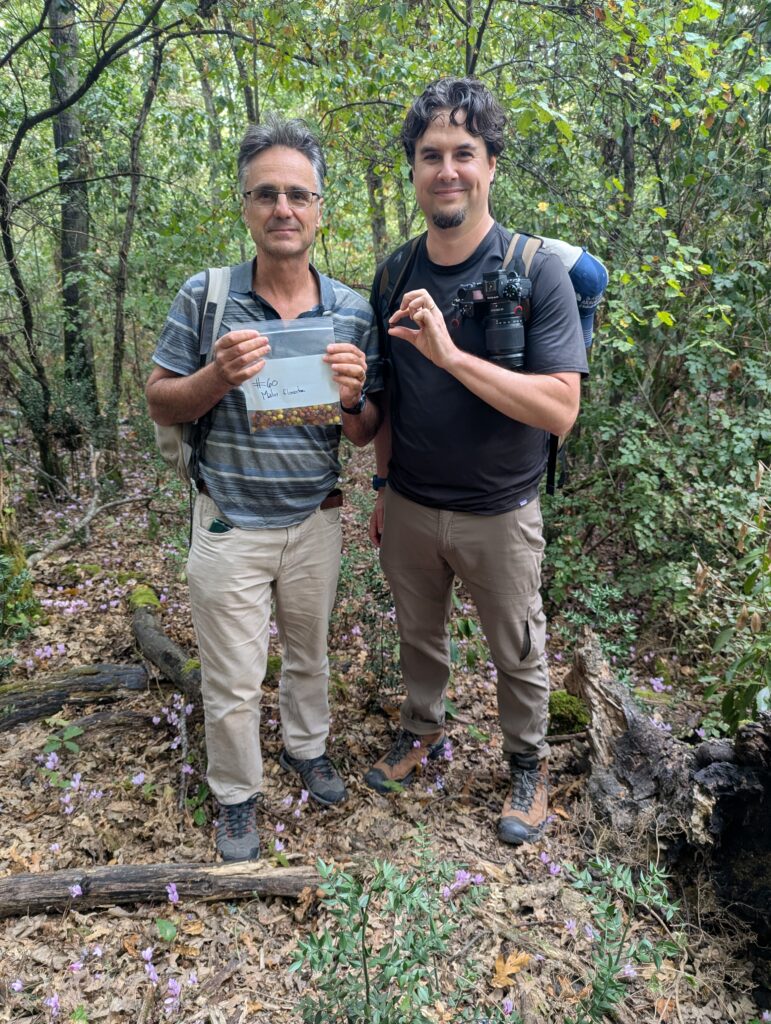
The main goal for visiting Tuscany was to collect another apple relative, Eriolobus florentinus (syn. Malus florentina). Like the E. trilobatus from Greece, the leaves are deeply lobed and the small fruits abundant. Unlike its Greek relative, however, each of the two populations of the Florentine apple included many individual small trees growing in the understory of large oaks and other hardwoods. Other related plants swarm these woods, including Sorbus domestica, a tall mountain ash with large, astringent fruits, and the medlar, Mespilus germanica. Although the Arnold’s collections include two provenances of Mespilus (from Iran and the Republic of Georgia), the other two species are entirely new to the collections.
The team had planned to collect maples while in Italy, but many trees had already shed their fruits. Luckily, Federico made collections ahead of time, including Acer opalus ssp. opalus, and Acer opalus ssp. obtusatum. Although both of these subspecies of the Italian apple grow in the Arboretum, neither is represented by wild-origin material currently.
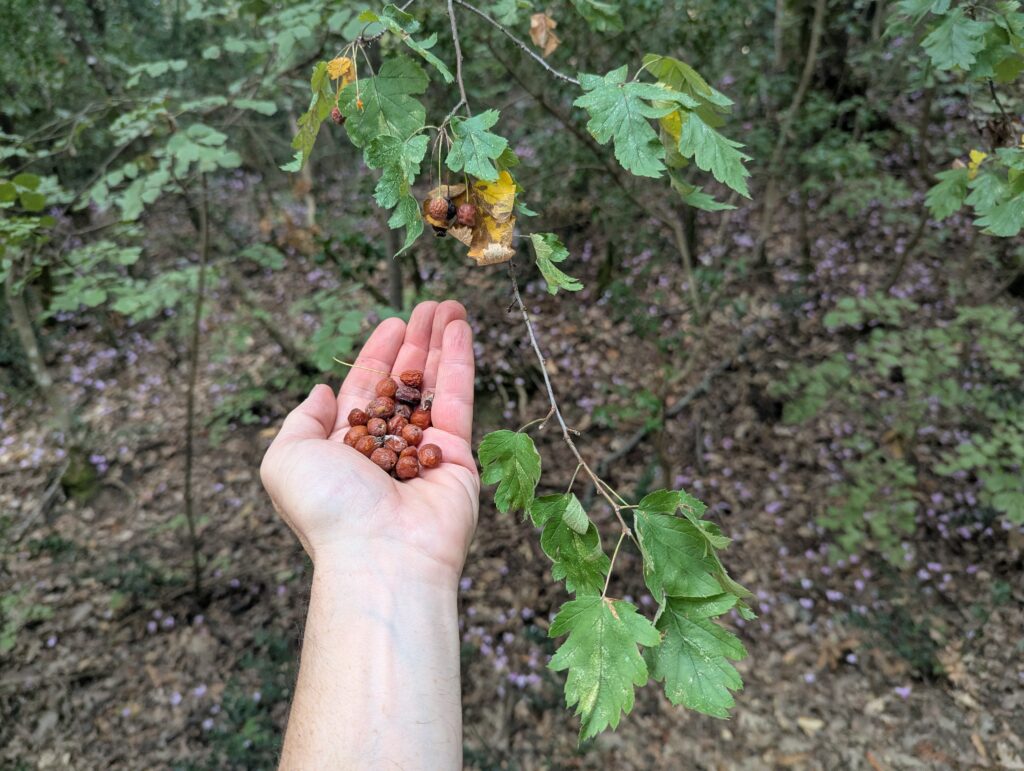
All told, Miles and Michael made a rich collection of seeds, herbarium specimens, and photographs of priority conservation species for the Arboretum’s living, preserved, and archival collections. These collections derive from 17 different taxa, eight of which are priority desiderata for the Campaign. In the coming months, these seeds will germinate at the Dana Greenhouse, and in a few years will graduate into the landscape to be studied and conserved. What began as seeds gathered in remote mountain forests will ultimately take root in Boston, carrying their stories across continents and centuries.