In July, the Arnold Arboretum’s landscape comes alive with the broad, luminous blooms of temperate hydrangeas—plants that reward close observation, particularly when encountered in their diversity. Across the Arboretum’s living collections, 183 hydrangeas representing 79 accessions—comprising 15 species and many varieties and cultivars—offer a vivid panorama of form, texture, and color as summer takes hold.
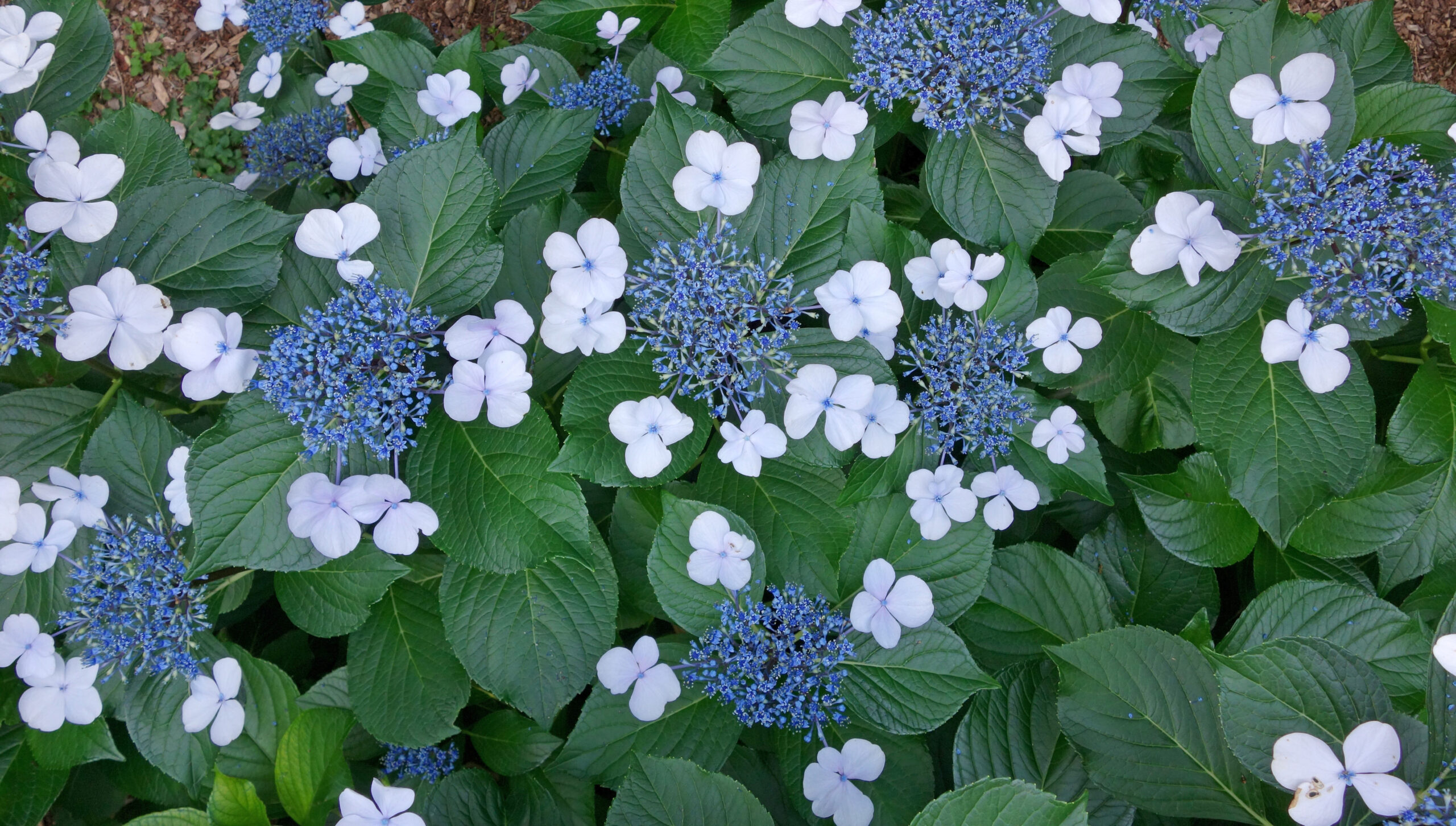
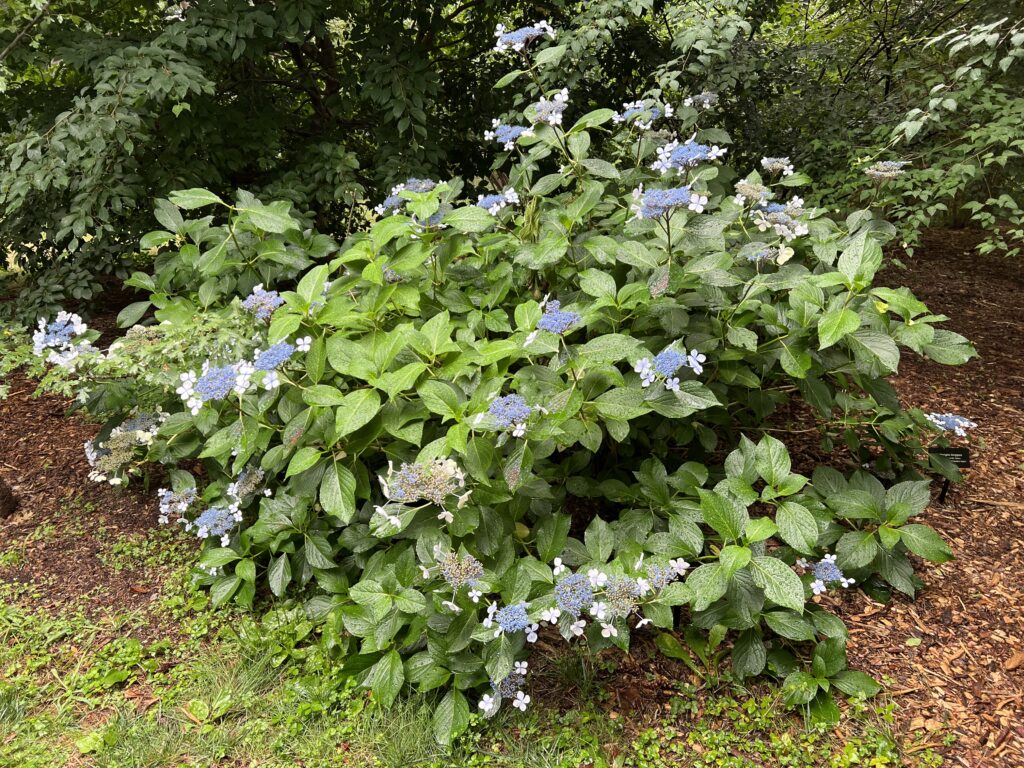
Each species tells its own story in the landscape. Bigleaf hydrangea (Hydrangea macrophylla) represents perhaps the most familiar species in American gardens, offering an array of mophead and lacecap flowers whose colors shift with soil chemistry—from saturated blues to pinks and purples. Even after peak bloom, the papery flower heads age gracefully, fading to muted tones that persist into fall, while glossy foliage can take on subtle autumn hues.
Panicle hydrangea (H. paniculata) produces elongated, conical flower clusters that age from creamy white to blush and deeper rose shades, often drying in place to provide lasting winter interest. Upright and sun-tolerant, these shrubs and small trees also feature sturdy branching and exfoliating bark that becomes more visible in colder months, lending structure and quiet texture well beyond the summer season.

By contrast, the smooth hydrangea (H. arborescens), native to eastern North America, forms loose, rounded shrubs that spread gently through woodland edges. Exceptionally hardy and adaptable, it flourishes in a range of soils and light conditions, producing soft, cloudlike blooms on new wood each summer. Flowers mature to pale green and tan, often persisting into fall, while the plant’s fine stems and naturalistic habit lend movement and openness to shaded paths and garden margins throughout the growing season.
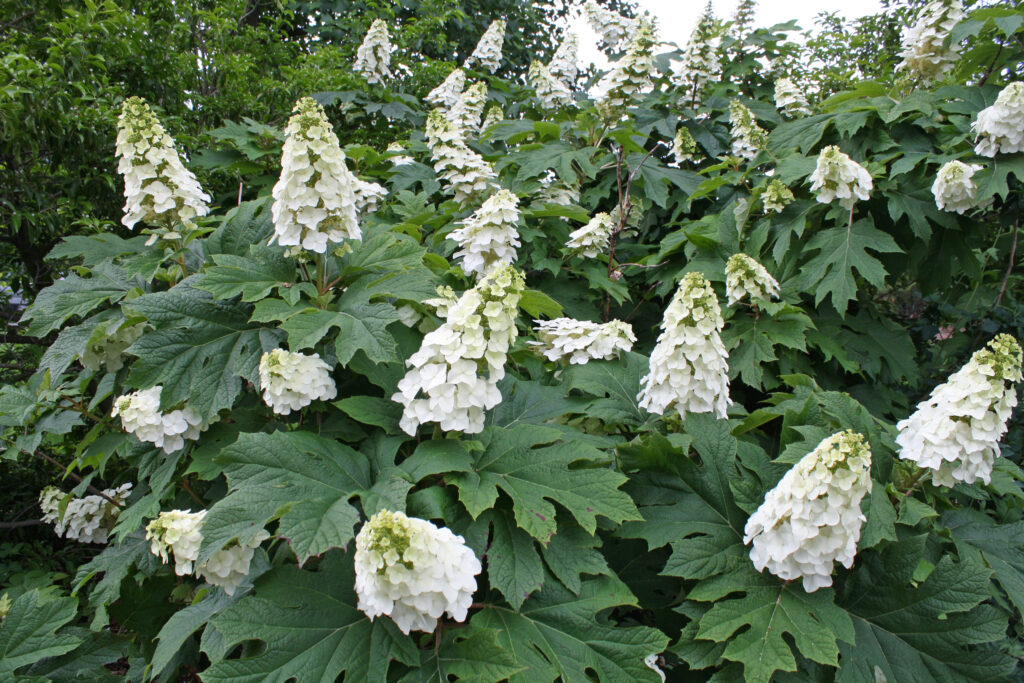
Distinctive foliage gives H. quercifolia, the oakleaf hydrangea, a unique allure. Its deep green, boldly lobed leaves echo those of oaks, while its tapering flower clusters transition from white to rose as summer progresses, then deepen to dusky pinks and soft browns that persist into autumn. The plant’s exfoliating bark—peeling in rich cinnamon and tan layers that reveal textured surfaces beneath—provides additional interest. Together with foliage that turns to shades of burgundy, bronze, and crimson, these features extend oakleaf hydrangea’s visual interest well beyond its flowering period.
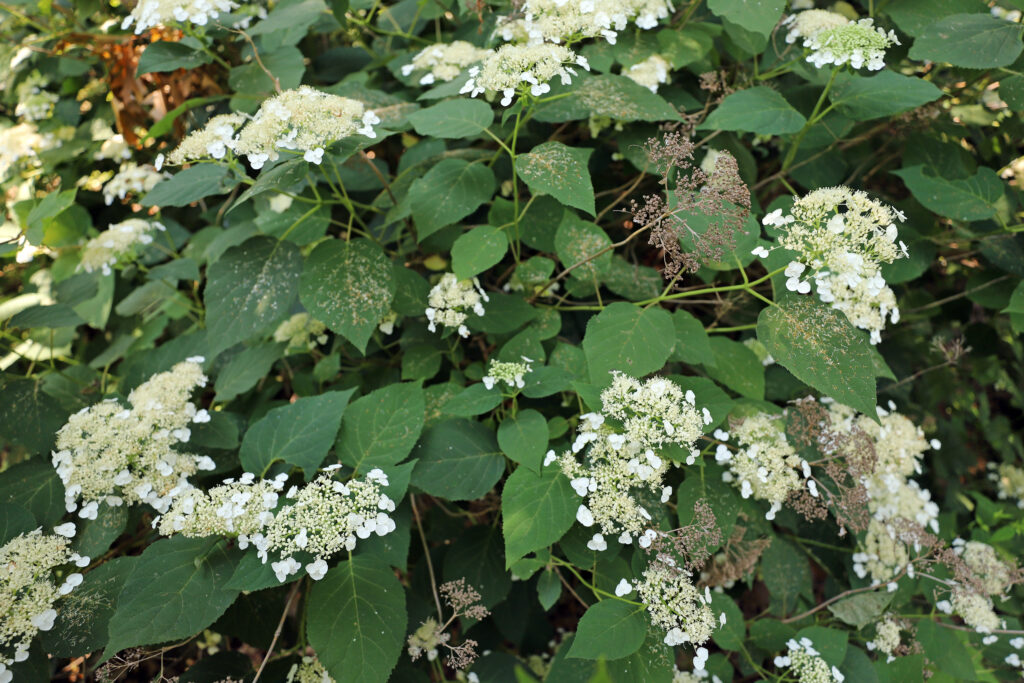
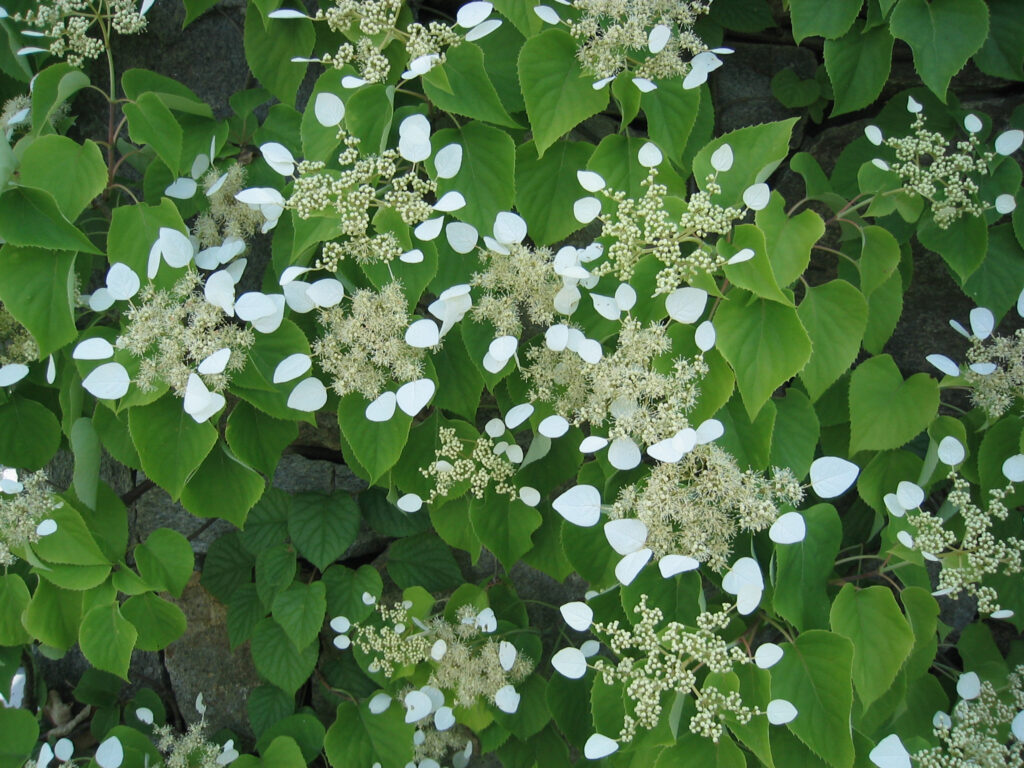
Hydrangea anomala, the climbing hydrangea, lends a striking vertical dimension to the genus, clinging to trunks, rock faces, and built structures with aerial rootlets. Slow to establish but vigorous with age, it eventually forms a broad, woody vine that can cloak large surfaces in deep green foliage. Its airy, lacecap flowers appear in early summer, hovering against bark and stone like luminous disks, while the textured stems and peeling bark provide subtle winter interest after leaves have fallen away. A beautiful example of climbing hydrangea thrives along the back wall of the Leventritt Shrub and Vine Garden.
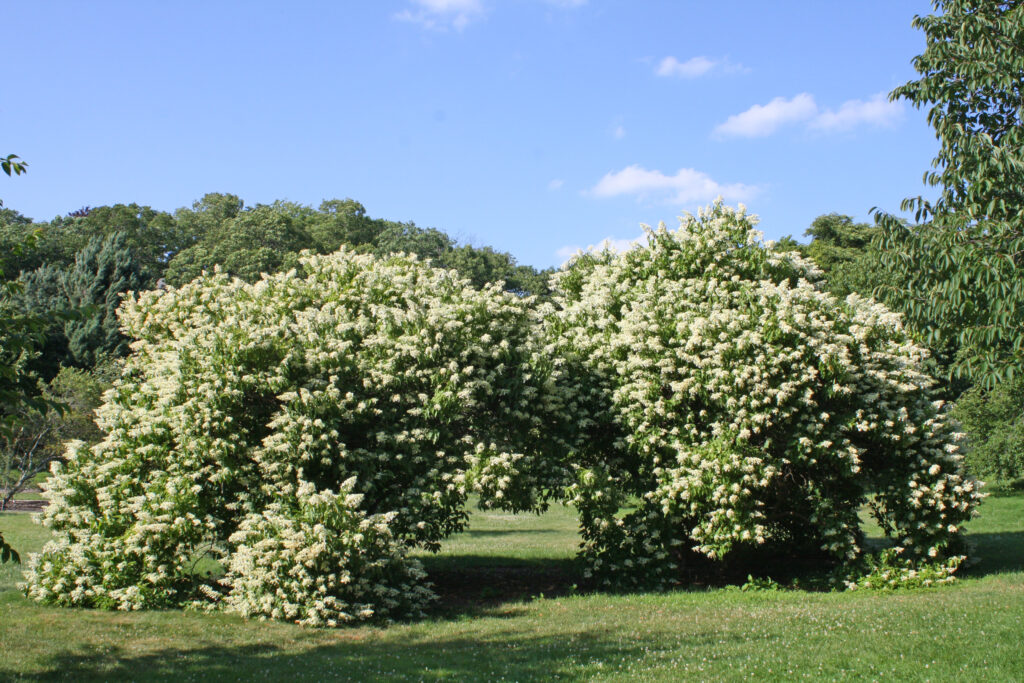
Historically, the cultivation of hydrangeas has deep roots at the Arnold Arboretum. An accession of a cultivar of bigleaf hydrangea (H. macrophylla ‘Otaksa’) entered our collection in August 1872—just months after our founding—marking the beginning of over 150 years of collecting and study. Perhaps the most significant hydrangea in our landscape is an individual of H. paniculata ‘Praecox’ (14714*A), collected in Japan by founding director Charles Sprague Sargent and accessioned in December 1892. The cultivar name refers to its notably early bloom time, flowering about a month ahead of the species, which typically comes into flower in late summer. This accession, growing in the Bradley Rosaceous Collection, not only represents one of the first acquisitions sourced through the Arboretum’s global plant exploration work—it also helped launch the Arboretum’s long history of introducing new and noteworthy plants into cultivation in North America.
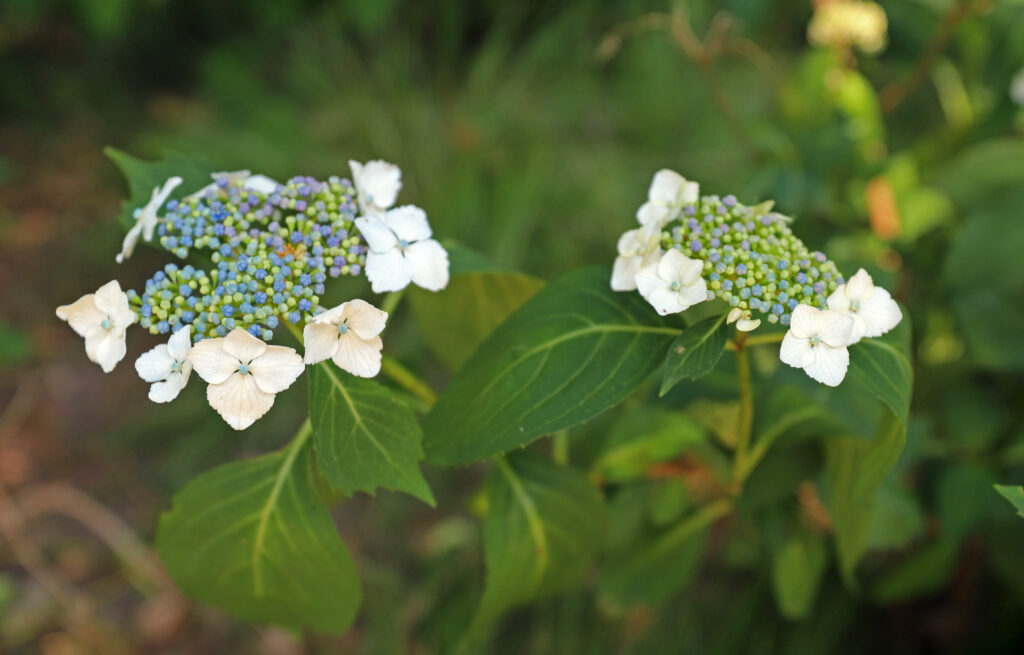
The story of this dual legacy—discovery and dissemination—is also reflected in another standout cultivar, H. macrophylla ssp. serrata ‘Tokyo Delight.’ During fieldwork in East Asia in the late 1960s, Arboretum botanist Shiu-Ying Hu encountered this distinctive hydrangea with long-blooming, multi-toned flower heads growing at a university botanical garden in Tokyo. Recognizing its unique beauty and horticultural potential, Hu sent cuttings to Arboretum propagator Alfred Fordham, who cultivated and tested the plant for its introduction here. Together, their work transformed a casual discovery into a lasting contribution to cultivated landscapes.
Jon Hetman
These and many other hydrangeas can be observed and enjoyed throughout the Arboretum’s 281 acres, integrated into a wide range of settings in our understory. Visitors hoping to explore the genus in depth should seek out standout plantings in the Explorers Garden, the Leventritt Shrub and Vine Garden, and along Linden Path. In July, a visit to the latter landscape can be especially rich: as you encounter diverse and distinctive hydrangeas, the bright, citrusy aroma of linden flowers overhead layers scent with color and light into a multisensory experience that epitomizes summer magic in the Northeast.