
For years, I have tried to visit the two oldest Franklin trees (Franklinia alatamaha) in the world (at the Arnold Arboretum, of course) on the day that the first flower of the season opened. My records show that the earliest date I have recorded was August 3, back in 2018. This week, while visiting these two magnificent specimens, I began to ponder the amazingly long period of time that members of this extinct-in-the-wild species have open flowers. The latest date I have recorded an open flower on a Franklin tree is October 26 in 2024. Our Franklin trees are in flower for nearly three months!
Why am I obsessing about the flowering period in Franklin trees? Well, the flowers themselves are ephemeral. They are open for business for just a few days, then wither and shed the sepals, petals and anthers, while holding on to the young fruit that will take roughly 13 months to mature (that is a great story for another day). Most species of temperate woody plants are in flower for a matter of a few weeks, at most. Think of your magnolias or crabapples and cherry trees. How and why does the Franklin tree pull this unusual feat off? I have a few thoughts but encourage you to ponder this yourself.
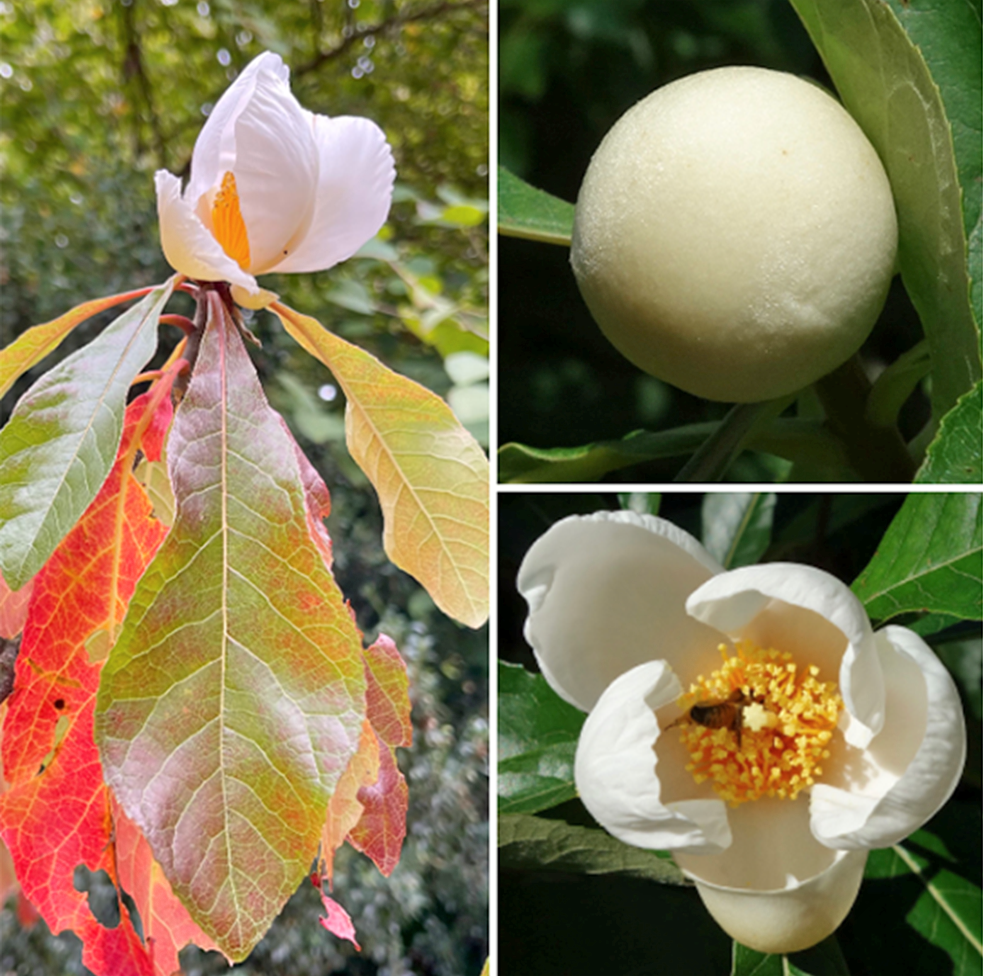
Images of accession 2428-3*A include (at left) a flower just opening in mid-October along with the magnificent fall colors of its leaves. Upper right, a flower bud just before anthesis (flower opening) with the creamy outermost petal. At bottom right, a newly opened flower being pollinated. Note that the outer petal (the petal at bottom) lacks the wonderful crenulations of the four inner petals.