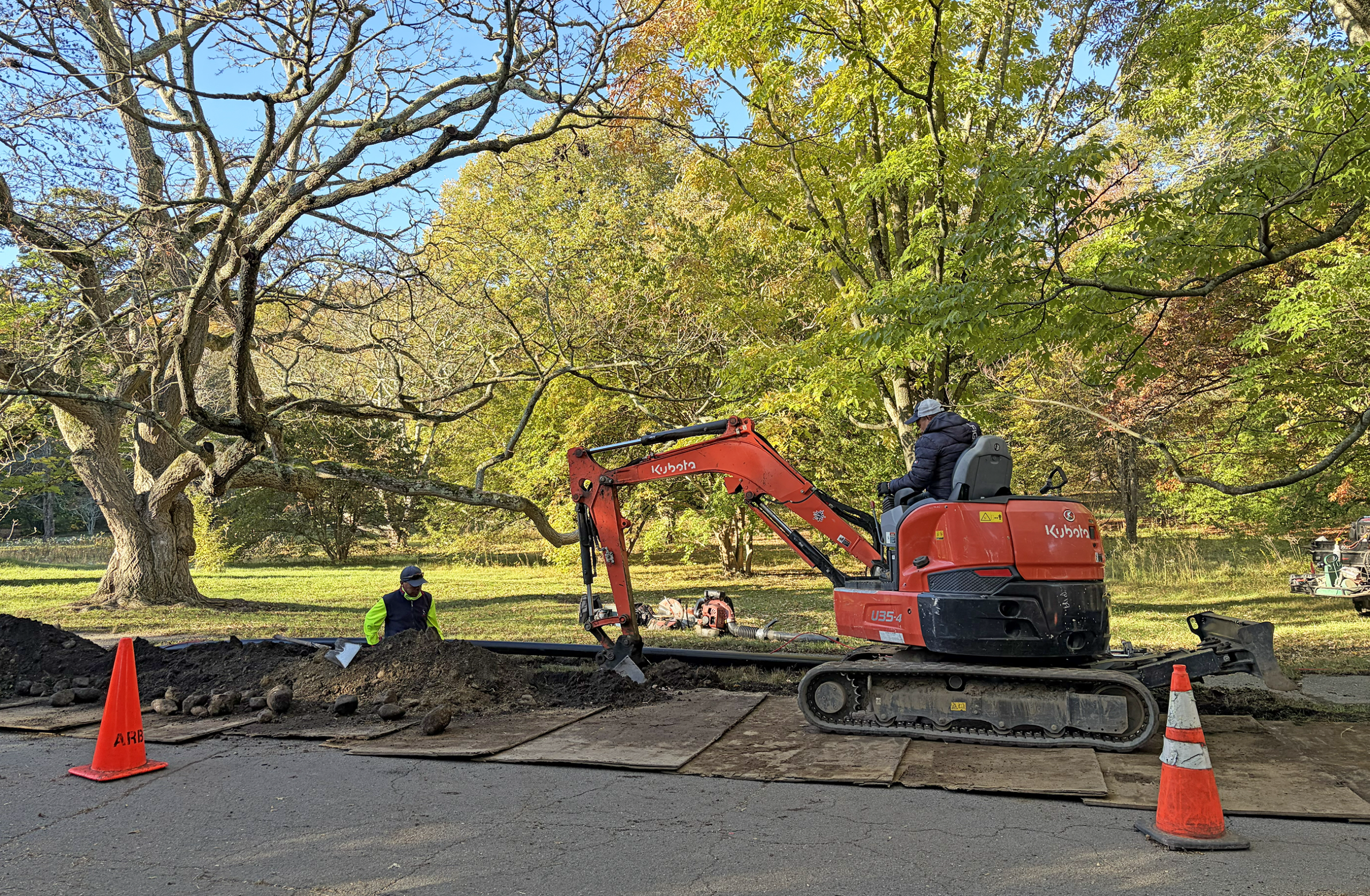
As climate change brings more frequent and severe droughts to New England, the Arnold Arboretum is making significant investments to protect the trees and plants that define its historic landscape. This fall, with generous donor support, the Arboretum initiated the third phase of its Drought Preparedness Initiative, expanding emergency irrigation infrastructure to help safeguard some 5,000 accessioned trees, shrubs, and vines across 60 acres of the landscape.
Launched in 2018, the initiative represents one of the largest investments in the long-term sustainability of the Arboretum’s living collections in its history. Designed to help rare, historic, and scientifically important plants withstand increasingly extreme weather, the project strengthens the Arboretum’s ability to support research, plant conservation, and the enjoyment of nearly a million visitors each year.
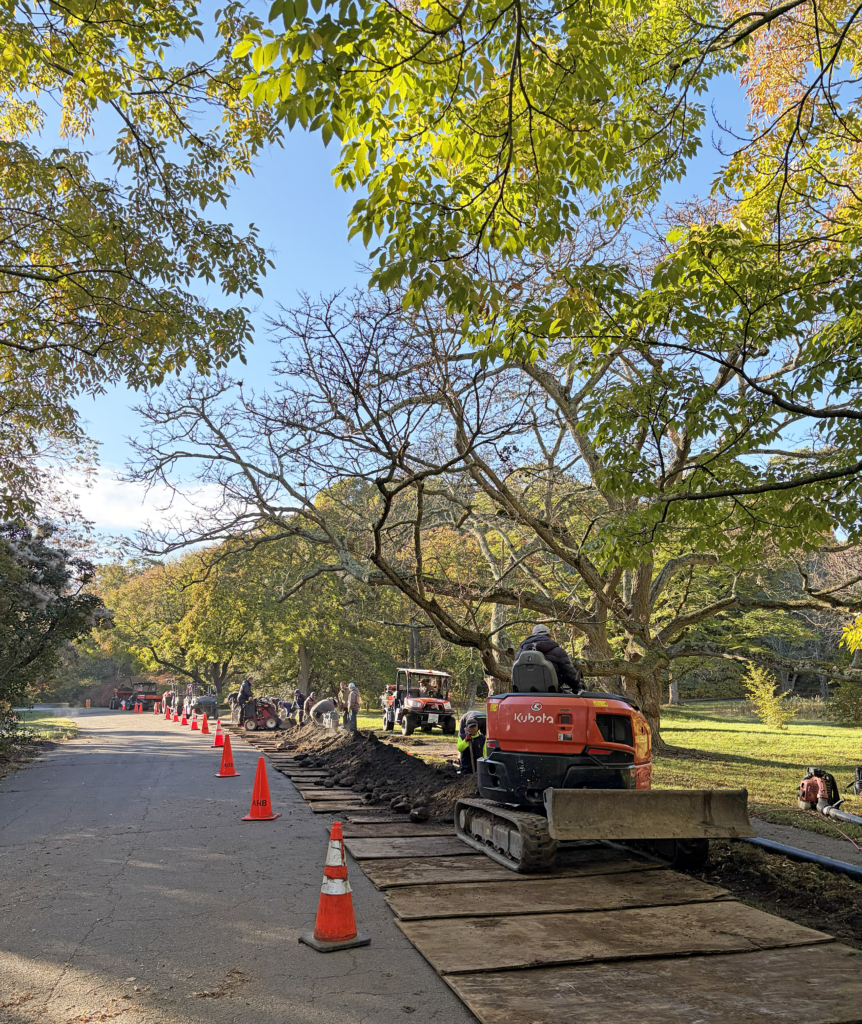
“Often, irrigation is installed as part of a new or newly renovated landscape project,” said Rodney Eason, director of horticulture and landscape. “With this project, our expert staff and contractors are working to carefully install an in-ground irrigation system within an almost 150-year-old landscape. It has been inspiring to watch the care and precision that everyone involved has used to protect our trees. Starting next summer, the Arboretum will be able to provide more supplemental water to our extremely important magnolias, maples, and beeches.”
Recent improvements extend irrigation infrastructure along Hemlock Hill Road and connect new automated watering zones within the Arboretum’s nationally accredited Beech and Rhododendron Collections. The project also brings irrigation service to the summit of Hemlock Hill and links with the existing Conifer Collection network, creating important backup capacity and improving reliability during drought conditions.
A second major component extends irrigation infrastructure through the North Woods, Linden Collection, and Meadow Road corridor to Arborway Gate. When final connections are completed in December, the system will provide irrigation support to the Magnolia Collection, Linden Path, Azalea Border, and Maple Collection. New infrastructure along Willow Path also establishes the foundation for future expansion within the Maple Collection and nearby landscapes.
Additional upgrades connect irrigation systems serving the Dana Greenhouses with new watering zones in the Lilac, Beech, and South Street Slope collections. Together, these improvements create a more resilient and interconnected network, allowing critical watering operations to continue even during maintenance work or unexpected equipment failures.
The urgency of this work has become increasingly clear. Exceptionally dry conditions across New England in 2025 and 2026 demonstrated that even mature trees and established landscapes are vulnerable to prolonged drought stress. These back-to-back years of extreme weather reinforced the need for reliable water infrastructure, making irrigation not simply a horticultural enhancement but an essential tool for climate adaptation.
While progress on this phase of the initiative marks a major milestone, opportunities remain to expand protection to several additional high-priority areas, including landscapes around the Weld Hill Research Building, Willow Path along the eastern edge of the Maple Collection, and the Walter Street Gate as part of planned renovations to that entrance. Continued philanthropic support will help the Arnold Arboretum build on this progress, ensuring that this extraordinary living museum of trees remains healthy and resilient through climatic extremes in seasons to come.