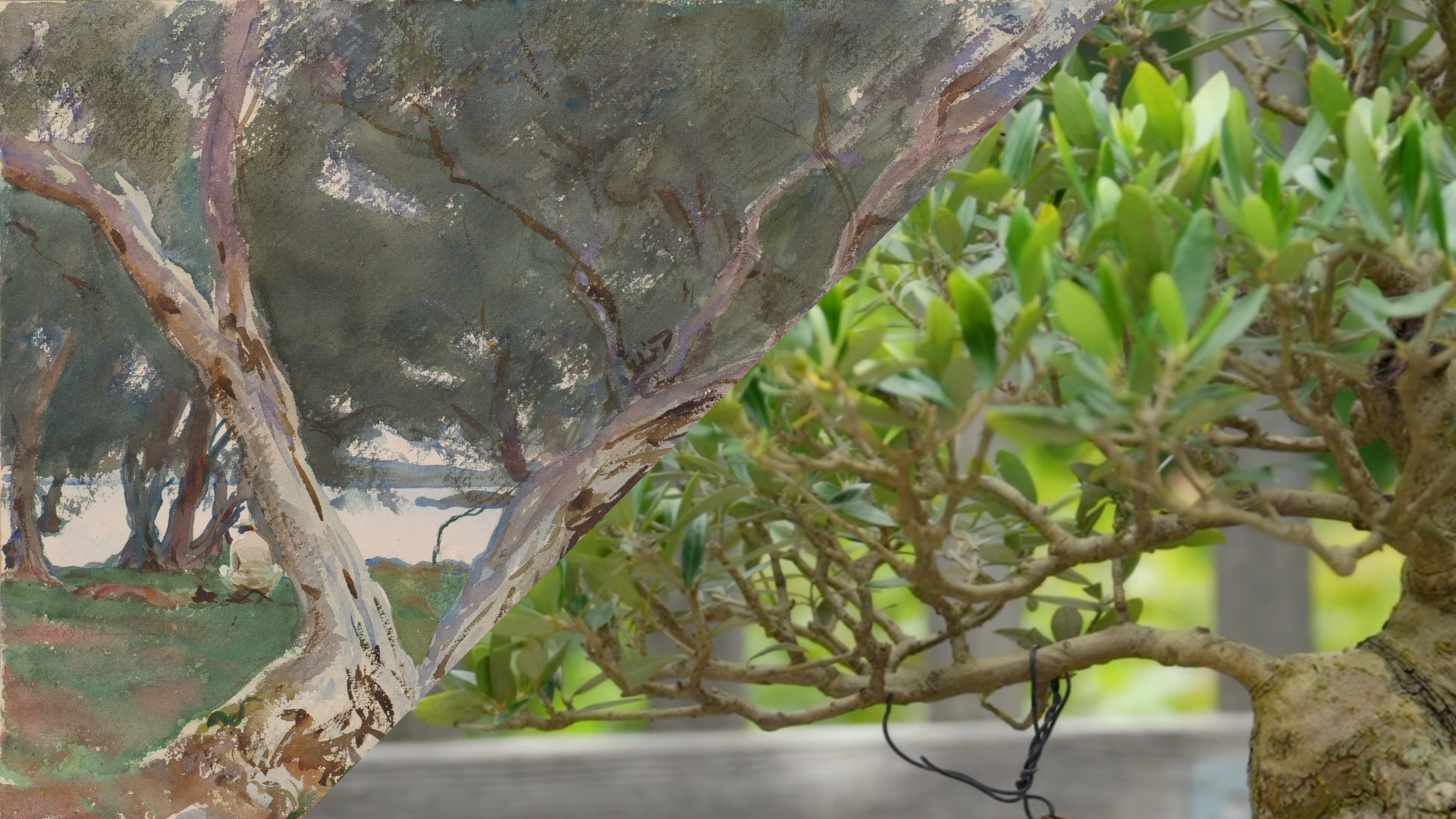
Our Double Take series is a collaboration with Harvard Art Museums, pairing objects from both collections: a plant from the Arnold Arboretum + a work of art from the Harvard Art Museums. This Double Take is part of a special series celebrating the Museums’ special exhibition “On Location: Drawing the Outdoors,” on view from September 18, 2026–January 17, 2027.
In 1909, John Singer Sargent traveled to Greece with his friend and travel companion Wilfrid de Glehn and painted Olive Trees, Corfu. At the center of the watercolor is a split, gnarled olive tree, dramatic and silvery.
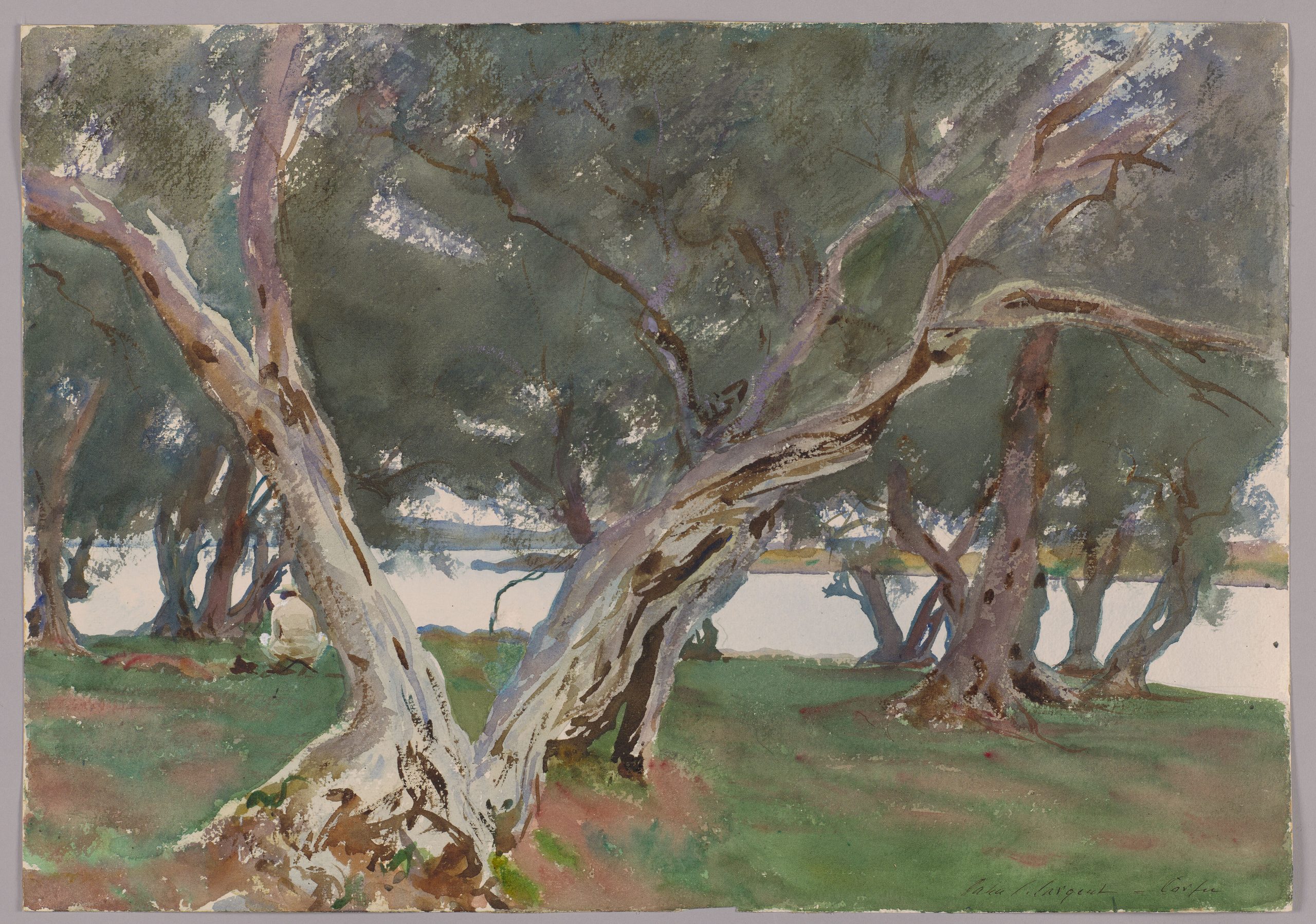
Look closely and you’ll find de Glehn tucked under the branches, looking a bit like a fruit of the tree himself. Sargent signed the work and noted “Corfu” beside his name, so the memory of that outing with his friend would stay with it. Joachim Homann, Maida and George Abrams Curator of Drawings at the Harvard Art Museums, says he was tickled by the difference in scale when he saw our olive. In the painting, the tree is so big that the figure behind it looks tiny.
Sargent wouldn’t have seen a tree like this in Boston, since they can’t handle our harsh winters. At the Arboretum, we found a workaround: we grow an Olea europaea as a bonsai, which means it can spend winter indoors in our cold storage facility.
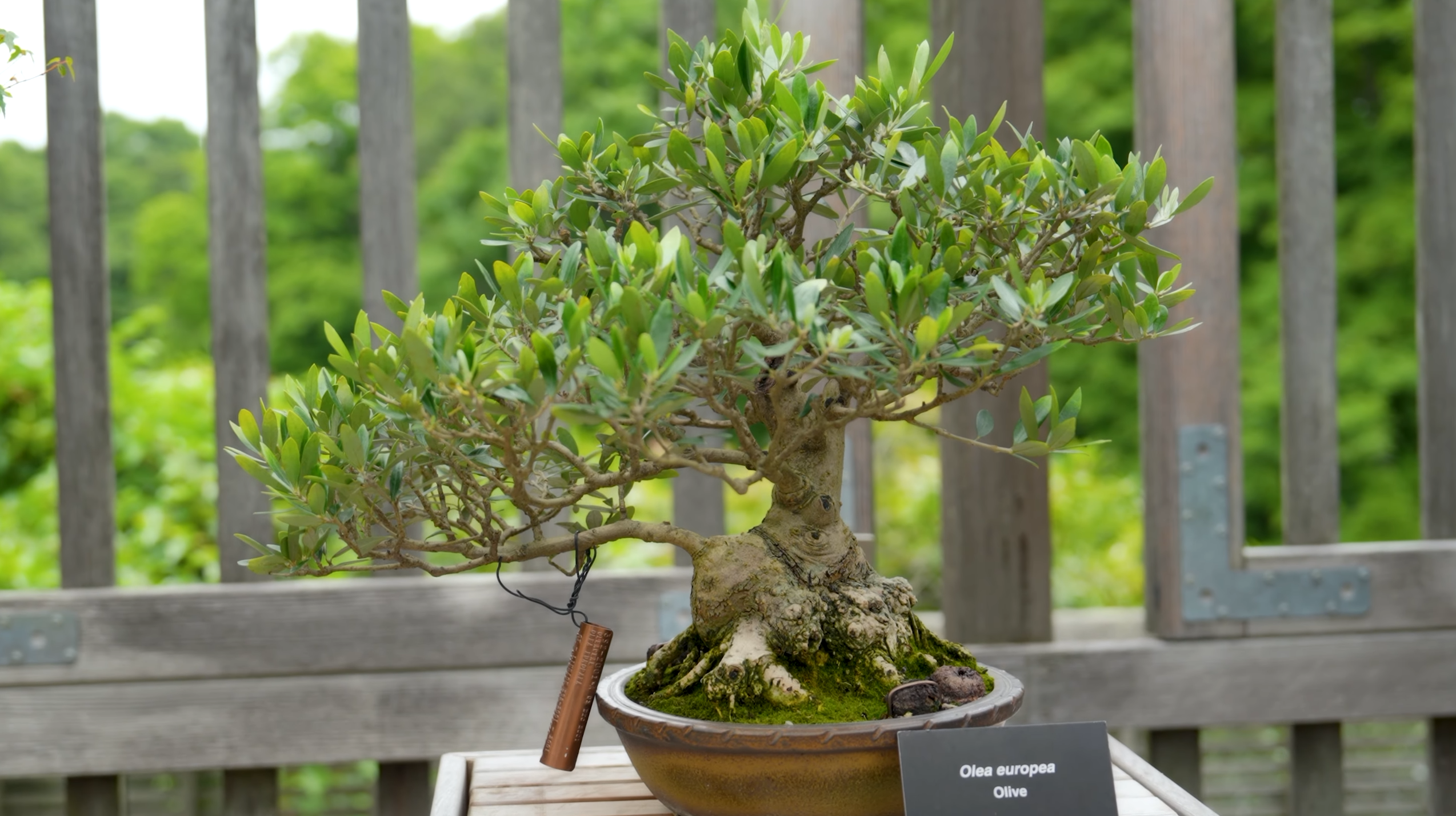
Our specimen comes from Mount Olympus, Greece, and its story starts in Boston in 1996, when cuttings were gathered to make a wreath for the Boston Marathon. Those cuttings rooted and grew, and about 25 years ago we received one from the Museum of Science. After years in a container, it was moved into our Bonsai and Penjing Collection, so Harvard’s tree museum could have an olive of its own.
Visit Olea europaea (392-2001) in the Bonsai and Penjing Collection from April through mid-November at the Arnold Arboretum.
Visit “Olive Trees, Corfu” (1943.314) on Level 3, Room 3500, Special Exhibitions Gallery, at the Harvard Art Museums.