Arboretum Seeks Philanthropic Support for Explorers Garden Expansion
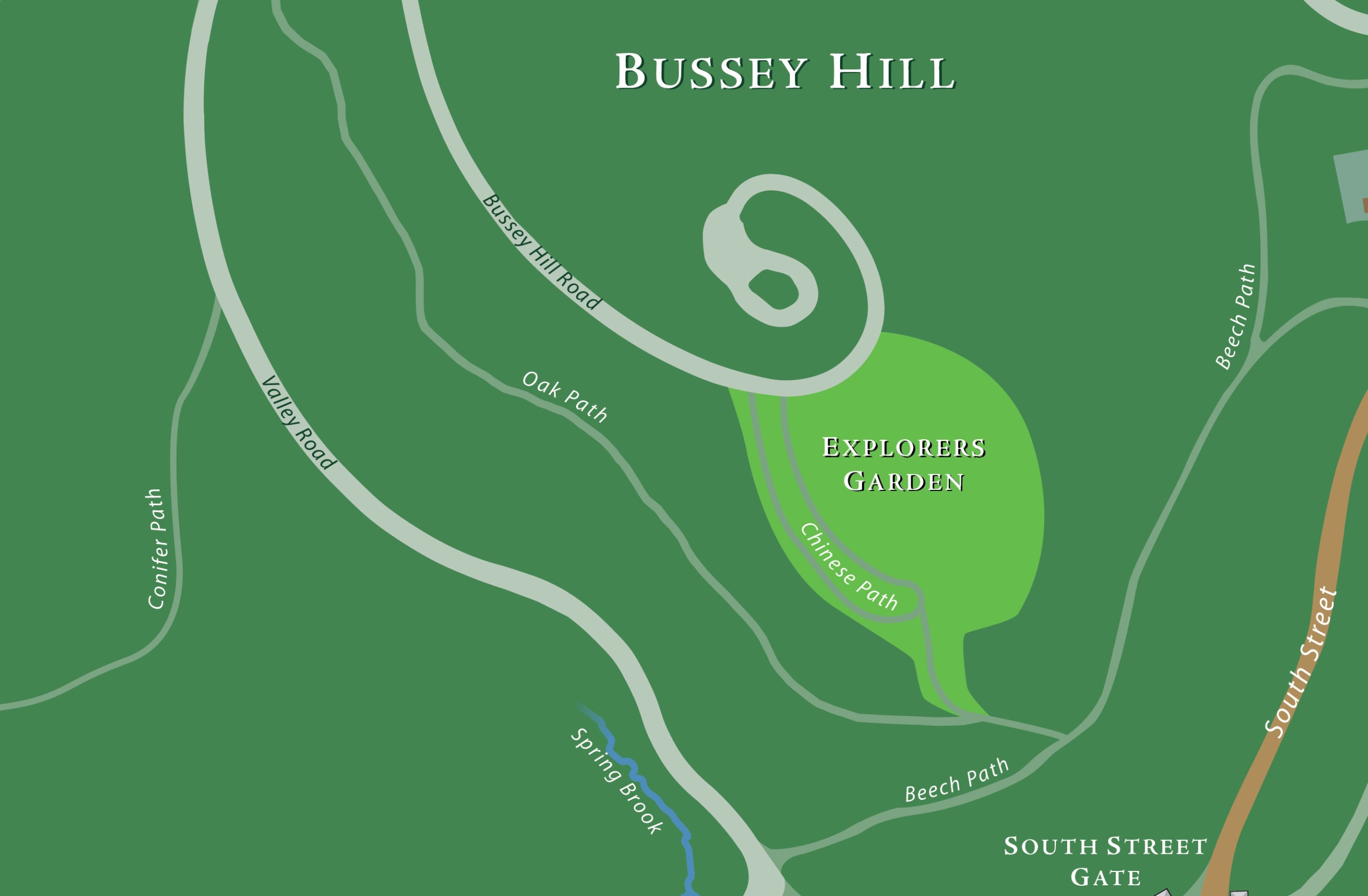
Bussey Hill is among the Arnold Arboretum’s signature landscape features, rising above the Arnold Arboretum of Harvard University to command magnificent views of the landscape and the Blue Hills beyond. Yet its summit currently underwhelms, offering little sense of arrival or connectivity to what grows around it. Nearby, the Explorers Garden tells a more coherent story—of discovery, adaptability, and the improbable global journeys of plants. And yet it too falls short of its promise, its informal and disconnected pathways limiting accessibility and its magnificent collections insufficiently showcased.
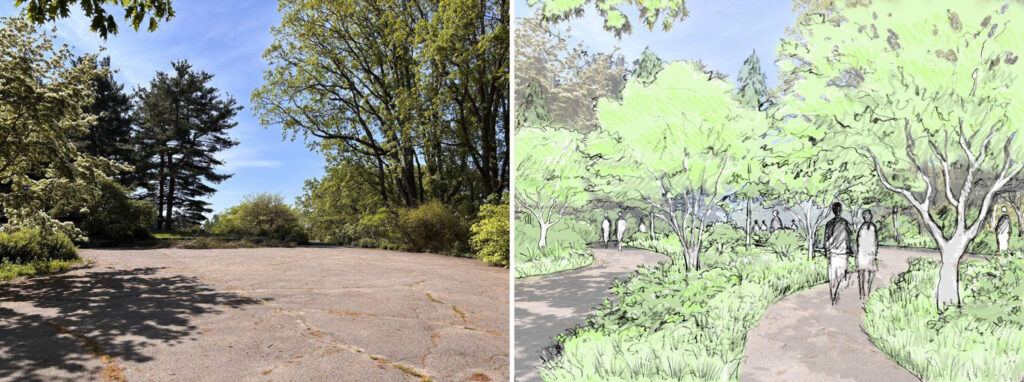
But thanks to a recent gift from an anonymous donor, the Arnold Arboretum is taking the first step in transforming Bussey Hill into a more unified and compelling visitor experience. The gift supports the conceptual and formal design phases of a project to create a unified and more accessible Explorers Garden that incorporates the summit and enhances how the Arboretum tells the story of its work in plant exploration and conservation. Highlights include improving circulation throughout the garden to the summit of the hill and extending new plantings throughout the surrounding landscape to knit these spaces together. Once completed, formalized plans will allow the Arboretum to engage prospective donors and build support for the project’s construction.
The Explorers Garden occupies nearly five acres just below the summit on the hill’s southern exposure, where the terrain and microclimate create growing conditions more forgiving than those found elsewhere in the Arboretum. For over a century, it has served as a horticultural laboratory where plants collected from around the globe can be tested, studied, and conserved. The collection traces a line from the early twentieth-century travels explorers like Ernest Henry Wilson to more recent expeditions organized in partnership with the North America-China Plant Exploration Consortium. Today, nearly 1,000 accessioned plants grow here, particularly species from Asia as well as rare and marginally hardy North American natives.
The garden’s notable residents include two of the world’s largest and oldest Franklin trees (Franklinia alatamaha), a species extinct in the wild for more than two centuries; a 1907 collection of paperbark maple (Acer griseum) from Hubei Province in China; and one of the first introductions of a hardy cedar of Lebanon (Cedrus libani), collected by Walter Siehe in the Taurus Mountains in Turkey in 1900. Visitors also encounter a century-old Chinese fringe tree (Chionanthus retusus), whose rounded canopy teems with white blossoms in late spring, as well as the seven-son flower (Heptacodium miconioides) with its shaggy bark and late-season interest. First documented by Wilson as an herbarium specimen in 1907, the seven-son flower was not introduced into cultivation outside of China until Arboretum staff participated in the Sino-American Botanical Expedition of 1980 and collected viable germplasm for propagation.
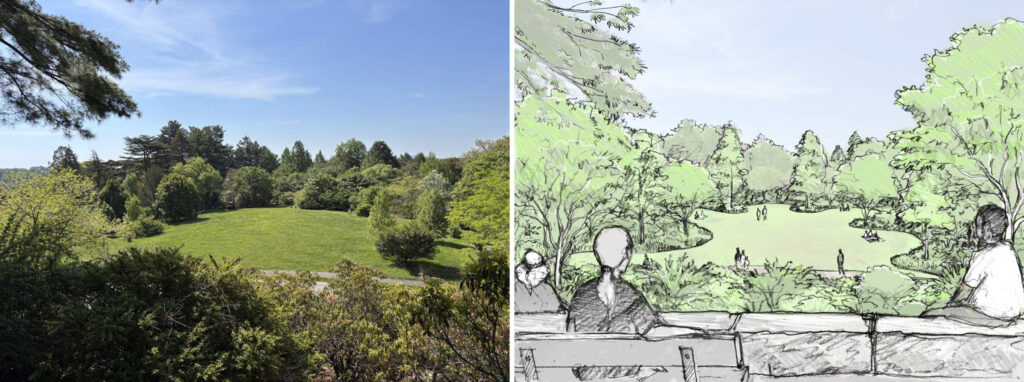
The Arboretum’s proposed redesign, led by Michael Dosmann, keeper of the living collections, and Rodney Eason, director of horticulture and landscape, would expand the capacity of the Explorers Garden while making it more inviting and enriching to the public. Concepts include activating more of the garden’s edges and lawn to bring new plantings further into the landscape and extending the display of some key collections like Stewartia at the summit. New accessible pathways and scenic vantage points will invite visitors to move through existing and enhanced collections, encountering it as an enduring record of exploration, adaptation, and the possibility of renewal. Innovative landscape design and improved circulation will be paired with careful attention to soil, drainage, exposure, and the specific needs of some of the Arboretum’s most precious—and precarious—plants.
With funding in hand for the planning phase, the Arboretum has begun an internal needs assessment and a series of focused design charrettes with Michael Van Valkenburgh Associates, an award-winning Boston firm recognized for its meticulous and innovative work with historic landscapes. Subsequent design phases will produce construction documents and renderings—materials that will help the Arboretum secure philanthropic support from donors for the realization of the project.
“While the taxonomic organization of our landscape is important to our science, it is also key for us to tell the story of exploration in the temperate world,” said Arboretum Director William (Ned) Friedman. “The Explorers Garden is the only space in the Arnold Arboretum that allows us to foreground the stories of international collaborations and our critical work in conservation. The proposed redesign and expansion of the Explorers Garden is a promise of what our institution can be for the world.”
For now, the Bussey Hill summit itself remains a promise. But an anonymous gift has given that promise shape. With additional support, a re-envisioned Bussey Hill Summit will complement and enrich the Explorers Garden by becoming its overlook, its threshold, and its partner in preserving and sharing the stories of temperate biodiversity at the Arnold Arboretum.