October 24, 2026–June 13, 2027
Hunnewell Building Visitor Center
Free and open to the public during regular Visitor Center hours
Plants and people are at the heart of Living Connections: The Arnold Arboretum and Korea, a new exhibition that explores more than a century of connections among science, history, culture, and international partnership.
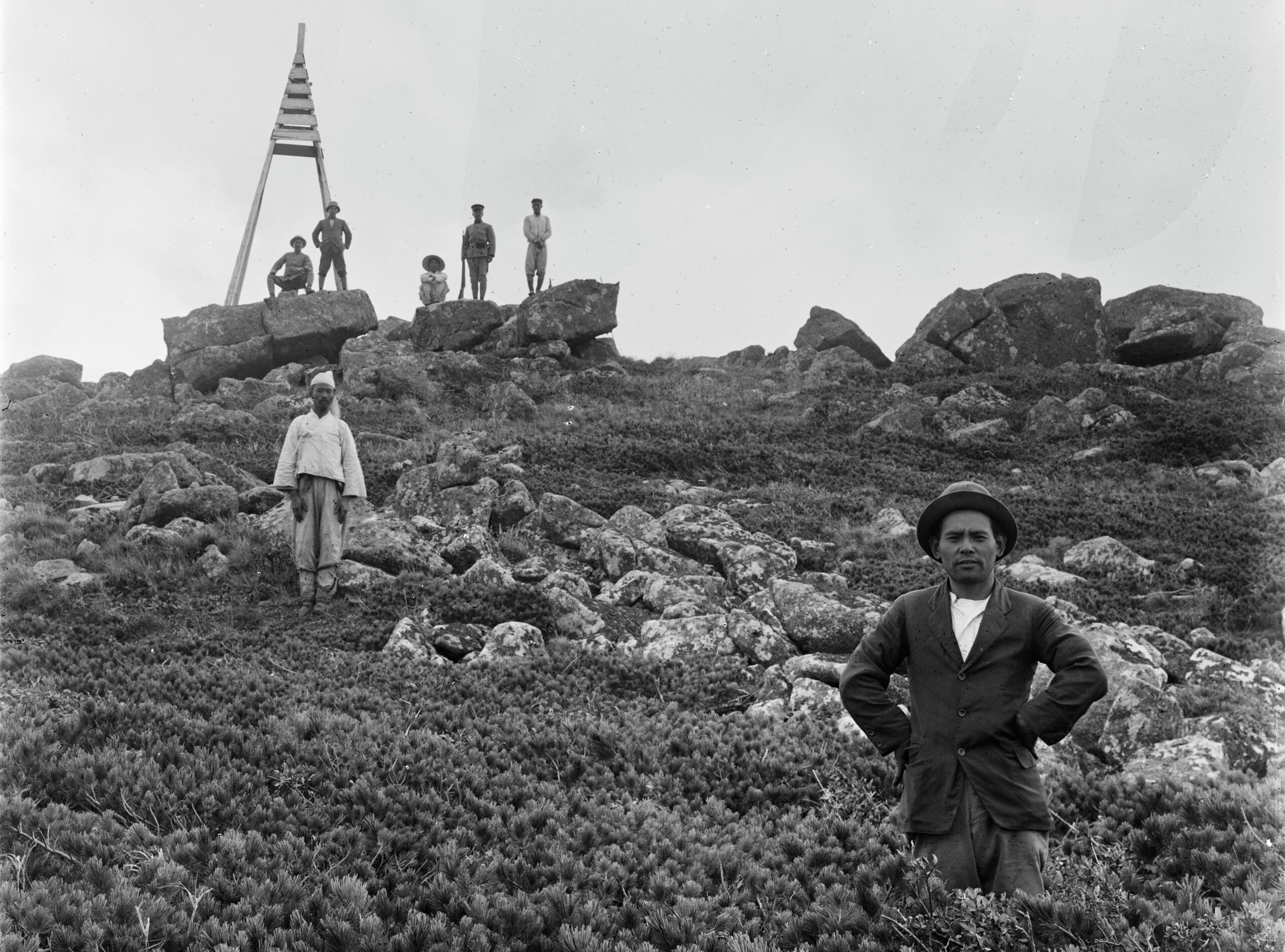
Opening October 24, 2026 in the Hunnewell Building Visitor Center, Living Connections examines the Arnold Arboretum’s enduring relationships with the flora, landscapes, and people of Korea. The exhibition pairs plants from the Arboretum’s living collections with one of the most extensive surviving visual records of early twentieth-century Korea, including photographs, archival materials, and contemporary collaborations.
The exhibition begins with botanical expeditions to Korea in the early twentieth century, when Arboretum collectors documented the peninsula’s flora and introduced hardy woody plants into cultivation in North America. Korea’s rigorous climate—similar in many respects to that of New England—made it an important source of plants capable of thriving in Boston. Many of these collections remain foundational to the Arboretum’s landscape today.
At the exhibition’s center is the work of renowned plant explorer Ernest Henry Wilson, whose 1917–1919 expedition produced an extraordinary visual and botanical record of Korea. His photographs capture plants and landscapes alongside architecture and daily life during a period of profound political and social change. Presented with living plants at the Arboretum, these images offer rare views of places now difficult—or impossible—to access and trace the origins of specimens that continue to grow in Jamaica Plain.
Living Connections situates this scientific work within the broader histories of Japanese colonial rule, the division of Korea, the Korean War, and continuing restrictions on access to parts of the peninsula. Rather than presenting plant exploration as a simple story of discovery, the exhibition examines how political power, colonial systems, and unequal relationships shaped scientific activity and historical records. It also acknowledges how Korean people and botanists were often marginalized or omitted from those records.
The exhibition highlights efforts to reinterpret these materials by restoring Korean names and identities in botanical literature, recognizing Korean scientists and institutions, and uncovering the human histories behind specimens, photographs, and place names. By connecting past and present, Living Connections shows how dynamic collections continue to generate knowledge, support conservation, and foster more reciprocal research and exchange with partners in South Korea.
Living Connections: The Arnold Arboretum and Korea is sponsored in part by Leslie and Peter Ciampi.
Please note: The scale model of the Arnold Arboretum landscape in the Visitor Center will be off view for the duration of the exhibition.