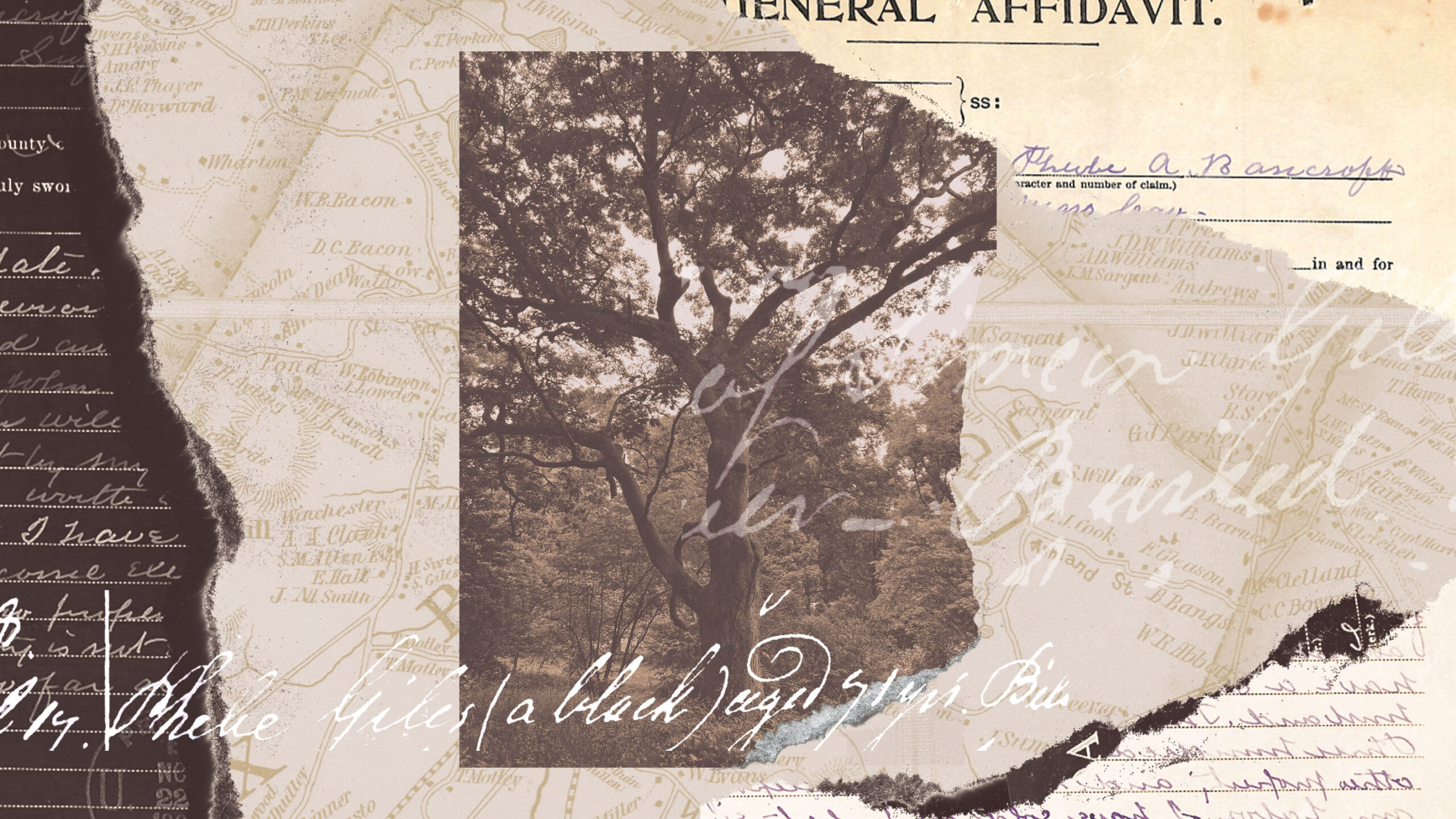
When you imagine historical sources, you might think of books, maps, and dusty manuscripts—but what about trees? Arnold Arboretum Director Ned Friedman and Harvard History Professor Tiya Miles posed this question as we meandered through the Arboretum’s oaks on a cool, rainy April afternoon. At the time, we were students in Dr. Miles’s history seminar, “Slavery, the Environment, and Public History.” After months of reading case studies, articles, and novels on how to draw stories from physical landscapes, we were finally putting our learning to the test by reading the Arboretum’s landscape for evidence of a man who lived more than a century ago. His name was Simeon Giles.
Professor Miles prepared us for our Arboretum visit by sharing what little we know about Giles, mostly uncovered by Thalia McMillion, Nancy Ahmadifar, Catherine Sasanov, and Mimi Pichey, all researchers with Hidden Jamaica Plain, a volunteer organization dedicated to uncovering Jamaica Plain’s marginalized histories. Through meticulous archival work, these researchers pieced together Simeon’s likely family tree and learned that he was a Black landowner in nineteenth-century Jamaica Plain (Roxbury), who was born in 1780 and died in 1858. He not only cultivated the land he owned but also used it to support his family’s future by leaving it to his daughter, Phoebe Giles Bancroft.
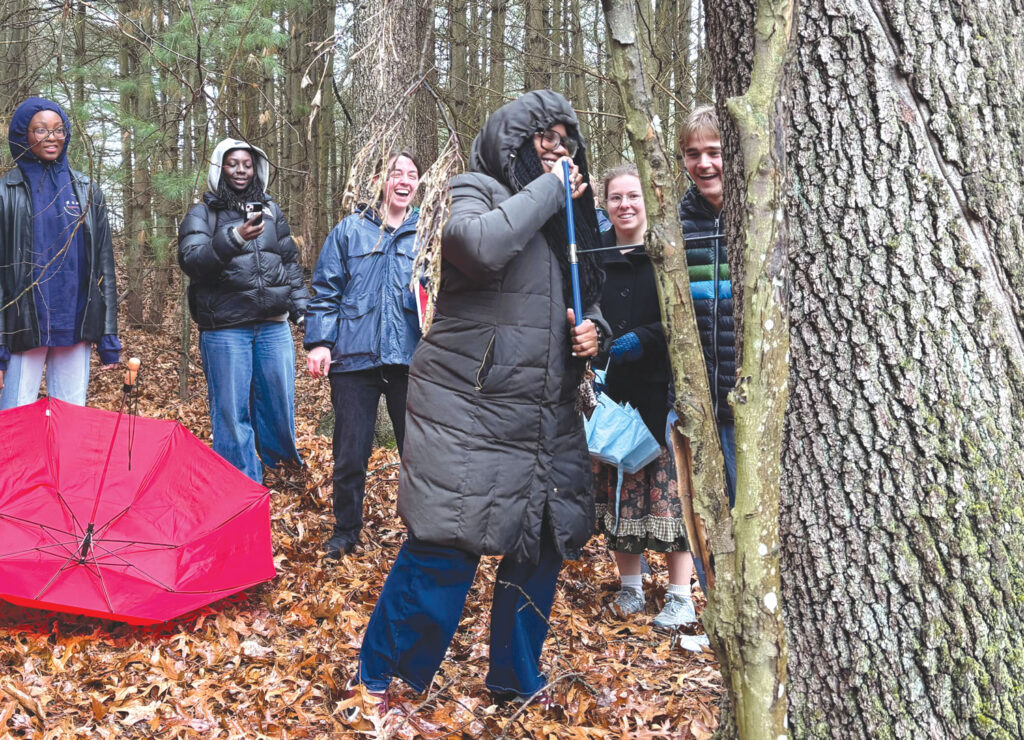
Friedman guided us off the Arboretum’s concrete path and onto a thick carpet of slick, fallen autumn leaves—ground that once belonged to Giles. Peering out from under our rain jackets and umbrellas, we imagined what it looked like when he inhabited it. Did he also have to watch his footing to avoid tripping on rainy days? Would he have cleared a patch in these woods to plant crops? What did the forest sound like to him? As we contemplated, Friedman strode up to a towering white oak. The tree had a thick, rough trunk and a skirt of moss around its base; a long lightning-strike scar, like a vertical claw mark wrapping around its side, was healing and beginning to regenerate new tissue.
We were going to ask the tree to speak with us and share its insights into Giles’s world. What environmental changes had it witnessed? Could it share Giles’s experiences with droughts, early freezes, heavy rains, or bountiful harvests? What new vocabulary could it introduce into our historical stories?
“Who wants to go first?” Friedman asked with a twinkle in his eye as he held up an increment borer, a large, T-shaped instrument used to take a core sample from the tree.
“Will it hurt the tree?” a student asked. Friedman explained that a large, healthy, and resilient tree like this oak can yield one or two small cores with minimal damage. With his guidance, we would bore responsibly by avoiding sick trees, not going too deep, and avoiding sampling near a previous boring site. A particularly brave student dropped her red umbrella, strode forward, and grasped the borer to begin carving a sample. We all took turns. Before long, Friedman removed and proudly presented the fruit of our labor: a long strip of wood, not even pencil-thick, filled with spiraling lines, each one a year of the tree’s life.
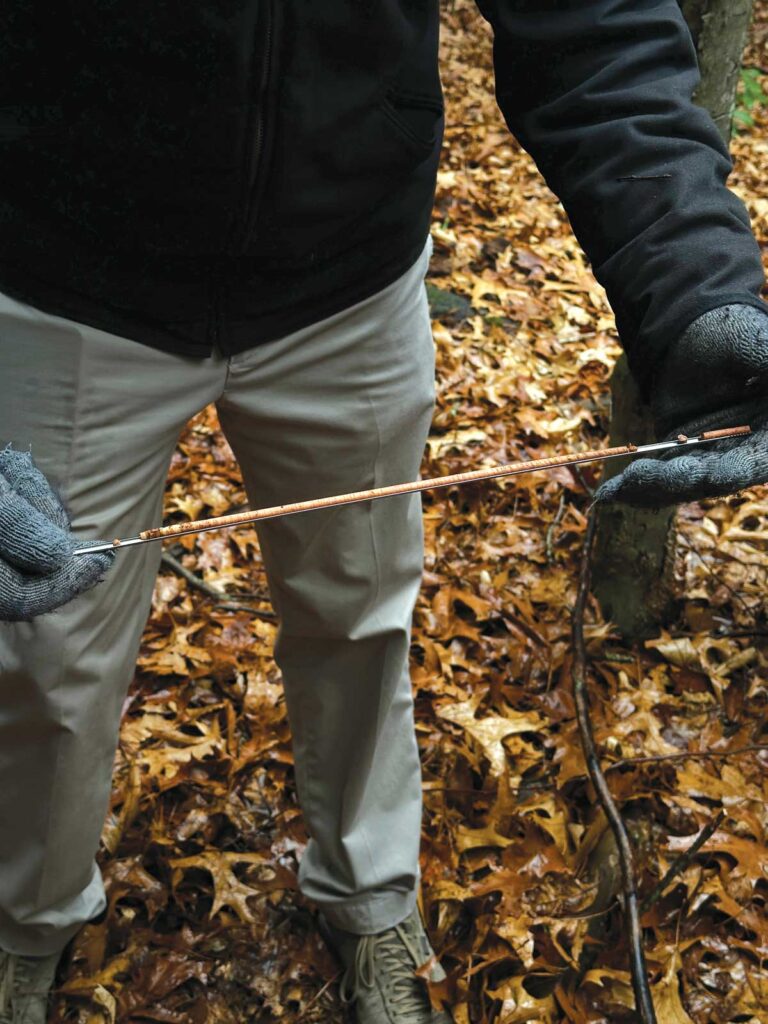
Widely spaced rings indicate periods of healthy growth for our oak, thanks to favorable weather. Narrow rings signal drought, disease, or insect damage. Sudden dark spots in the rings can indicate lightning strikes or fires. As a historical source, the oak reveals the ecological conditions Giles worked alongside or against to make his living. By counting the rings, we learned that the oak is about 160 years old. That means she probably first flowered around 1858, the same year Giles died and passed this land to his daughter, Phoebe.
After coring the oak, we wanted to engage more deeply with what the landscape could teach us about Simeon Giles’s life. It’s possible to put landscapes into conversation with written sources to offer definitive facts about Giles—when he lived and died, what he did for work, and how he created a family—but often the scarcity of archives challenges us to use informed speculation. We will think alongside and against local landscapes to consider the possibilities and choices Giles and his daughter, Phoebe Bancroft, faced as Black landowners in nineteenth-century Boston.
It’s possible to put landscapes into conversation with written sources.
Traces of Simeon Giles
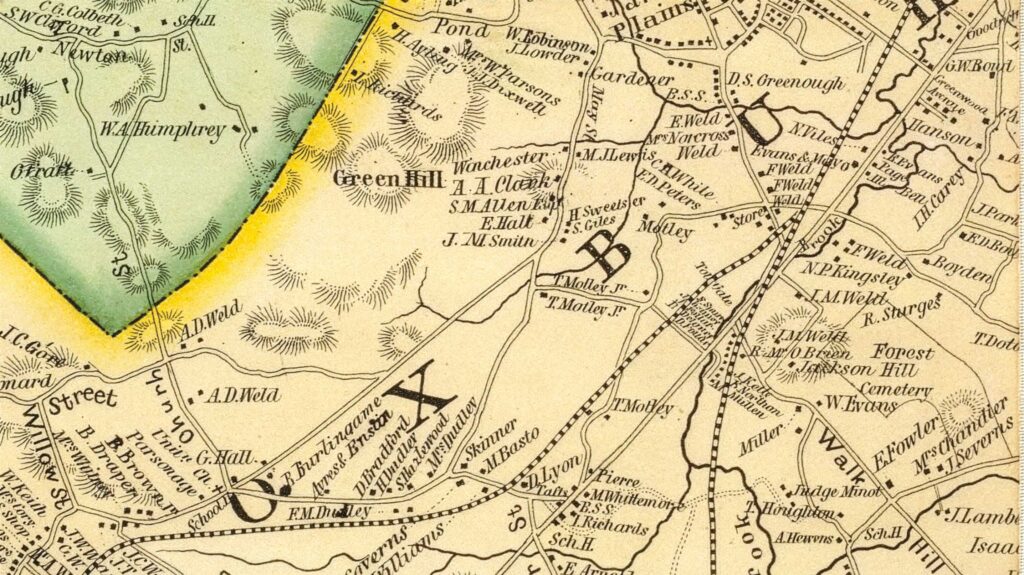
Giles lived in present-day Jamaica Plain, which he would have known as the agricultural town of Roxbury, for several years between his birth in 1780 and his death in 1858. His family’s ties to Roxbury remain ambiguous at best. In 1897, local author Harriet Manning Whitcomb speculated that Giles’s father might have been Peter Giles and that he may have been a servant of—or enslaved by—the founding statesman and political theorist Samuel Adams, who owned property and even a tavern in Roxbury. However, Whitcomb’s inference is not supported by other historical records.
Local death and property records shed more light on Giles’s maternal line: his mother, Phebe Giles (1747–1818), and his probable paternal grandmother, Dinah Giles (1701–1801). Given the period in which they lived, researchers Sasanov and McMillion argue that DInah was enslaved. As a result, we have little information about her.
We know that Simeon’s life in Roxbury was rooted in the landscape, particularly in the four plots where he lived and labored, which together totaled more than two acres. His daily life was mediated by the trees and plants he could profit from and by relationships with his neighbors, framed by their common interests as landowners. In 1839, he purchased two of these plots on Centre Street for $500 from Robert Seaver, the owner of a nearby grocery store, and his wife, Abigail. The Seaver family also owned the surrounding land. Seaver, however, had mortgaged part of his property to Thomas Milton before Simeon bought the land. This mortgage would have created a precarious situation for Simeon and his dependents: if Seaver defaulted on the mortgage, Milton could foreclose on the mortgaged land. Because Milton’s mortgage came before Giles’s deed, Giles could lose his right to remain on the land even though he paid for it and had nothing to do with Seaver’s payments to Milton.1 This situation reminds us that land represented more than physical plots in Simeon Giles’s Roxbury. It also represented networks of debt, promises, and trust among neighbors.
Land also shaped family relationships. Another of Simeon’s plots came from his mother, Phebe. We know she inherited a Centre-Street plot from her father, Peter. In the 1850 census, Simeon was listed as owning a house and land on May Street between Pond and Centre Streets, but we don’t know how he acquired it. This property is on land that now belongs to the Arnold Arboretum, specifically modern-day Bussey Hill.
The land invited Giles to partner with it in a multiplicity of ways: to cultivate, to harvest, and to create family.
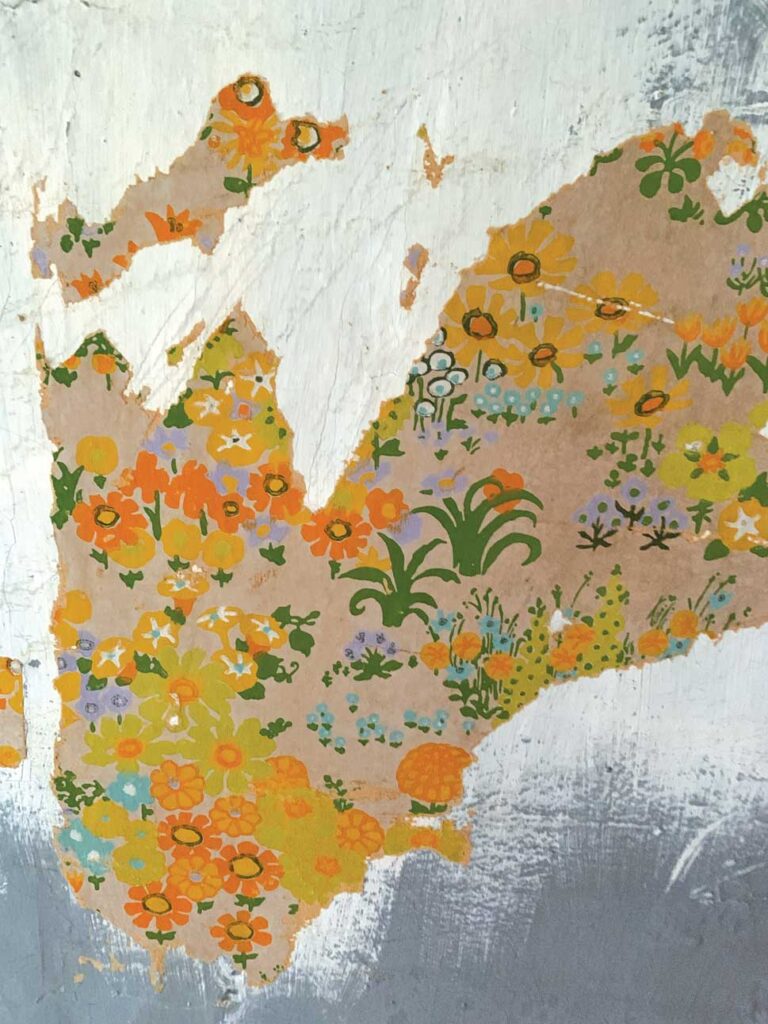
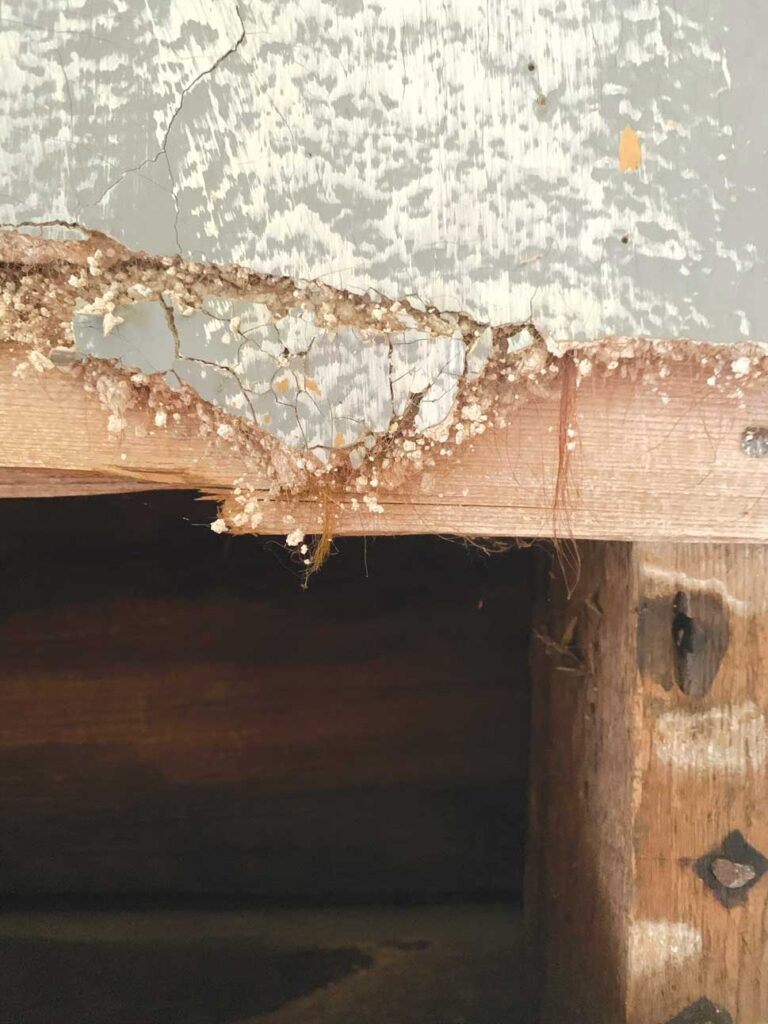
From Whitcomb’s account, we know that Giles likely earned income from farming and lumber, though it’s unclear whether he did so as an independent contractor or within an industry. Whitcomb notes only that “[Simeon] made a precarious living by woodchopping and like services for the neighbors.” Just as Phebe used her land to nurture her family roots through Simeon, he used his lumber work to build and support a family of his own. Giles married Hannah Robbins and had two children: a son, Joseph, and a daughter, Phoebe. In 1833, Hannah disappeared while walking from Dedham, where her parents lived, to Jamaica Plain. After a month-long public search, her body was found near Roxbury’s Muddy Pond. Two years later, Giles’s son Joseph, aged thirteen, died of typhus. Simeon’s household did not remain empty, however: in 1849, Phoebe married a man named Thomas Bancroft, and Thomas’s uncle John and his wife lived in the Giles family house with Simeon for several years.
Imagining Giles’s World
We could end Simeon’s story here and treat it as a brief biographical account based on sparse sources. But one of our goals as students of history is not only to learn about Simeon’s life but also to imagine the possibilities available to him and men like him in nineteenth-century New England. In this section, we will draw on primary and secondary sources to paint the broader context in which Simeon lived and to speculate about the decisions he might have made and the lifestyles he might have chosen or encountered. We are especially interested in how these possibilities were shaped by the landscape—by trees, land, and sea.
Whitcomb noted that Giles chopped wood. He might have done so as an independent contractor trading with neighbors in a local economy, or he could’ve been involved in Boston’s metropolitan timber industry. He may have worked for the East Boston Timber Company, a subsidiary of General William H. Sumner’s East Boston Trade Company, which was based in East Boston and separated from Simeon’s neighborhood in Jamaica Plain by the harbor. If he did work for the timber company, he might have intersected with the maritime world: the company was focused on building a wharf, warehouse, and timber-dock in East Boston in 1835.
Whether Simeon worked in local or large-scale lumber, he would have known that alternative careers were available to him far from his plots of land, at sea. One of the most documented roles for Black American workers in New England during Simeon Giles’s lifetime was in the whaling industry. Simeon’s life fell within the “golden age” of whaling (1800-1860), and during this period, roughly 25 percent of the crew on whaling expeditions departing from New England hotspots (New Bedford, Nantucket, Cape Cod, Newport, Salem) consisted of Black workers. Many of these workers had escaped slavery. Although conditions were harsh and the work dangerous, life at sea meant being farther from their enslavers. Quakers largely ran the industry and hired with little regard for skin color. Whaling crews thus were a bastion of cross-cultural exchange among Indigenous, Black, and other racially marginalized laborers at the time.
Simeon’s lifestyle reveals the privileges he reaped from his family connections and local resources: the land he received from his mother and purchased from neighbors gave him the stability to raise a family. He supported them locally rather than traveling on dangerous missions for meager earnings.
Though we don’t know what Simeon did with his land beyond harvesting timber, we can imagine the options available to him by studying the activities of other free Black landowners. For example, Peter Robbins (1792–1855) was Simeon’s contemporary in nearby Concord, Massachusetts. His father, Cesar Robbins, was formerly enslaved and served in the Revolutionary War in exchange for his freedom. After the war, Cesar settled on a small plot of land in Concord owned by a man named Humphrey Barrett. Cesar married and had six children before he died in 1822. A year later, Peter purchased the plot from Barrett and built a new home. Like his father, Peter raised six children on that land. He sold crops, trees, rye, and cranberries. Even farther from the water than Simeon, Peter seems to have made a living by harvesting timber, not as an industrial manual laborer, but by selling his own crop. Simeon Giles may have done something similar and may even have grown the same crops as Peter Robbins. The land invited Giles to partner with it in a multiplicity of ways: to cultivate, to harvest, and to create family.
Phoebe Giles, Marriage, and Land
Although we know Simeon inherited his land from his mother, Phebe, we aren’t sure how: married women could not legally own or devise property in Massachusetts in 1818, so perhaps Phebe was widowed when she made the bequest. In 1855, however, under pressure from first-wave feminists, Massachusetts passed a Married Women’s Property Act (MWPA) that allowed married women to own and sell property. Consequently, when Simeon died in 1858, he devised his Bussey Hill property to his married daughter, Phoebe Giles Bancroft. Unfortunately, land alone could not secure Phoebe’s financial or social independence. Despite the 1855 MWPA, Phoebe’s livelihood still depended on her husband, stonemason Thomas Bancroft, whose own life was marked by a precarious relationship to land.
Thomas was a member of the Massachusett tribe. His ancestors, like Giles’s, survived by living in relationship with the land, trapping game, cultivating grains, hunting, fishing, and quarrying stone to make tools and weapons. In the 1650s, however, English colonizers seized Massachusett lands in a genocidal campaign and forced survivors, including Thomas’s relatives, to Ponkapoag, a 6,000-acre English-owned plantation and “praying town” where the Massachusett were converted to Christianity and compelled to abide by Puritan laws. English colonizers forced male Indigenous Ponkapoag residents to do traditionally female work, such as cultivating the land, and women to weave baskets and brooms. Thomas might have heard about this violent past from his parents or grandparents, inheriting a generational memory of how land can be used not only to cultivate family but also to trap and violently control people.
Phoebe and Thomas married in Stoughton, Massachusetts, in 1849 and, in Phoebe’s words, had “ten years very happily.” But shortly after Simeon’s death, Phoebe lamented that Bancroft “commenced to drink very hard—to bring rough company to our home, and to abuse me when I remonstrated with him.” Up to ten people frequented the Bancroft home, drinking and playing cards all night. Eventually, Bancroft promised to change his ways. “I thought he would,” Phoebe remarked. “In fact, he did for a time.” Having seemingly recovered, Thomas made an “urgent request” that Phoebe sell the land she had received from Simeon. Eventually, “in the hope that we were at last to live decently,” she conceded. Phoebe sold Simeon’s land to pharmacist Joseph M. Smith for $550 and used the money to buy a small farm.
She and Thomas built a small barn, and Phoebe proudly felt that “we were nicely situated” until Thomas “soon returned to his evil ways.” By 1863, Phoebe was very sick, and her farm felt like a prison: she was isolated, surrounded by card-playing men, and unable to persuade her husband to send for help. In desperation, she went to a neighbor’s house, regained her health, and fled her land to find work in Boston as a seamstress and housekeeper. “I never went back,” she said of her land.
Meanwhile, Thomas enlisted in Company G of the Fifth Massachusetts Cavalry. After the war, he moved to Philadelphia, where, as Phoebe ruefully noted in her pension testimony, he married another woman but “deserted her after spending all her money.” He eventually returned to Canton, where locals hailed him as a Civil War hero, fetishized him as “the last but one surviving lineal descendant of the famous Ponkapoag tribe,” and celebrated his advanced age.
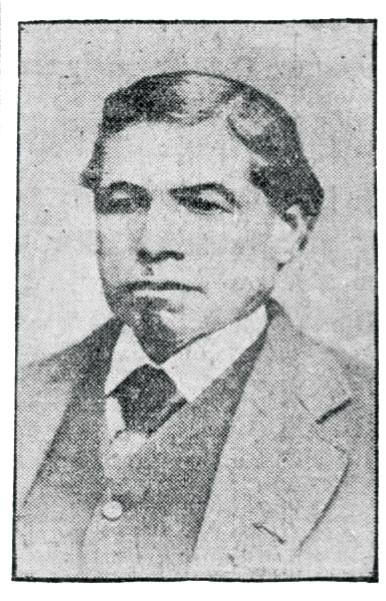
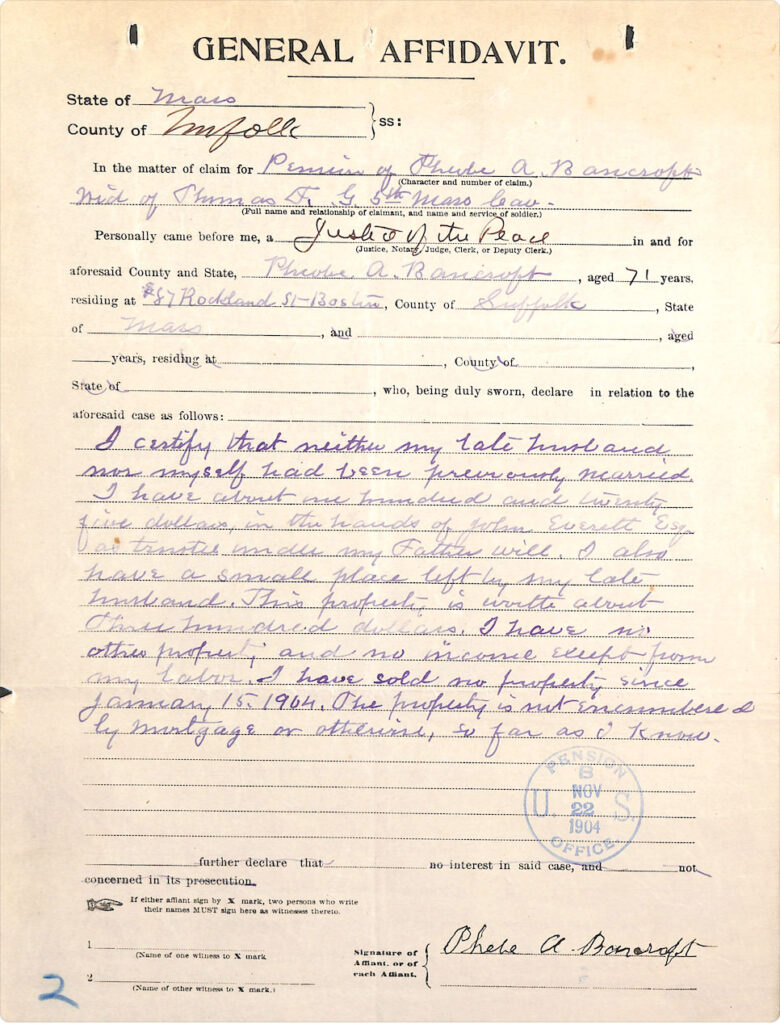
After his death, Phoebe saw an opportunity: although she could not reclaim the land she had sold at his urging, she could secure support by claiming his Civil War pension. Widows of Civil War veterans were entitled to financial support if they could prove their marriage and their husbands’ service. Phoebe faced a difficult task: she needed not only to prove her marriage but also to explain why she had fled Thomas and to convince judges that she had never obtained a formal divorce. To meet this demand, Phoebe asked her employer and several women—perhaps former employers, neighbors, or friends—to testify about the abuse she endured. Together with Phoebe’s own testimony, their accounts convinced judges that Phoebe had no choice but to flee Thomas, that she was never divorced, and therefore that she was his widow. She began receiving quarterly payments. Phoebe’s story reminds us that relationships to land were gendered and mediated not only by lineal inheritance, but also by marriage. As a married woman, Phoebe’s relationship to the plot of land her father had owned was more tenuous. From the 1860s through the 1890s, Phoebe capitalized on various forms of wealth, social networks, and intangible knowledge and skills (such as sewing) to forge her own path.
Seeing Giles in the Arboretum Today
By the time Phoebe died, land owned by Benjamin Bussey had been bequeathed to Harvard, and whaling merchant James Arnold left a bequest to the university to establish a public arboretum. Founding director Charles Sprague Sargent worked with landscape architect Frederick Law Olmsted to forge a partnership with the city of Boston, and the Arnold Arboretum opened in 1872. Had Phoebe returned to her property, she would have seen that Arboretum planners had planted new trees and shrubs that attracted visitors in carriages or on horseback. Since then, the Arboretum has grown to 281 acres, including the acreage Simeon once worked and Phoebe ultimately sold.
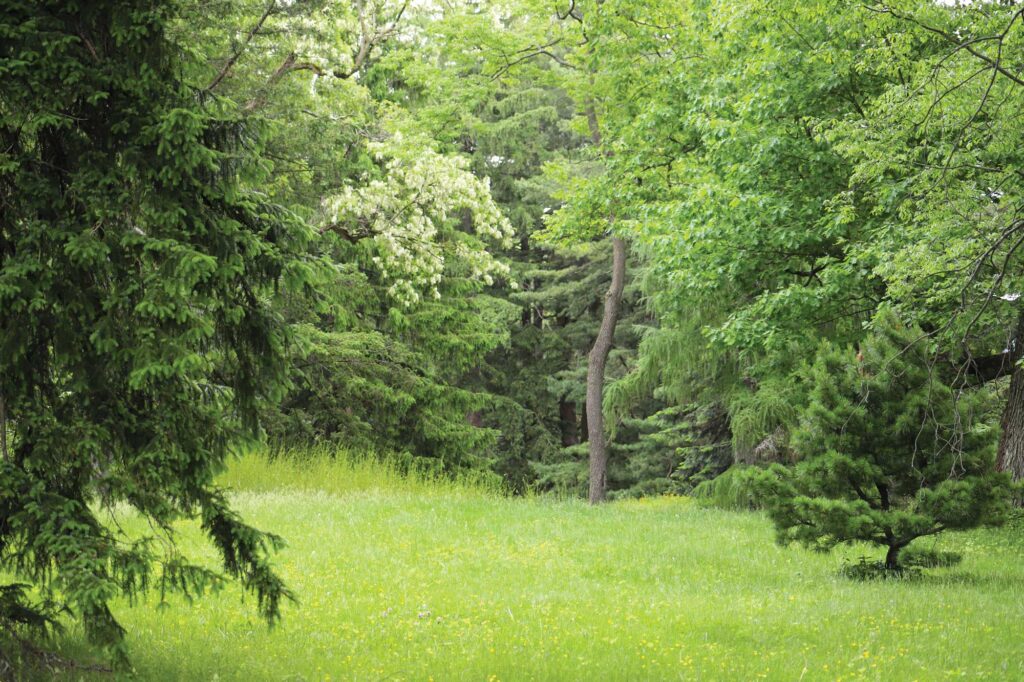
If Simeon and Phoebe stood on their land or wandered through Jamaica Plain today, what would they see? They might be surprised to find that suburbs, commercial streets, and a highway now surround the sprawling Emerald Necklace. Yet their familiar oaks—including the one we bored—still stand. How much does the land resemble the earth Simeon partnered with to make his livelihood?
As we wandered out of the forest, guided by Ned Friedman and Tiya Miles, we couldn’t be sure. Yet the Giles family reminds us that Jamaica Plain has been and remains an active site of historical change, where social and ecological networks collided and shaped one another. People like Simeon and Phoebe Giles were active participants in transforming Jamaica Plain’s landscape. Their stories offer a critical lens for understanding the entangled histories of land, identity, race, gender, and social life in Boston.
Rayha Kelly McPherson (Harvard ’25) is a mental health specialist at McLean Hospital. Madeleine Riskin-Kutz (Harvard ’25) is pursuing an M.Phil. in classics and ancient history at Oxford University. Riley K. Sutherland is a Ph.D. candidate in history at Harvard. Jasmine N. Wynn is a senior at Harvard College studying History with a secondary in Energy and Environment. Outside of her studies, she is a freelance writer and climate advocate.
Notes
1. Norfolk County (Massachusetts), Registry of Deeds, Deed Book vol. 271: 461, James Longley, trustee under the will of Simeon Giles (deceased), conveying land inherited by Simeon from his mother Phebe Bridgham Giles and devised to his daughter Phoebe Giles, to Joseph M. Smith, deed dated 8 December 1858, recorded 7 December 1858; Norfolk County, Registry of Deeds, Deed Book 126: 224, Robert Seaver and wife Abigail to Simeon Giles, deed (with mortgage condition) for one undivided seventh part of dower land and an additional lot in Roxbury, dated 7 October 1839, acknowledged and recorded 7 October 1839.
2. Hidden Jamaica Plain, “From Slavery to Freedom.”
3. Farr, “A Slow Boat to Nowhere,” p. 160.
4. “Massachusett Tribal Life” and “The Removal of the Neponsets to Ponkapoag,” The Massachusett Tribe at Ponkapoag.
5. Pension Application of Phoebe Bancroft.
6. “One of Ponkapoag Tribe,” The Boston Globe, March 11, 1903.
Works Cited
Agnew, Aileen “Women and Property in 19th Century New Hampshire,” Historical Archaeology 29 no. 1 (1995): 62-74. https://www.jstor.org/stable/25616353.
B., Mark. “Eliot School.” Remember Jamaica Plain? (blog). December 13, 2007. https://rememberjamaicaplain.blogspot.com/2007/12/eliot-school.html.
“Boston Has Nation’s Oldest School. Endowed in 1676, Eliot, the Apostle to the Indians, Game It 75 Acres of Land and Was One of Its Teachers.” Boston Daily Globe, Dec. 25, 1921.
Cacchione, Victoria A. 2019. “Public Face and Private Life: Identity through Ceramics at the Boston-Higginbotham House on Nantucket.” Journal of African Diaspora Archaeology and Heritage 8 (1–2): 57–77. https://doi.org/10.1080/21619441.2019.1644826.
“History.” The Eliot School of Fine & Applied Arts. Accessed May 1, 2025. https://eliotschool.org/about/history.
Commonwealth of Massachusetts, “Return of a Death: Phoebe Ann Bancroft,” January 14th, 1908.
Ernst, Ellen Lunt Frothingham. The First Congregational society of Jamaica Plain (the third parish church in Roxbury) 1769-1909. Jamaica Plain, Massachusetts: Private Print, 1909.
Farr, James. “A Slow Boat to Nowhere: The Multi-Racial Crews of the American Whaling Industry.” The Journal of Negro History 68, no. 2 (1983): 159–70. https://doi.org/10.2307/2717719.
Gambee, Robert. Nantucket Impressions. New York: Norton, 2001.
Greenridge, Kerri, & Hannigan, John. “How free were free people of color,” peer-reviewed pamphlet from The Robbins House: Concord’s African American History, Concord.
Healy, James A. “The friends and patrons of the Eliot Charity School are informed that it has been removed to a more commodious house and neighborhood, at no. 9 High Street…” Boston, Massachusetts: n.p., 1862. Readex: American Broadsides and Ephemera, Series I, no. 11205.
Jamaica Plain Historical Society collection, SC-0228, Container: 124-010 Box 1; Container: 124-010 Box 2. University Archives and Special Collections. Accessed May 01, 2025. https://archives.umb.edu/repositories/2/resources/83.
Heath, Richard. “The Owners of Hellenic Hill.” Jamaica Plain Historical Society, February 11, 2019. https://www.jphs.org/locales/2019/2/10/the-owners-of-hellenic-hill#gsc.tab=0.
Hidden Jamaica Plain. “From Slavery to Freedom: Three Centuries of a Black Family in Jamaica Plain.” Jamaica Plain Historical Society. Accessed Apr. 5, 2026, https://www.jphs.org/people/from-slavery-to-freedom#gsc.tab=0.
Hidden Jamaica Plain. “Slavery in Jamaica Plain.” Jamaica Plain Historical Society, January 27, 2024. https://www.jphs.org/colonial-era/slavery-in-jamaica-plain#gsc.tab=0.
“A Brief History of Jamaica Plain.” Jamaica Plain Historical Society. Accessed May 1, 2025. http://jphs.squarespace.com/display/ShowJournal?moduleId=154752®isteredAuthorId=17267.
“The First Apartment House in Jamaica Plain.” Jamaica Plain Historical Society, May 24, 2022. https://www.jphs.org/victorian-era/the-first-apartment-house-in-jamaica-plain.html.
Lemire, Elise Virginia. Black Walden: Slavery and Its Aftermath in Concord, Massachusetts. Philadelphia: University of Pennsylvania Press, 2009.
“Massachusett Tribal Life.” The Massachusett Tribe at Ponkapoag. Accessed Apr. 5, 2026, https://massachusetttribe.org/massachusett-tribal-life.
McKissack, Patricia C., and McKissack, Frederick L. Black Hands, White Sails: The Story of African American Whalers. New York: Scholastic Press, 1999.
McMillion, Thalia, & Sasanov, Catherine. “Simeon Giles.” Unpublished compiled research, Jamaica Plain Hidden Histories Project, 2024.
Norfolk County (Massachusetts). Deed Books. Deed Book 271:461, James Longley, trustee under the will of Simeon Giles (deceased), to Joseph M. Smith, 8 December 1858, recorded 7 December 1858; Deed Book 126:224, Robert Seaver and wife Abigail to Simeon Giles, 7 October 1839, acknowledged and recorded 7 October 1839. Norfolk County Registry of Deeds, Dedham, Massachusetts. Accessed via the Office of the Register of Deeds and Land Court Records Database, May 3, 2026.
“One of Ponkapoag Tribe,” The Boston Globe, March 11, 1903.
Pearson, Lisa E. “For the Establishment of an Arboretum.” Apr. 21, 2022. Arnold Arboretum. Accessed Apr. 5, 2026, https://arboretum.harvard.edu/stories/for-the-establishment-of-an-arboretum/.
Pension Application of Phoebe Bancroft, File No. 798123, Record Group 15, National Archives.
“Peter Robbins.” The Robbins House. Accessed May 9, 2025. https://www.scribbr.com/chicago-style/website-citations/
“The Removal of the Neponsets to Ponkapoag.” The Massachusett Tribe at Ponkapoag. Accessed Apr. 5, 2026, https://massachusetttribe.org/the-removal-of-the-neponsetts-to-ponkapoag.
Shoemaker, Nancy. “Mr. Tashtego: Native American Whalemen in Antebellum New England.” Journal of the Early Republic 33, no. 1 (2013): 109–32. https://doi.org/10.1353/jer.2013.0017.
Van Ravenswaay, Charles. “America’s Age of Wood.” Proceedings of the American Antiquarian Society 80, no. 2 (1970): 49–66.
Warren, Joyce W. Women, Money and the Law: Nineteenth-Century Fiction, Gender, and the Courts. Des Moines, Iowa: University of Iowa Press, 2005.
Whitcomb, Harriet Manning. Annals and Reminiscences of Jamaica Plain. Cambridge, Massachusetts: Riverside Press, 1897.
Wright, Carroll D. and Wadlin, Horace G. “The Industries of the Last Hundred Years.” In Justin Winsor, ed. The Memorial History of Boston, Including Suffolk County, Massachusetts. Boston: James R. Osgood & Company, 1883.
Thanks to Gretchen Grozier, Mimi Pichey, Nancy Ahmadifar, and Thalia McMillion of Hidden Jamaica Plain for helping to identify and correct several errors in an earlier version of this article.