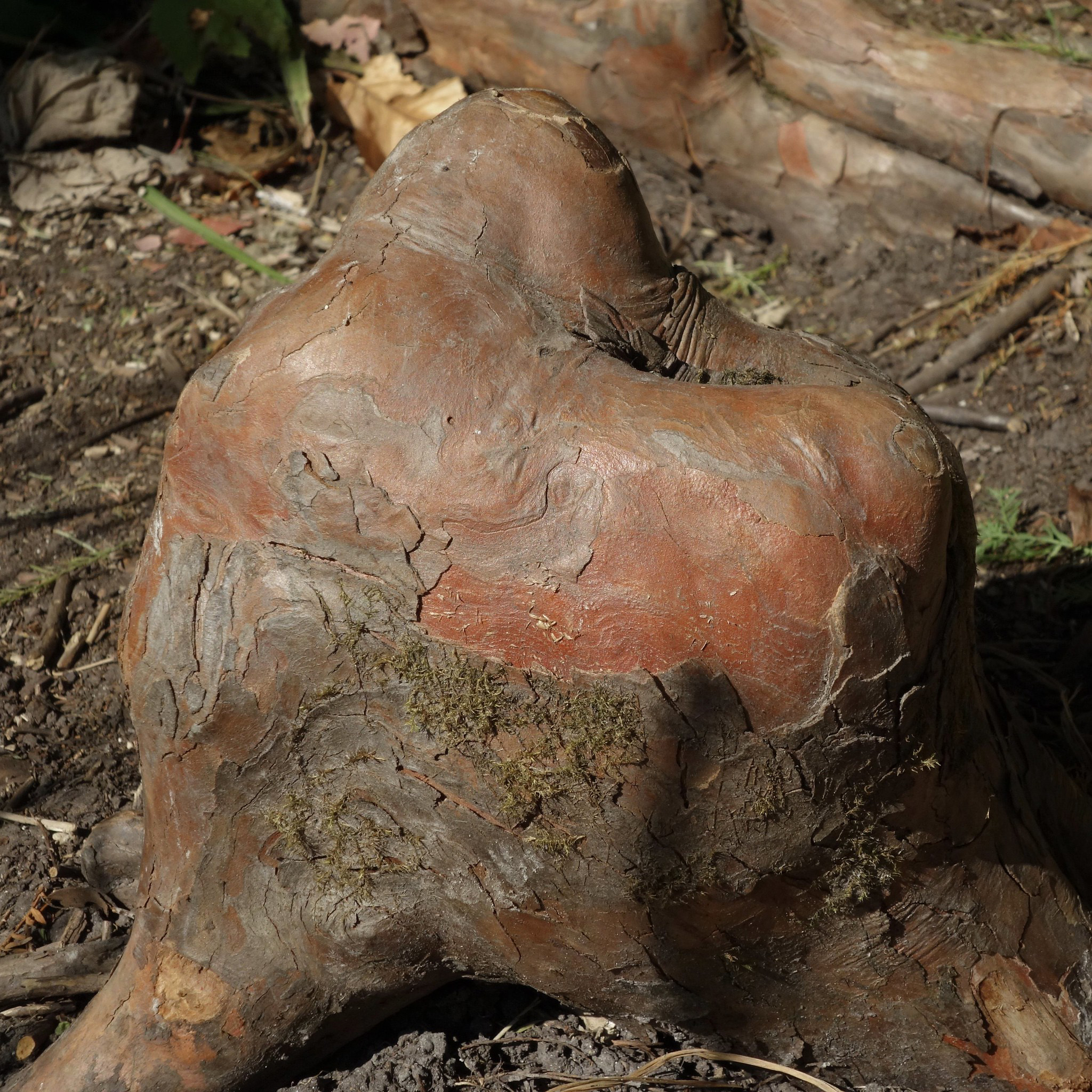
Everyone has heard of the “bee’s knees.” But what about the “tree’s knees?” Yes, just like bees, some trees have knees. The bald cypress, Taxodium distichum, native to the southeastern United States, can have spectacular knees. Like the golden larch (Pseudolarix amabilis), dawn redwood (Metasequoia glyptostroboides), all larch species (Larix spp.), and the Chinese swamp cypress (Glyptostroboides pensilis), the bald cypress, as the common name would suggest, is a deciduous conifer, with magnificent copper to bronze colors in the autumn (lower left image, accession 806-52*A).
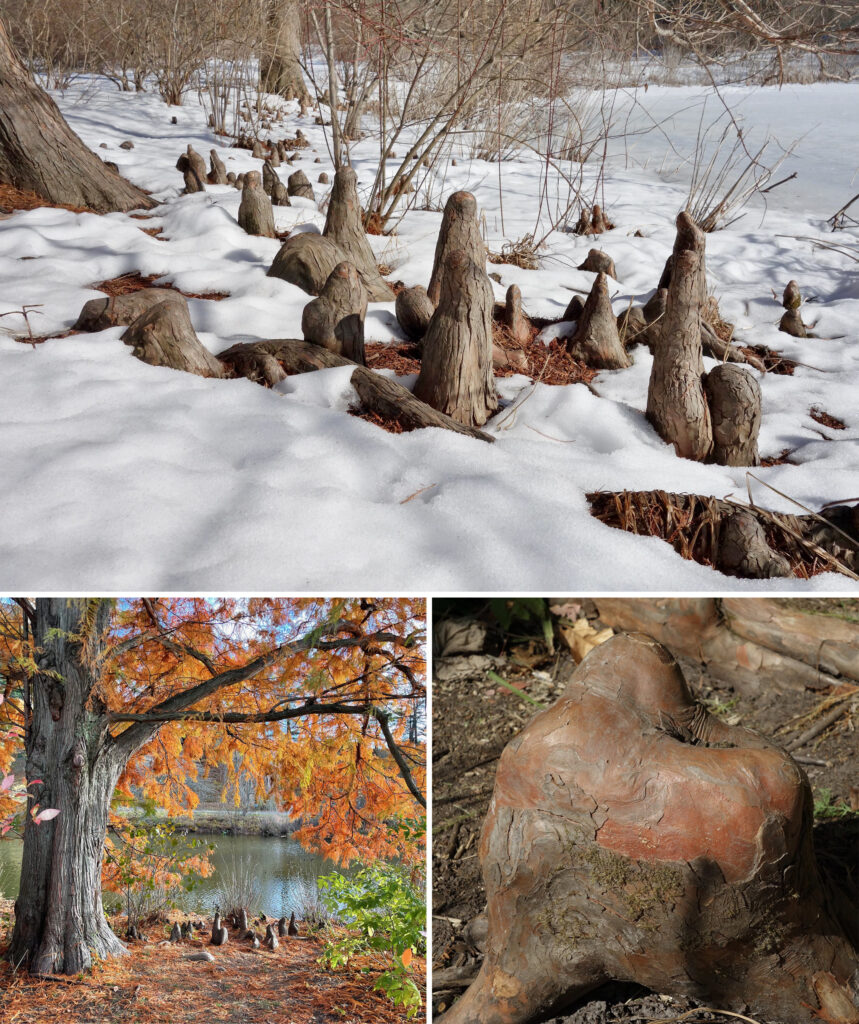
So, what are bald cypress knees? The “knees” of a bald cypress are woody upward growing protuberances of the horizontally extending root system (upper and lower right images, accession 806-52*A). On older trees, there can be hundreds of these knees appearing above the soil (or watery bottomlands) surrounding the trunk. For well over a century, botanists have speculated (and debated) about the functional significance of bald cypress knees, but we remain uncertain. Given that bald cypresses typically live in moist to permanently water-inundated ecosystems, they may play a role in helping to oxygenate the extensive below-ground roots.
If you want to see some really great tree knees, come visit the Arnold Arboretum. We have a fantastic collection of bald cypresses, both on the Jamaica Plain end of the grounds and on Peters Hill in Roslindale. The two specimens by Dawson Pond are easily accessible, as is the grove in the wet seep on the east flank of Peters Hill. The most extensive set of bald cypress knees at the Arnold can be found on accession 1007-38*A (click the hyperlink for map location). Set against the snow, they are magnificent, and in the fall, how can you beat the copper-colored leaves as a backdrop?