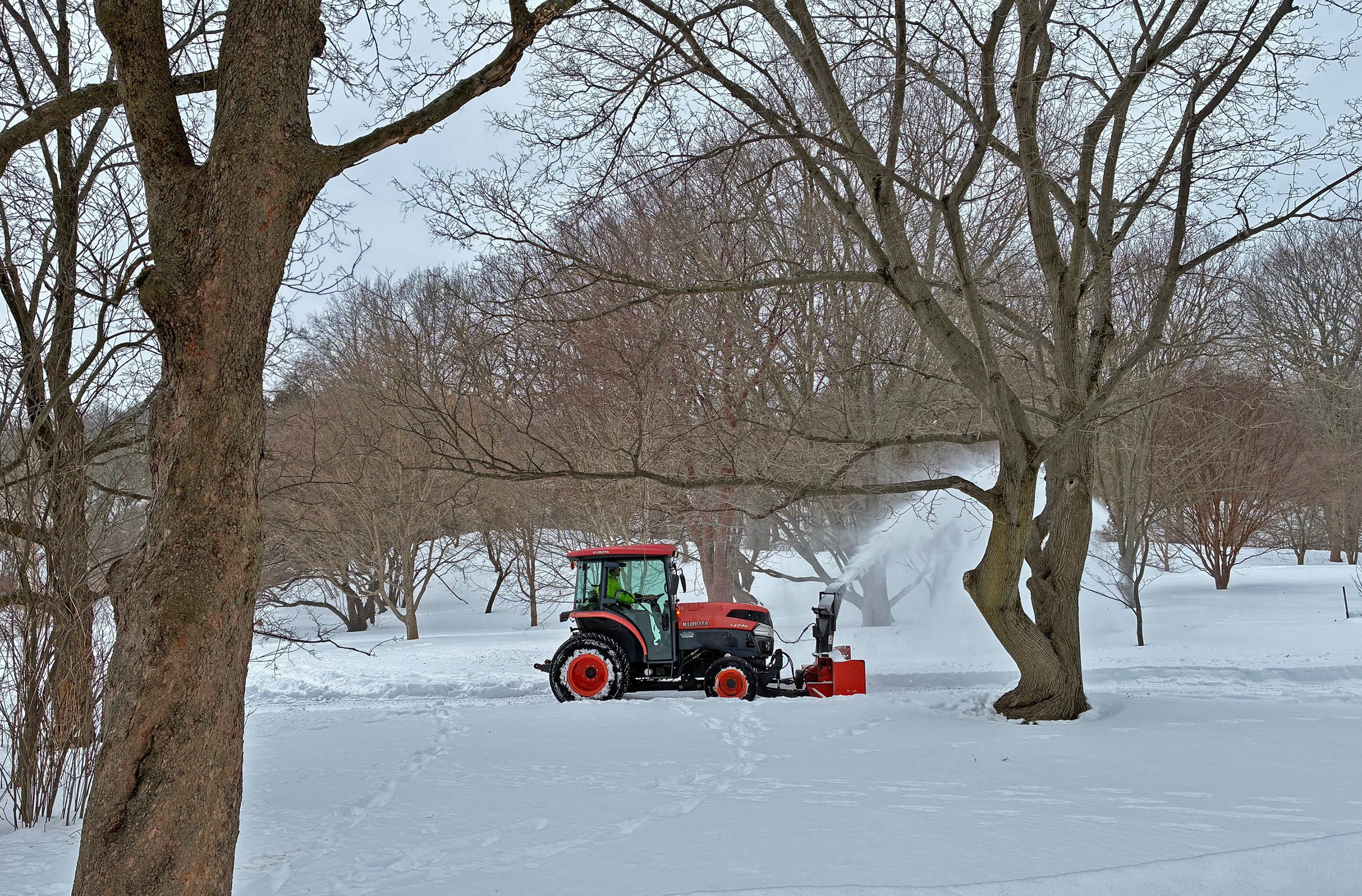
Last week’s winter storm offered a vivid reminder of New England’s climate in motion: nearly 18 inches of snow fell at the Arboretum between January 25 and 26—more than Boston received in each of the past two winters in their entirety. For the Arnold Arboretum, storms like this are more than remarkable weather events; they are data points in a long continuum of observation that extends nearly a century.
Weather has long been one of the Arboretum’s most instructive teachers. Legendary Arboretum propagator William Judd began recording temperature and precipitation by hand in 1918, a practice that has been centered at the Dana Greenhouses since 1965. Decades of notebook entries lay the groundwork for today’s automated monitoring systems, expanded in 2011 with the addition of a second major station at our Weld Hill Research Building. With online reporting and public access to real time conditions, weather tracking has evolved from a purely internal tool into a powerful resource for staff, researchers, and visitors.
The Arboretum now relies on a robust network of instruments that continuously measure temperature, humidity, wind, precipitation, and soil conditions. Staff seasonally calibrate sensors, confirm snow depth after storms, and share their onsite measurements with the National Weather Service. Additional climatic sensors—monitoring barometric pressure, leaf wetness, solar radiation, and more—provide our staff with an exceptionally localized and comprehensive picture of our weather.
Weather has shaped our landscape and collections in profound ways. A catastrophic hurricane in 1938, deep freezes in the 1930s, landmark snowstorms in 1978 and 1997, and the record-setting winter of 2015—all influenced horticultural practices at the Arnold. In 2015, Boston recorded more than 108 inches of snow, creating towering berms along our roads that dwarfed young trees and demanded new strategies for winter maintenance.
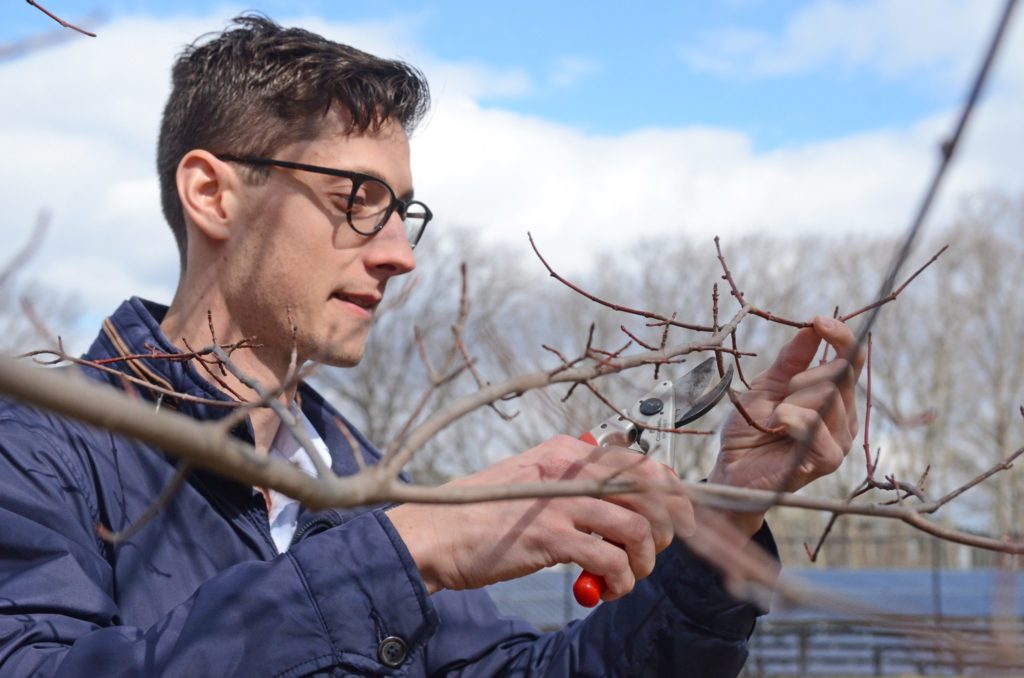
Long‑term temperature and snowfall patterns help our staff understand how woody plants respond to environmental stress. Sudden hard freezes after warm spells, recurring freeze–thaw cycles, or prolonged late‑season snowpack can leave subtle but lasting effects on bark, buds, and cambium. Research by our 2019-21 Putnam Fellow Al Kovaleski—whose work centers on how woody plants adapt to winter freezing stresses—examined how chilling accumulation and cold hardiness influence the timing of budbreak across our collection. His work joins a growing body of knowledge that helps our horticulturists better anticipate plant needs and tailor their care practices throughout the year.
Snow itself can offer unexpected benefits. Last week’s deep, powdery snowfall will insulate the roots of shallow-rooted trees such as maples, willows, and rhododendrons. Powder snow—formed in cold, dry conditions—is gentler on plant structures than heavy, wet snow, which can accumulate on branches and cause significant damage. After major storms, staff use our weather station measurements to prioritize inspections in the landscape, starting with plant taxa most vulnerable to snow loads, such as mature evergreens.
Ultimately, the Arnold Arboretum’s meticulous weather tracking—shaped by decades of observation and evolving technology—supports our core mission: stewarding one of the world’s finest collections of temperate woody plants. Each storm, from a dusting to an 18-inch snowfall, adds another chapter to our environmental narrative, one we continue to document and interpret in service to science and the well-being of our plants.