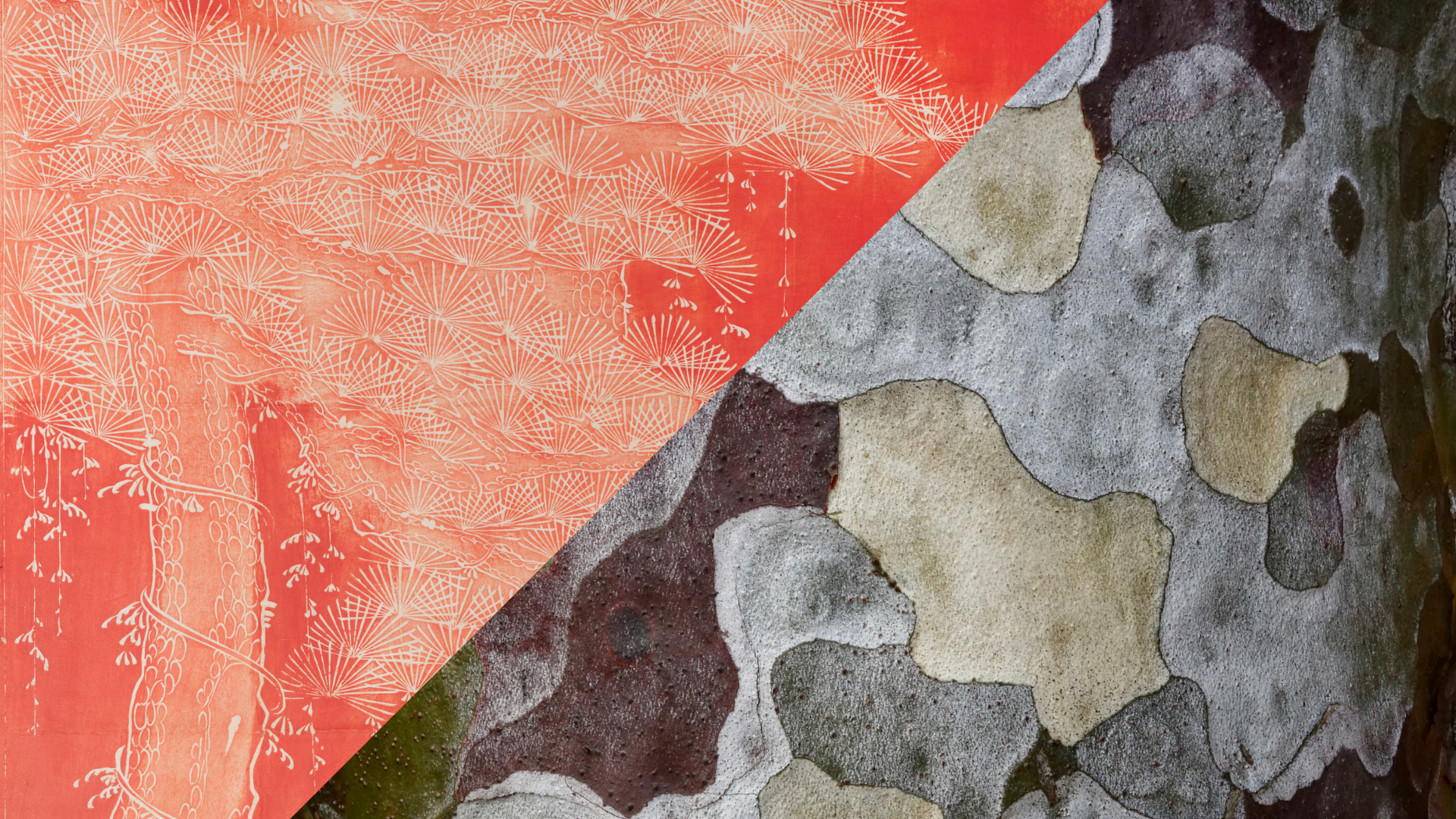
Our Double Take series is a collaboration with Harvard Art Museums, pairing objects from both collections: a plant from the Arnold Arboretum + a work of art from the Harvard Art Museums.
This time, we’re looking at two pines which both required special care.
Lacebark pine 663-49*C is a particularly special tree to Arboretum Director Ned Friedman. A few weeks into his tenure at the Arboretum, he’d already fallen in love with the tree, with its unique exfoliating bark. Then a winter storm knocked it down.
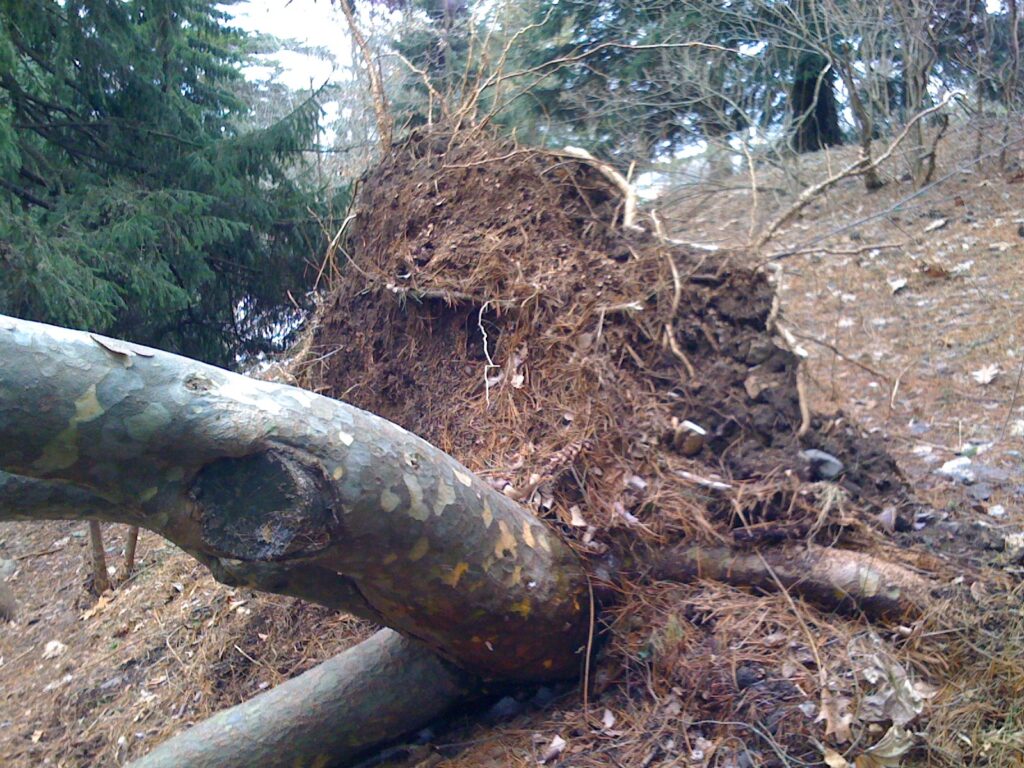
The Arboretum’s horticulture crew sprang into action and ultimately saved the tree. It still stands some 15 years later, a testament to the care that goes into every plant in our landscape.
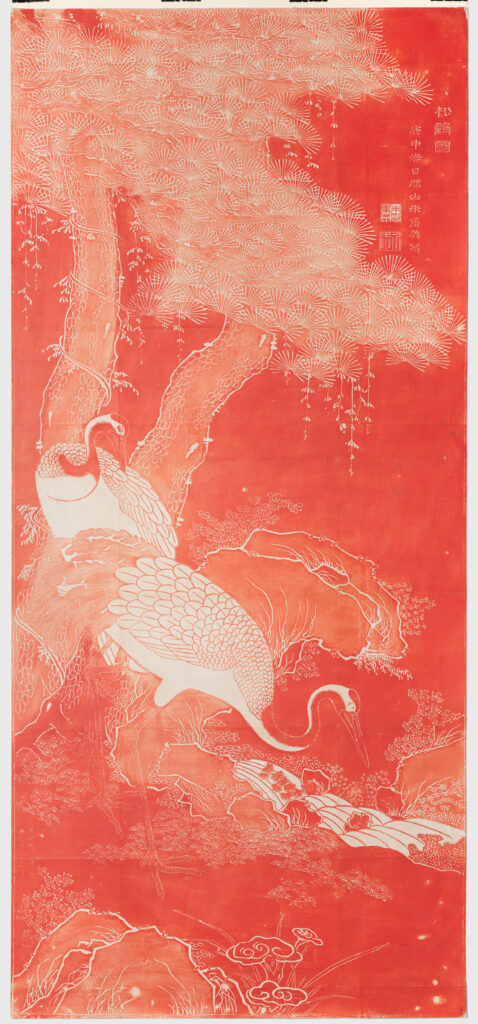
The striking red ink rubbing “Pines and Cranes” at the Harvard Art Museums is another example of second chances. The piece by Zhu Jiyi 朱集義—which features trees that are likely lacebark pines—dates to the turn of the 20th century, but it’s a rubbing of a far older stele that dating to 1680. When it entered the museums’ collection, it was folded into 24 sections, leaving heavy creasing and staining. The rubbing was treated in the museums’ paper lab with humidity and weights, relaxing the paper and reducing stains.
Two objects, both transplants from China, in their own way. One rooted, one rendered—but both reminders that what we choose to preserve can take many forms.
Visit the lacebark pine (Pinus bungeana) 663-49*C in the Arboretum’s conifer collection.
To view this artwork, no longer on display in the museums’ galleries, please contact the Art Study Center at the Harvard Art Museums and inquire about viewing object 1970.52.